
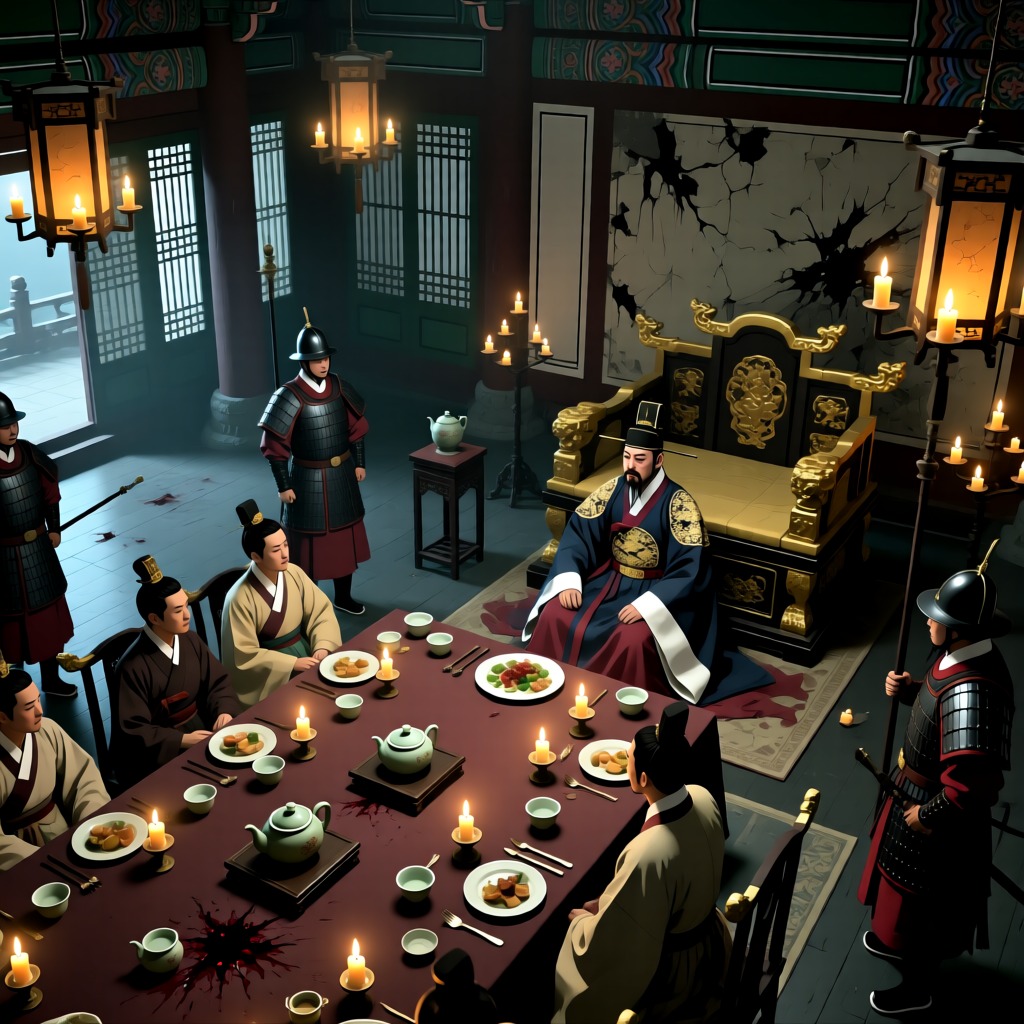

The mystery surrounding Emperor Lee Hee's sudden death on January 22, 1919, sparked the world-renowned March 1st Movement in Korea. Lee Hee's life was marked by countless hardships and humiliations, transitioning from a young emperor to being oppressed by Japanese imperialism, and ultimately being forced to abdicate as a king without a country. His life is steeped in tragedy, and the cause of his death remains an unsolved enigma.
Born in 1852, Lee Hee was the 26th king of the Joseon Dynasty in Korea. His childhood was spent in the opulence of the royal court, but as an adult, he endured the pains of power struggles, national decline, and foreign oppression. In 1894, Japanese envoys brazenly entered the palace and seized treasures, leaving Lee Hee powerless to resist. The following year, the palace was attacked again by Japanese forces, resulting in the brutal killings of the queen, ministers, and court ladies, which left Lee Hee in a state of terror. Amid escalating tensions between Japan and Russia, Lee Hee was forced to cut his hair, abandoning traditional customs and bearing immense psychological pressure. He sought assistance from Russia but ultimately found himself in a deeper predicament.
In 1907, Lee Hee sent envoys to The Hague seeking international support, but to no avail. Japanese imperialism then forced his abdication and confined him in Deoksugung Palace. His son, Lee Jae, ascended the throne as Emperor Gojong, but the Korean government had effectively become a shell of its former self. In 1910, the Japan-Korea Annexation Treaty was signed, officially making Korea a Japanese colony. Lee Hee and his son were imprisoned in the old palace until his death on January 22, 1919. Various theories surround his death; some believe he was poisoned, while others assert he died of illness.
Lee Hee's death became a catalyst for the Korean people's resistance against Japanese colonial rule, igniting the March 1st Movement.