
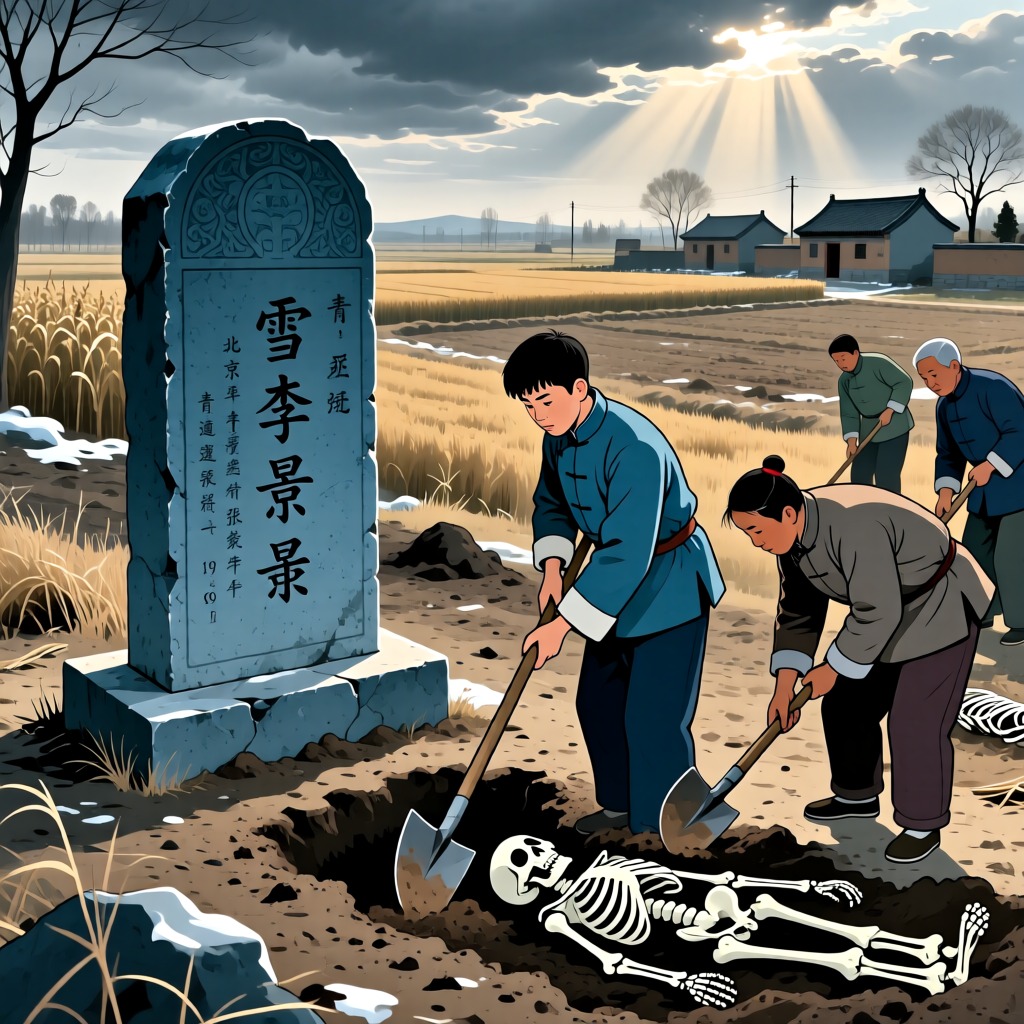

In the winter of 1968, while leveling land in Zhangjiawan Village, Tong County, Beijing, a young man named Li Jingzhu discovered a blue stone tablet inscribed with the words "Cao Gong's Tomb." Villagers mistakenly believed it to be the tombstone of Cao Xueqin, the author of "Dream of the Red Chamber," and even disturbed the grave, removing the remains. Li Jingzhu took the tombstone home for safekeeping, and by 1992, its authenticity sparked a significant debate within the field of Redology.
Cultural relics expert Qin Gong argued that the tombstone was a forgery, citing reasons such as the inappropriate materials used for the stone, rough craftsmanship, and grammatical errors. Conversely, Redologist Du Jinghua contended that the tombstone was genuine, speculating that Cao Xueqin died in 1923, possibly due to poverty. Another Redologist, Feng Qiyong, also supported the tombstone's authenticity, referencing poetry from Cao Xueqin's friend Dun Cheng, suggesting that Cao Xueqin may have been laid to rest alongside other friends near the banks of the Lu River.
The debate over the authenticity of the tombstone continues to this day.
