

The Mayan culture in Central America began to attract the attention of scholars around 1700 AD. In 1885, a young American explorer named John Lloyd Stephens discovered the city of Chichen Itza in the jungles of the Yucatan Peninsula and began a 24-year excavation project. Systematic excavations started in 1947, bringing this ancient city back to light.
The Chichen Itza site, located in present-day Yucatan, Mexico, is one of the three major cities of the Mayan culture. Its water source primarily comes from natural wells, which is why it is called "Chichen Itza," meaning "the well of the Itza people." In the 10th century, the city was occupied by foreign invaders and subsequently abandoned. Most of the structures we see today were built in later periods.
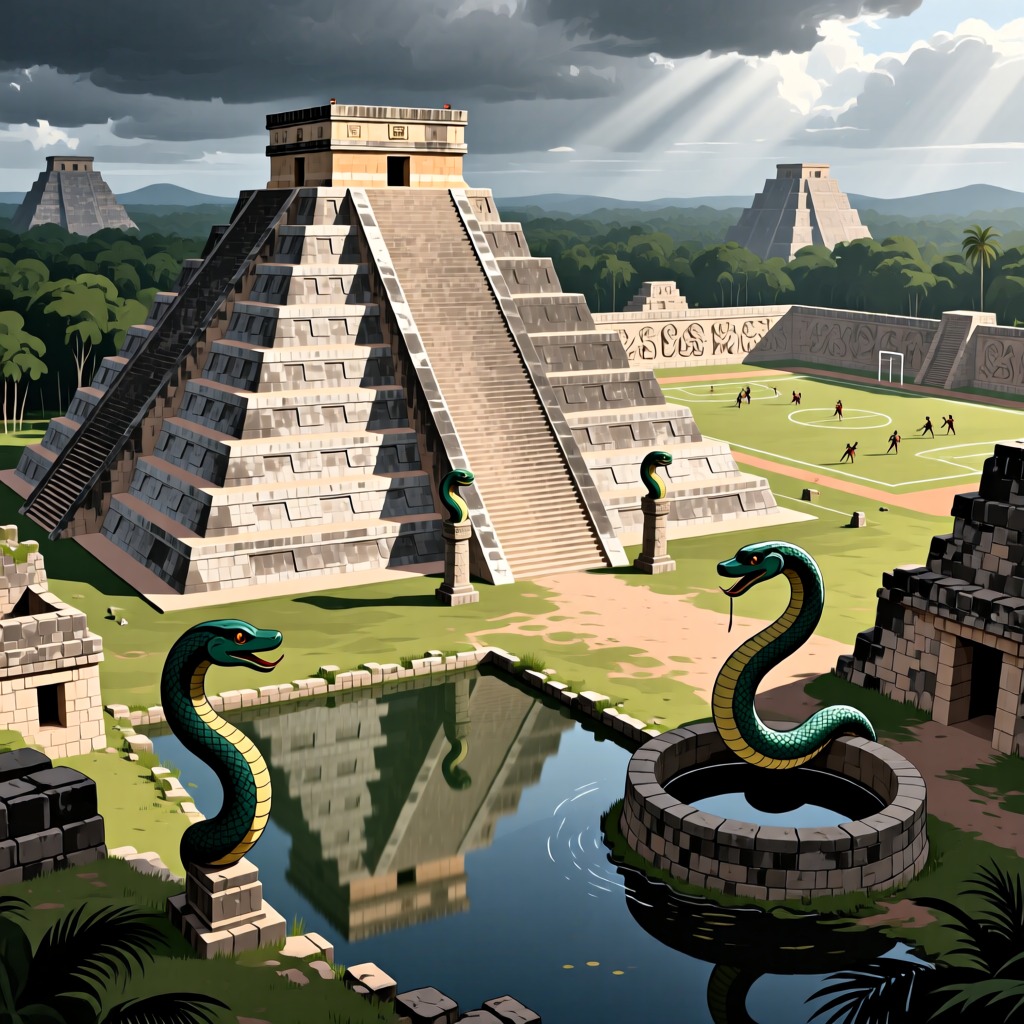
The entire site covers about 6 square kilometers and features hundreds of buildings, including the Castillo pyramid and a ball court. The Castillo pyramid stands 24 meters tall with nine levels, each side having 364 steps, symbolizing the days of the year. During the spring and autumn equinoxes, sunlight creates a serpentine shadow through the doorway, a breathtaking sight.
1.5 kilometers from the site, there are two wells and a pyramid. The sacred cenote next to the wells is a center of faith for the Mayans, who believed it was the dwelling place of the rain god. Stephens discovered valuable artifacts here that confirmed the legends of human sacrifices among the Mayans.
Chichen Itza also has several ball courts, the largest located to the north, covering an area of 22,576 square meters. Players were prohibited from using their hands or feet to touch the ball, making the matches intense and brutal. Victors received rewards, while the defeated could face execution. This life-and-death competition reflects the harsh realities of Mayan society.
The Mayan civilization reached its peak between the 6th and 9th centuries but rapidly declined after the 10th century. Scholars speculate that over-farming, population surges, natural disasters, and internal conflicts may have contributed to the collapse of the Mayan civilization. Ultimately, this great civilization seems to have vanished, leaving behind endless mysteries for future generations.