
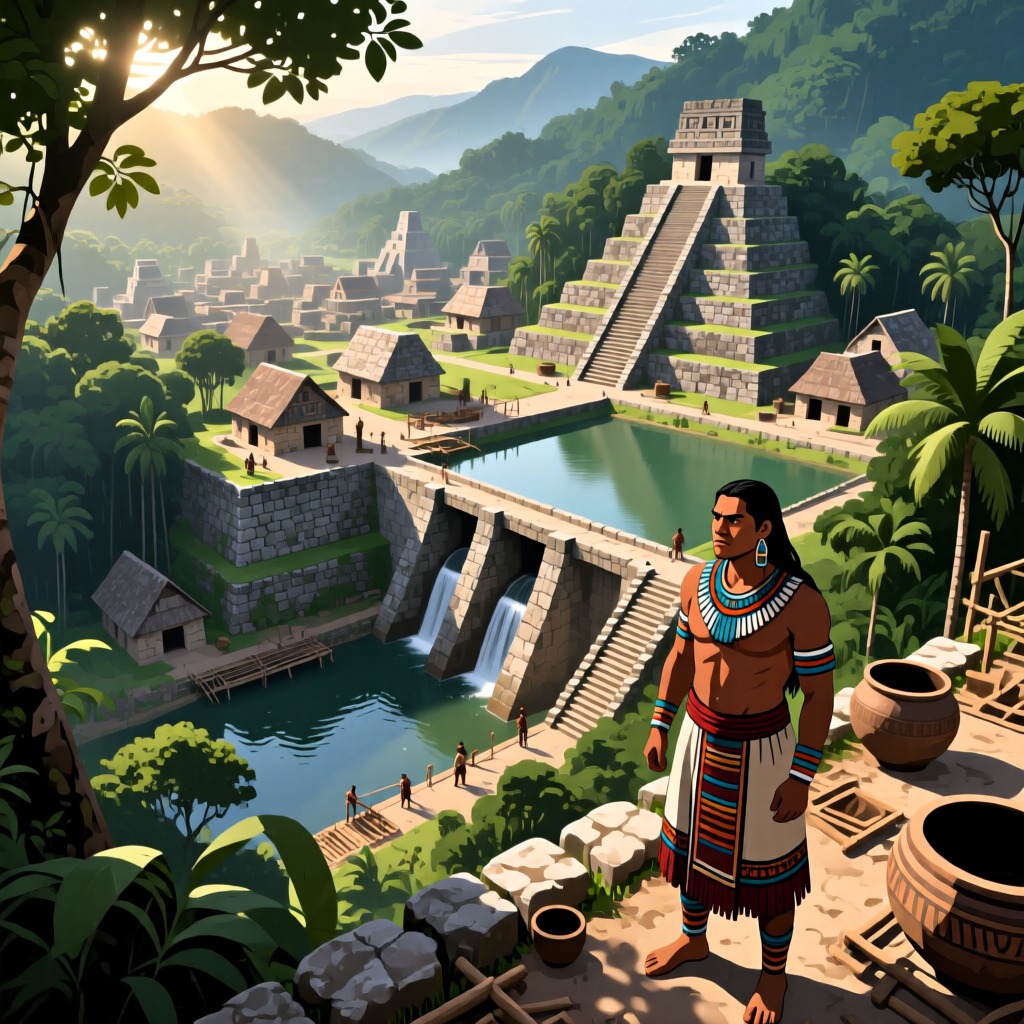

Why were Mayan cities built deep within the jungle? While ancient civilizations like those of Egypt and India arose along the banks of the Nile and Ganges rivers, and Chinese civilization developed around the Yellow and Yangtze rivers, the Mayans chose the tropical rainforest as their urban backdrop, which is particularly intriguing.
Take Tikal, for example. It is located 109 miles from the Bay of Honduras, 161 miles from the Campeche Bay, and only 236 miles from the Pacific Ocean. Despite their profound knowledge of the sea, evidenced by the abundance of coral, conch shells, and shellfish products found in the ruins and cultural sites, why did the Mayans not establish their cities along riverbanks or beaches? Furthermore, why did later generations not migrate to the riversides or coastal areas but instead move to the more desolate mountains? This choice is perplexing.
Tikal is a typical example, situated deep in the mountains. To meet the water needs of this populous city and for crop irrigation, the Mayans had to construct 13 reservoirs around the city. These reservoirs have a total capacity of 214,500 cubic meters. The effort required to build such large-scale hydraulic projects in ancient times is unimaginable. Yet, why did these extraordinarily intelligent Mayans opt to build their cities in such harsh conditions rather than seek a more convenient and reasonable location?