
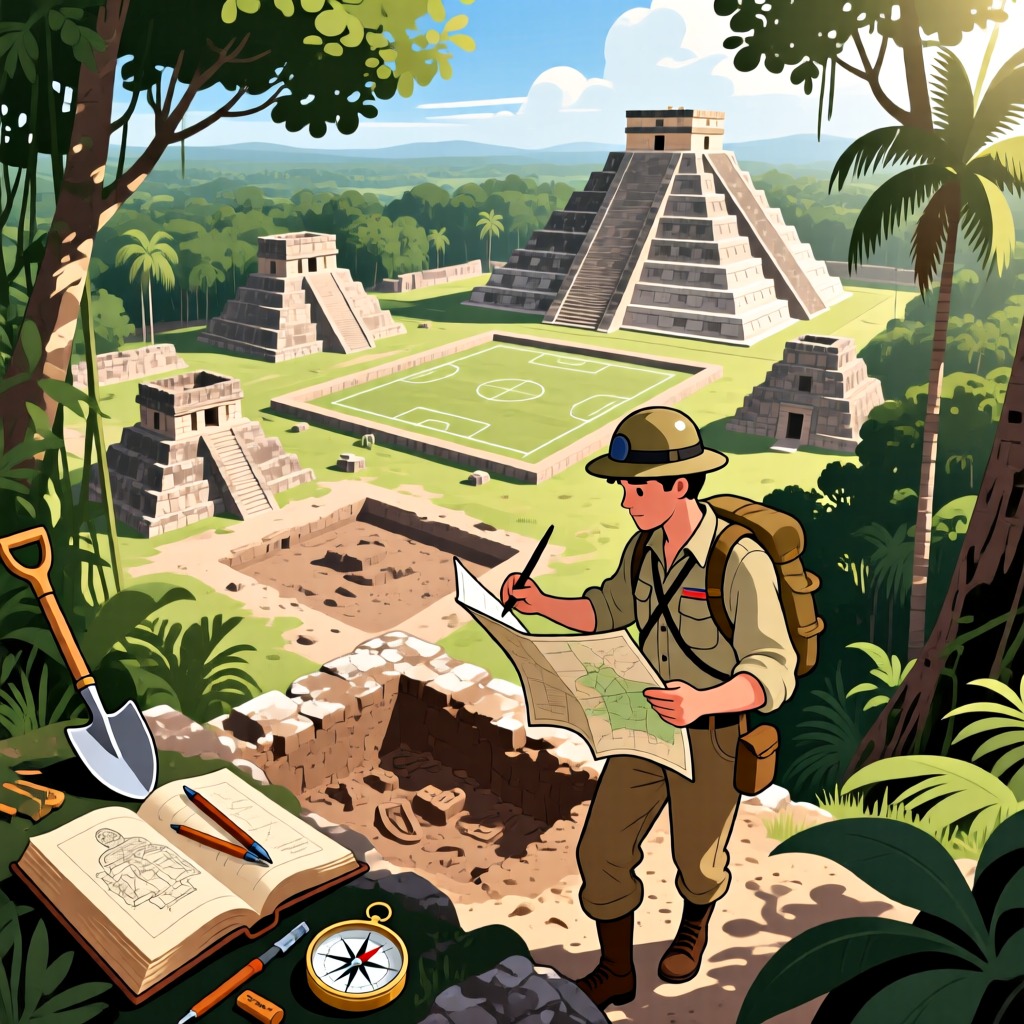

The mysteries of the Mayan city: the rise and fall of Chichen Itza.
Around 1700 AD, scholars in the Americas began to introduce Central American Mayan culture, but these descriptions were often superficial. It wasn't until 1885 that a young American explorer named John Lloyd Stephens trudged through the jungles of Mexico's Yucatan Peninsula and discovered the city of Chichen Itza. During his tenure as the U.S. consul in Yucatan, he excavated and explored this ancient city almost year-round.
Chichen Itza, located in the central-southern part of today's Yucatan state in Mexico, is one of the three major cities of Mayan culture. Due to the arid nature of the region, precious water sources became a vital resource for its inhabitants. The term "Chichen" means "well mouth," while "Itza" refers to the Itza people, thus "Chichen Itza" translates to "the well of the Itza people."
Archaeologists speculate that the Mayan people occupied this land as early as 1500 BC to 300 AD, establishing the city of Chichen Itza in the 6th century AD. The early structures included the Temple of the Inscriptions, the Hall of the Deer, and the Sacred Cenote. However, after being conquered by foreign tribes in the 10th century, the city entered a new period of prosperity, during which the Great Pyramid, the Great Ball Court, and the Temple of the Warriors were constructed. Yet, by around 1450, the city was abandoned, leading to the decline of Mayan culture. The ruins we see today are remnants of later constructions.
The Chichen Itza site covers an area of approximately 6 square kilometers, stretching about 3 kilometers north to south and 2 kilometers east to west. It features hundreds of buildings, among which the well-preserved structures include the Castillo Pyramid, the Pyramid of the Warriors, and the Ball Court.