

In 1927, British archaeologist Michael Heizer discovered a crystal skull weighing approximately 5 kilograms in the ruins of the ancient city of Lubaan Tum. This skull was crafted from large pieces of crystal, with the nasal bone made of three crystal segments, a round crystal for the eye sockets, and neatly arranged teeth embedded in the jaw. Some believe this crystal skull was created over 3,600 years ago, but other scholars question this claim.
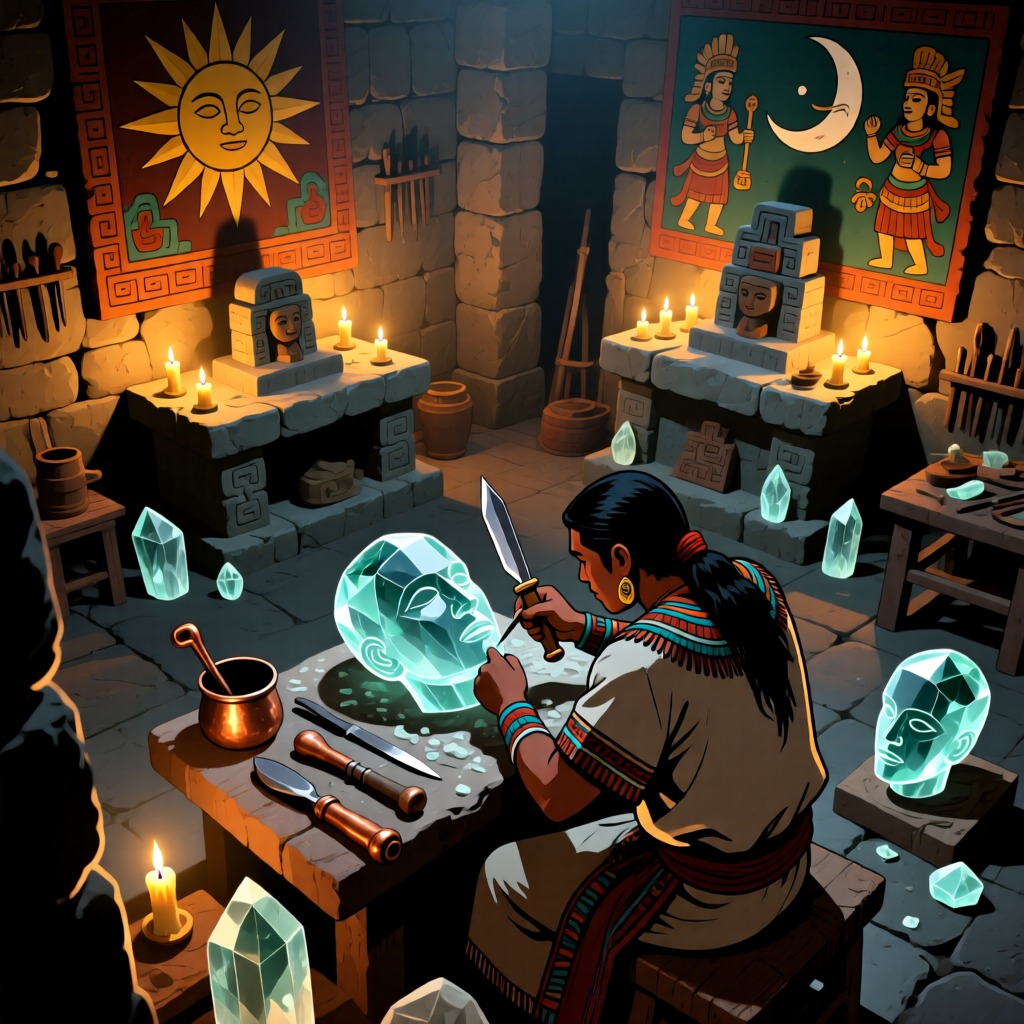
The Musée de l'Homme in France also houses a crystal skull, which is believed to be a decorative piece from a priest's staff made by the Aztecs in the 14th or 15th century. The Aztecs used copper tools to carve the crystal skull, indicating a high level of craftsmanship. However, some scholars argue that the Aztecs' technological capabilities during the 14th to 15th centuries were limited, making it difficult to produce such an exquisite crystal skull.
Another crystal skull in the British Museum is even more mysterious. In the absence of light at night, it emits a dazzling white glow, revealing a terrifying visage. This skull was purchased in 1898 from the Tiffany jewelry store in New York, but its exact origins remain a mystery.
The origins of these three crystal skulls are still unclear. When, by whom, and for what purpose were they created? This question continues to perplex archaeologists.