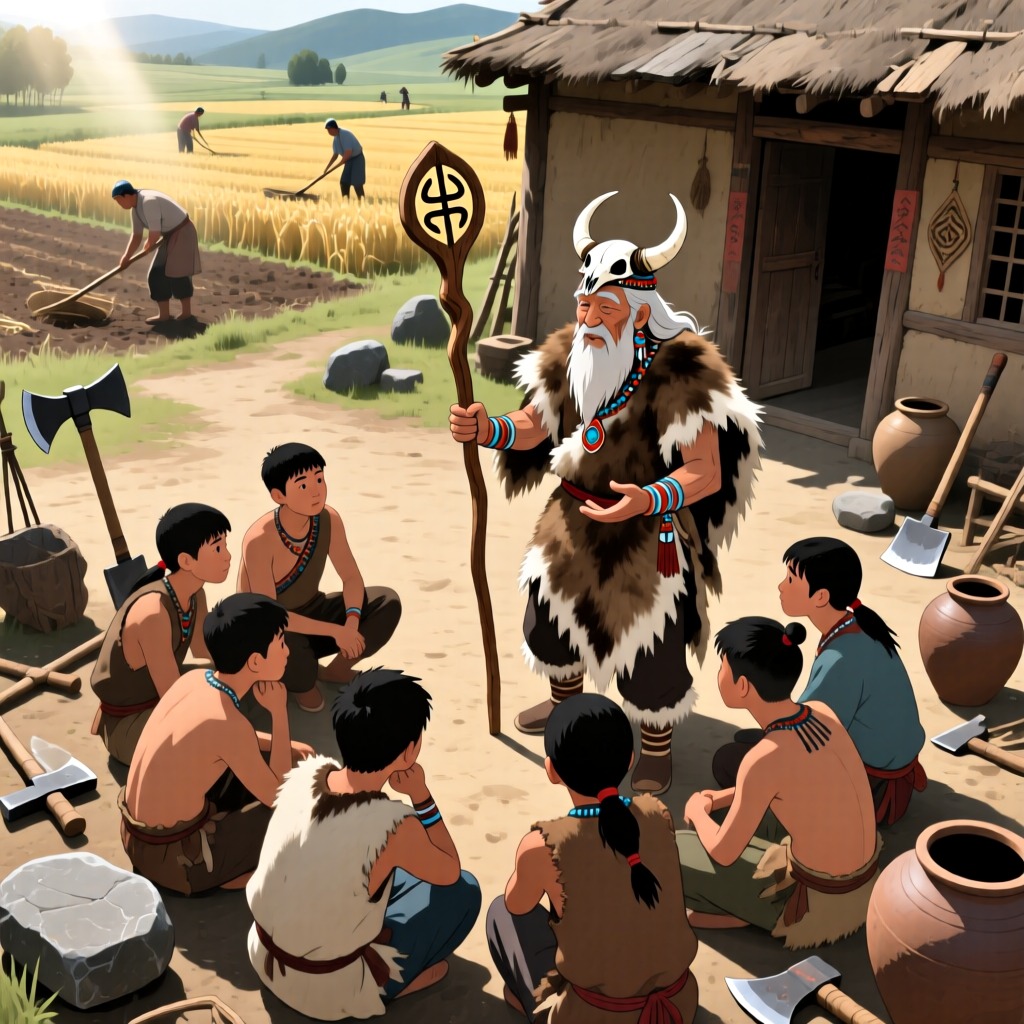
Human history has experienced a primitive phase of group marriage, where all men and women were considered spouses of one another. Over time, this group marriage evolved into family structures defined by generational lines, with siblings, cousins, and even more distant relatives becoming spouses. Although this system excluded marriages between different generations, it was ultimately replaced by exogamous marriages due to the weaker health of offspring.
Scholars have differing views on the origins of the incest taboo within clans. Some believe that natural selection led people to gradually realize that offspring from exogamous marriages were healthier, thus giving rise to the incest taboo. Others propose the eugenics theory, suggesting that humans discovered over time that intra-clan marriages resulted in unhealthy descendants, leading to the gradual formation of the taboo. Additionally, some scholars advocate the "organizational adaptation to environment theory," arguing that to survive in harsh conditions, human groups had to prohibit incestuous marriages to avoid internal conflicts and ensure collective strength.
While these perspectives emphasize different aspects, they all reveal the historical logic behind the changes in early marriage systems in human society.