
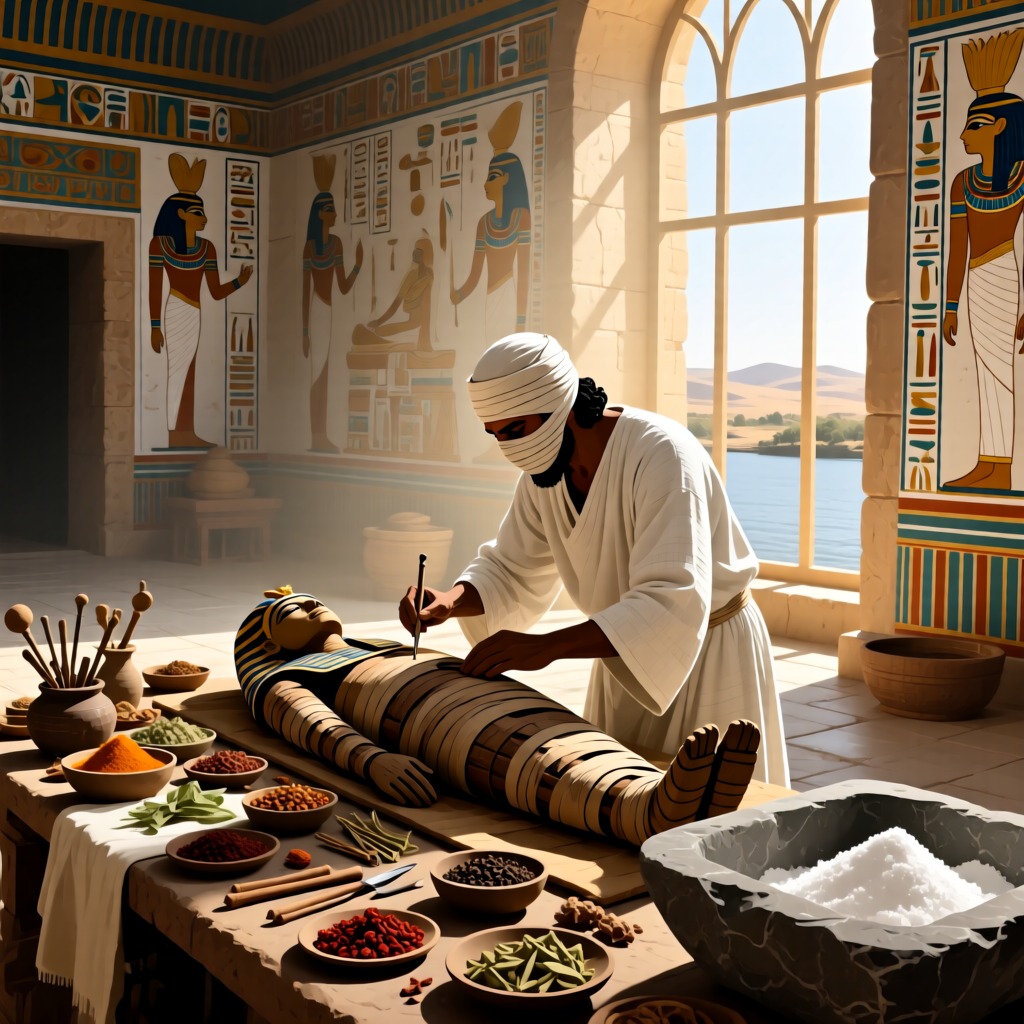

In this ancient land, mummies symbolize not only death but also the continuation of life. From natural occurrences to meticulous human craftsmanship, the ancient Egyptians explored and mastered preservation techniques, paving the way for the deceased to reach the afterlife. The earliest mummies formed naturally under the protection of the desert, while later mummies underwent complex and refined processing. Preservers combined science and art, using their wisdom and skills to preserve bodies for thousands of years, showcasing the brilliance of ancient Egyptian civilization.
As time passed, the development of preservation techniques reflected the changes in ancient Egyptian society. From the initial simple methods to the later intricate operations, the process of mummification was shrouded in mystery. Those preservers were both artists and scientists, creating astonishing miracles of life with their hands.
By the third millennium BCE, ancient Egyptian preservation techniques reached their peak. The embalming craftsmanship during the Pharaohs' reign was exquisite; mummies not only appeared intact but also had their internal organs carefully treated, ensuring the integrity and preservation of the body.
However, as time went on, this noble craft gradually lost its luster. In later periods, embalmers focused more on the appearance of mummies, neglecting the internal preservation effects. This bears a striking resemblance to modern funeral practices, where, despite changes in technology and materials, the core principle remains the same—out of respect for the deceased.
The creation of mummies was not merely a technical challenge; it was a grand feast of culture and belief. The ancient Egyptians expressed their profound understanding of life and death through this practice, along with their beautiful aspirations for the afterlife.
