
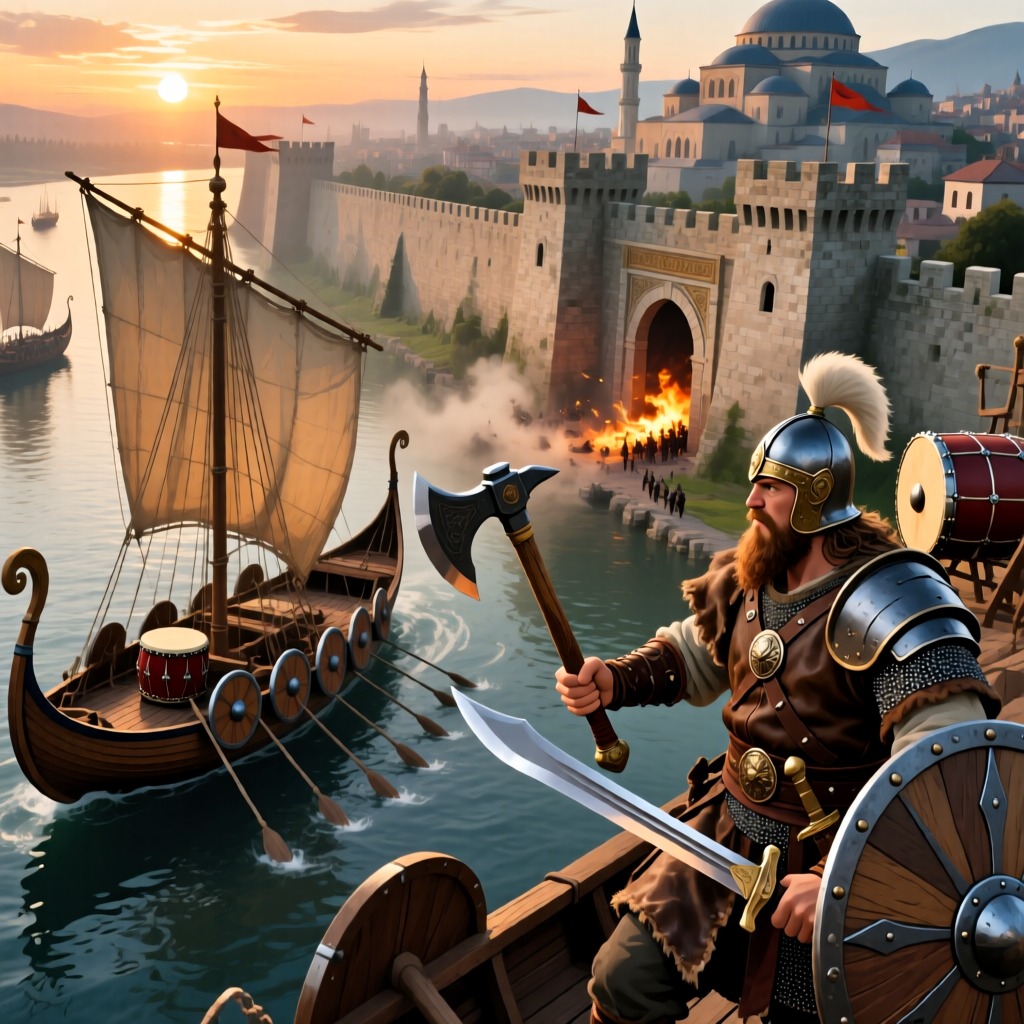

Starting from the 8th century, the Nordic pirates known as the Vikings leveraged their exceptional seafaring skills to establish a trade network that spanned across the European continent, amassing significant wealth. They engaged not only in raiding but also in colonization, leaving their mark in far-off places like Iceland and Greenland. The lifestyle and customs of the Vikings were steeped in mystery, and their trade activities connected various civilizations from East to West.
Viking life was simple and rugged, yet it was accompanied by unique rituals and ceremonies. For instance, they conducted cremation ceremonies for chieftains, presided over by an elderly woman, with female slaves volunteering to be buried alongside them. Despite their reputation for ferocity, the Vikings also displayed a civilized side; for example, the Normans, who were originally Vikings, eventually integrated into local societies and became a significant power in Europe.
The adventurous spirit of the Vikings is truly remarkable. They sailed their longships into the unknown depths of the ocean, opening up new colonies. In the Byzantine Empire, Viking fleets once captured this seemingly impregnable city, showcasing their intelligence and bravery. Over time, the blending of Vikings with Slavs ultimately led to the formation of the first true Russian state in history.