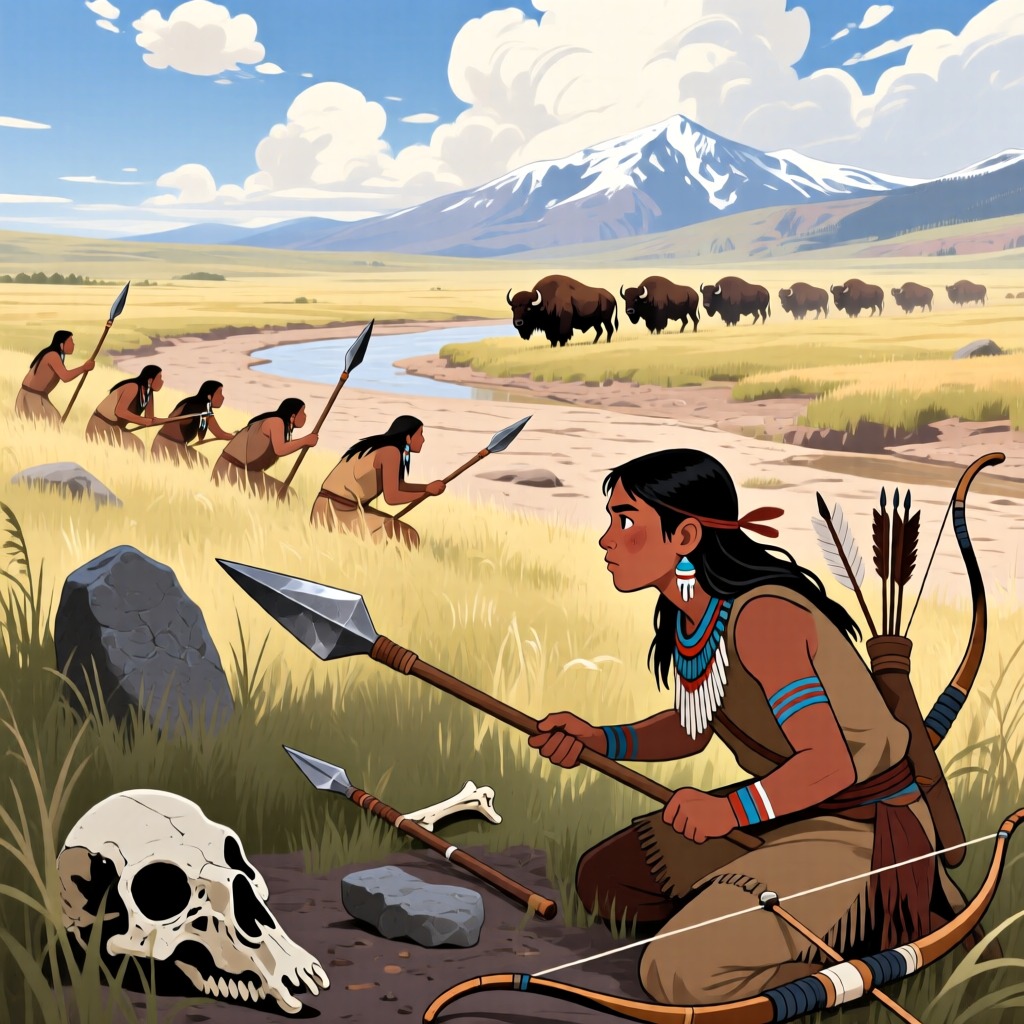
In the spring of 1925, a discovery near Folsom, New Mexico, by archaeologist McJunkin led to the unearthing of bones that appeared to be from cattle, which were later identified as the remains of a long-extinct bison species. This find caught the attention of Fegins, the curator of the New Mexico Museum, who theorized that the flint points found alongside the bones might have been used by prehistoric Americans as projectile points. This theory challenged the prevailing understanding of North America's prehistoric history. Years later, in 1967, archaeologists confirmed Fegins' hypothesis when they uncovered more evidence at the Folsom site, proving that ancient tribes skilled in bison hunting existed during prehistoric times. These hunters employed sophisticated tactics, successfully hunting large herds of bison, and could even kill hundreds of bison in a single hunt, demonstrating remarkable hunting skills and organizational capabilities.
Secrets Revealed by the Folsom Site: The Mystery of Prehistoric Hunting in North America