
The mystery of the labyrinth on Crete: is it a palace or a tomb?
In ancient Chinese wisdom, the body is often compared to a "reverse journey," symbolizing the fleeting and illusory nature of life. Similarly, the Minoans on the island of Crete created a mysterious civilization over 4,000 years ago, yet their stories have gradually faded with the passage of time.
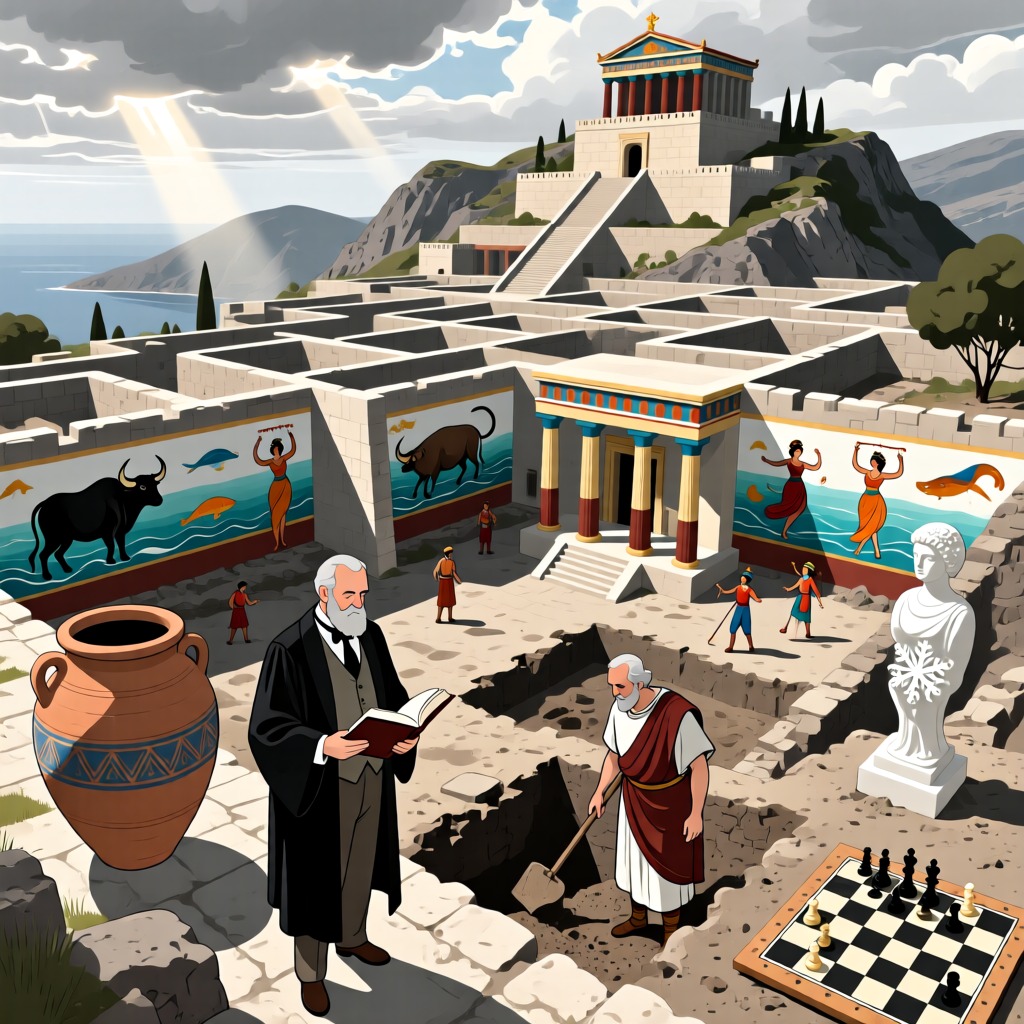
The Minoans primarily engaged in maritime trade, establishing a material civilization older than that of Greece and becoming a brilliant cultural center in the Mediterranean region. However, little is known about their specific deeds aside from a widely circulated myth: King Minos of Crete possessed a half-man, half-bull monster known as the Minotaur, which hid within a dark underground labyrinth. It wasn't until the early 20th century that British archaeologist Sir Arthur Evans discovered the ruins of the Minoan capital, Knossos, revealing a breathtaking palace. This palace is not only complex in structure but also houses a wealth of artworks, including frescoes depicting marine life, bulls, dancing women, and acrobats.
But is this palace truly a palace, or could it be a tomb? German scholar Wolfgang Wörthlich has proposed a different perspective. He argues that this grand structure was not meant for the king to reside in during his lifetime, but rather served as a tomb or burial site for the nobility. Wörthlich points out that the building's location is overly exposed, lacking defensive fortifications and a water source, which does not meet the standards of a palace. Additionally, he questions why such an important building would lack essential living facilities like stables and kitchens. These doubts have sparked a deeper discussion about the true purpose of this remarkable structure.