
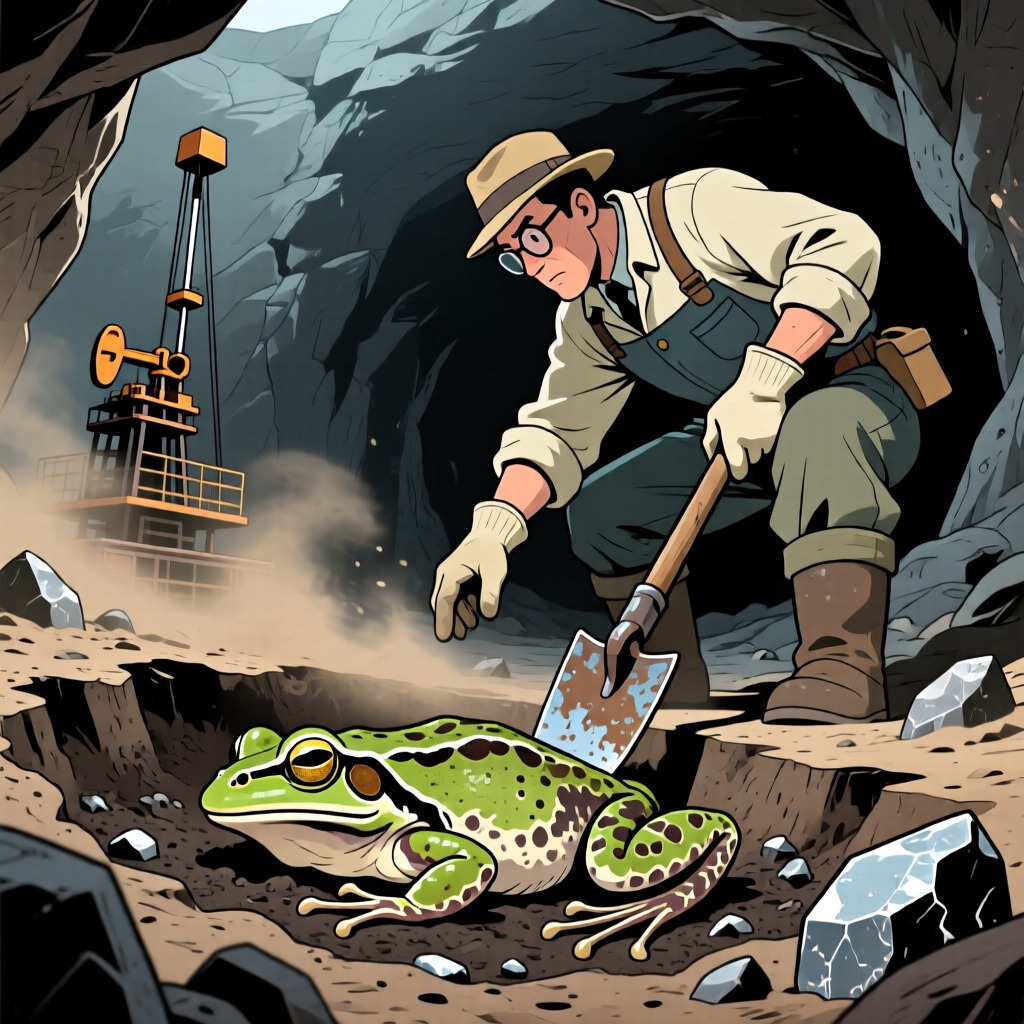

In July 1946, a petroleum geologist in Mexico discovered a frog that had been buried for 2 million years. When excavated, the frog's skin remained soft and shiny, but it died two days later. Geologists determined that the mineral bed formed over 2 million years ago, suggesting that this frog had been hibernating for an incredibly long time. A similar miracle occurred in 1782 in the suburbs of Paris, where a stone worker found four living toads buried 45 meters underground in limestone. These toads had been hibernating for over a million years. Why were they able to survive for such an extended period without dying? This has sparked widespread interest and research among scientists.
Many biologists believe that the stable temperature within the rocks is a key factor that allows these amphibians to hibernate for long periods. The metabolism of frogs and toads significantly decreases with temperature changes, and in the stable temperature of the rocks, they hardly metabolize at all, consuming almost no energy, which enables them to survive for long durations without food. Dr. Su Mi from the University of Minnesota discovered through experiments that frogs contain glycerol, which may be one reason they can survive under extreme conditions.
However, many mysteries remain regarding how these amphibians can survive for millions of years within the rocks. Many scientists believe that understanding this issue is crucial for studying biological adaptability and human longevity.
