
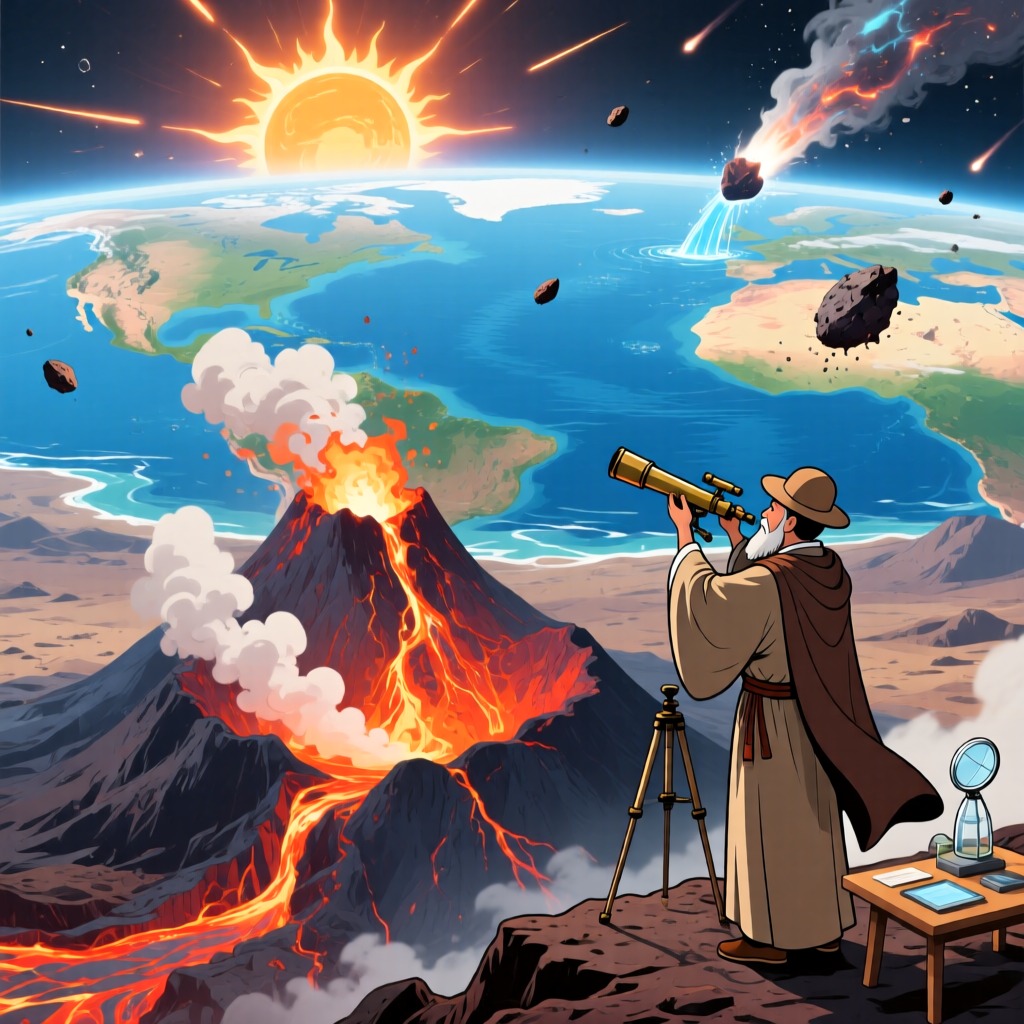

From space, Earth appears as a blue jewel. However, the scientific community has differing opinions on the true origin of water on Earth. One perspective suggests that water falls from the sky in the form of rain and snow, while another asserts that it returns to the atmosphere after evaporating from the surface. In recent years, some scientists have proposed new theories to unravel this mystery.
Tovili has suggested that solar wind may be one of the primary sources of Earth's water. He calculated that the amount of hydrogen absorbed from solar wind is sufficient to form a significant amount of water. Although this idea is quite creative, it has not gained widespread acceptance.
Another theory posits that Earth's water originates from within the planet. Scientists indicate that the water on Earth's surface did not exist from the beginning but was continuously released through volcanic activity. When volcanoes erupt, a large amount of water vapor is released, and water is also found in the magma and igneous rocks deep underground.
However, as research has progressed, this viewpoint has also been partially overturned. Scientists have analyzed the tritium content in volcanic hot springs and discovered that this hot water is actually formed from the decomposition of underground water, rather than originating from deep within the Earth.
The latest theory suggests that comets are a significant source of Earth's water. Scientists have found that small comets frequently enter Earth's atmosphere, melting into water vapor and replenishing Earth's water supply. This process has been ongoing for billions of years, providing a substantial amount of water resources to the planet.
Despite the various theories proposed by scientists, the true source of Earth's water remains a mystery, with many unanswered questions awaiting further exploration.