

The Strange Deaths Surrounding the Pharaoh's Tomb
On April 15, 1912, the Titanic embarked on its maiden voyage to America, tragically sinking and becoming one of the deadliest maritime disasters in history. At the same time, a stone sarcophagus unearthed from an ancient Egyptian tomb was said to carry a curse, warning that anyone who touched it would face misfortune. This sarcophagus was purchased by an American businessman, who commissioned the captain of the Titanic to transport it to the United States. Although scientists initially dismissed the existence of the curse, a series of bizarre events forced them to reconsider the legend.
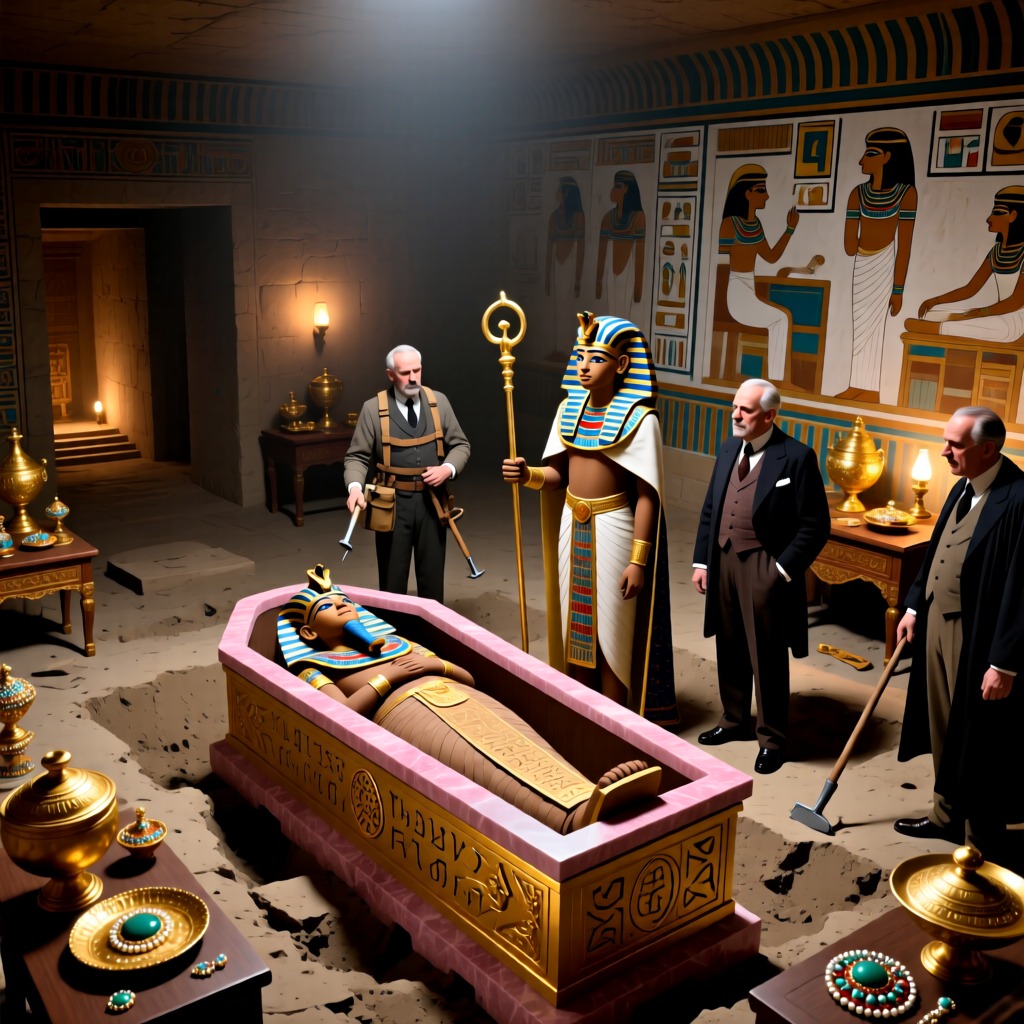
In 1922, British archaeologist Lord Carnarvon and his assistant Howard Carter discovered the tomb of Pharaoh Tutankhamun in the Valley of the Kings in Egypt. The tomb was lavishly adorned and contained thousands of precious artifacts. However, as the excavation progressed, a series of eerie incidents began to unfold. Shortly after visiting the tomb, Lord Carnarvon fell ill and died, followed by the deaths of his family members, assistants, and others involved in the excavation, sending chills down spines. Whether these deaths were connected to the curse inscribed within the tomb remains an unsolved mystery.
The tomb of Pharaoh Tutankhamun bears a mysterious inscription: "Who disturbs the peace of this Pharaoh, the winged death shall come upon his head." Despite this, some scholars remained determined to unveil the truth. In 1923, Professor Arthur Mace and Dr. E. A. W. M. Hawass joined the excavation efforts but also met with misfortune, both passing away in succession. The only survivor was Dr. Carter, but his daughter, Evelyn White, tragically took her own life, unable to bear the weight of the curse's influence. This rollercoaster of events has left people deeply skeptical about the curse of Tutankhamun's tomb.
