
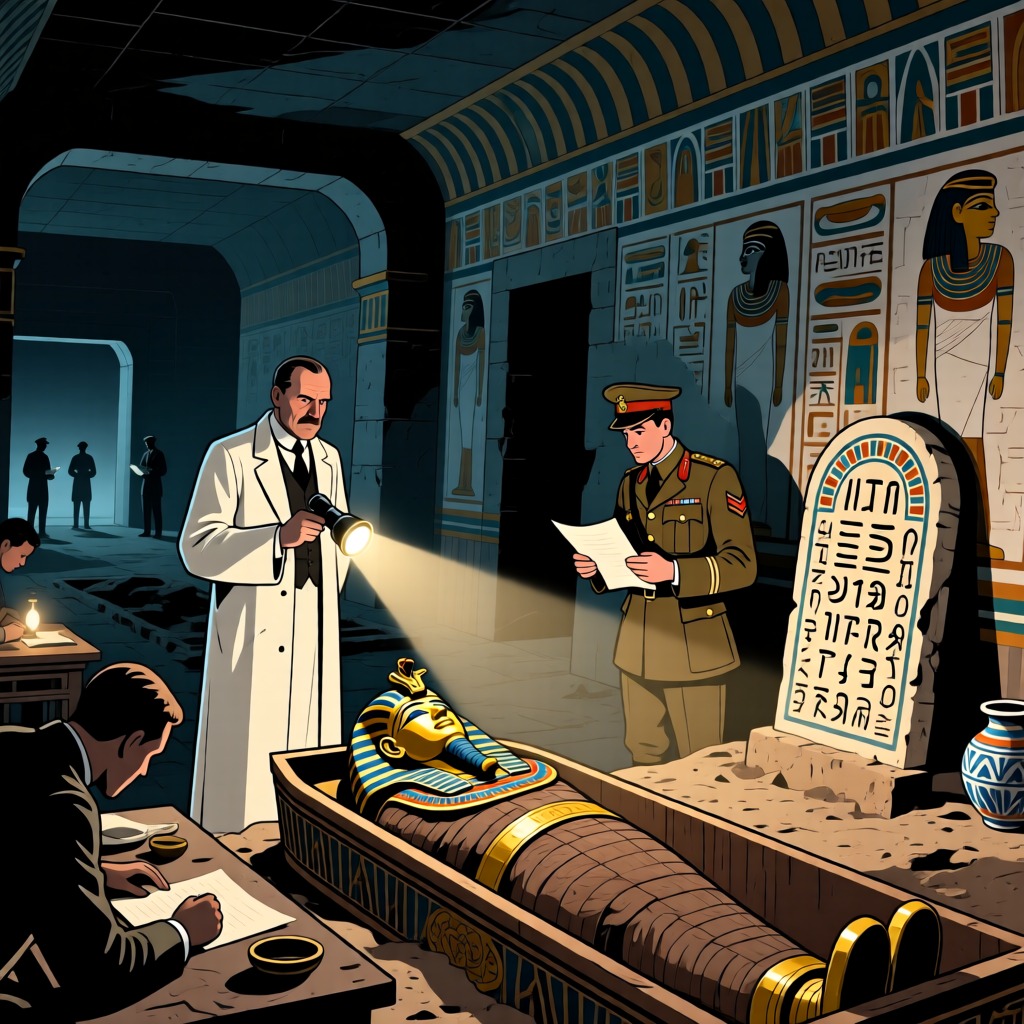

In ancient Egypt, the pharaoh's curses were regarded as sacred and inviolable. Tutankhamun's curse, inscribed on a ceramic tablet outside the pharaoh's tomb, claims, "Whoever disturbs the peace of this pharaoh, death will spread its wings over him." However, this seemingly simple curse has sparked countless mysteries surrounding death.
In 1923, shortly after British archaeologist Lord Carnarvon entered Tutankhamun's tomb, he died, becoming the first victim of the curse. Following this, a series of mysterious deaths occurred, including those of Carnarvon's brother, a nurse, American archaeologist George Edward Stanhope Molyneux Herbert, and several experts involved in the excavation. These deaths not only puzzled many but also ignited discussions about the existence of the curse.
As the years passed, more legends about Tutankhamun's curse emerged. In 1972, Dr. Mazefy, the director of the Egyptian Museum, also died under mysterious circumstances, reigniting public interest in the curse. Although the scientific community has proposed various theories, such as bacterial infections, fungal toxins, protective poisons, and radioactive substances, the truth remains elusive.
Tutankhamun's curse is not just a tale of death; it is a narrative woven with fear and superstition throughout history.