
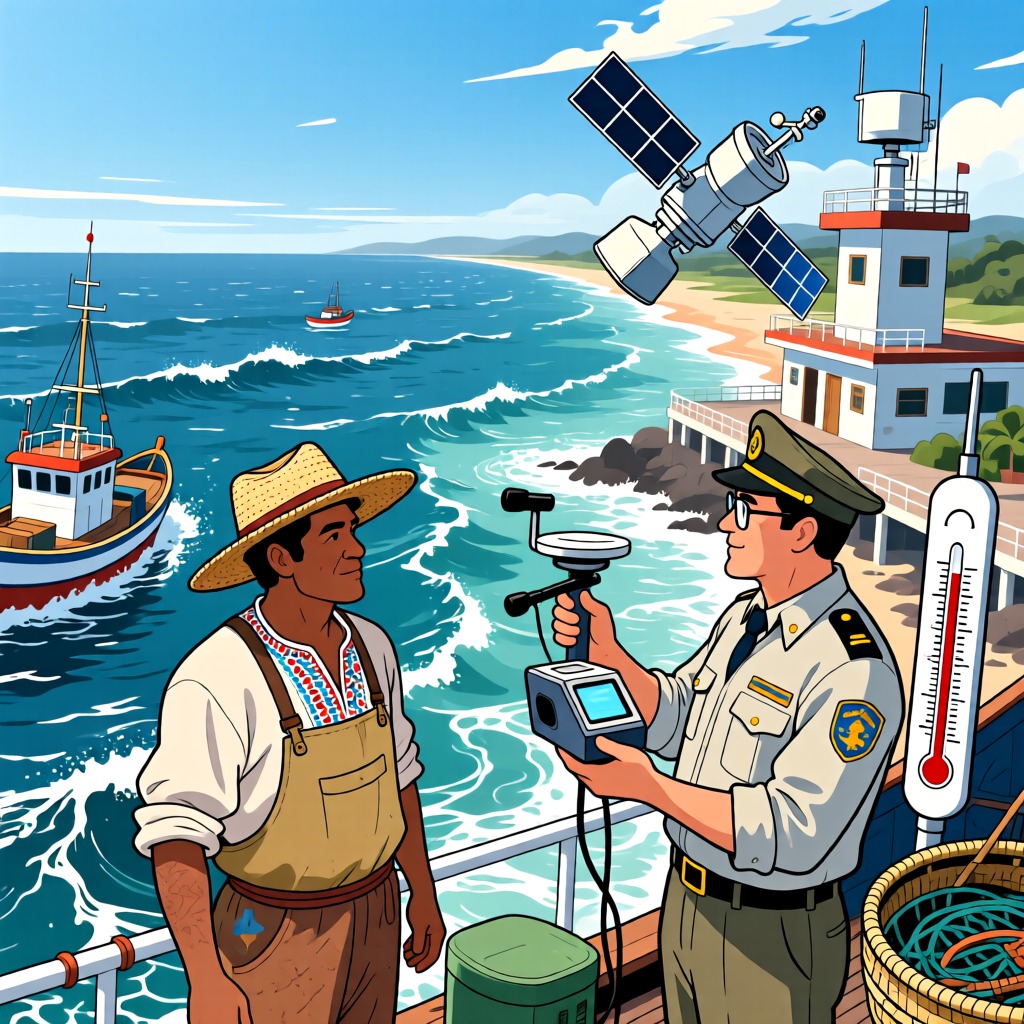

In recent years, the El Niño phenomenon has frequently captured public attention, becoming a significant factor in climate anomalies and natural disasters. The term originates from Peruvian fishermen in South America, who referred to the warm ocean currents affecting local fish populations. It describes a widespread and sustained abnormal warming of sea surface temperatures in the eastern and central Pacific Ocean, which has profound impacts on global climate. El Niño not only disrupts local fisheries but also leads to unpredictable climate changes worldwide, affecting regions from Africa to Latin America and from cold areas to hot ones. Since 1950, the world has experienced 13 El Niño events, with the one in 1997 being particularly severe.
Although scientists have established a basic definition of El Niño and recognize it as a result of interactions between the tropical atmosphere and ocean, the specific causes remain a mystery. Currently, the atmospheric factor theory is considered a popular explanation. This perspective suggests that the trade winds influence the equatorial Pacific, creating a situation where sea temperatures and water levels are higher in the west and lower in the east. When the trade winds weaken, seawater from the western Pacific flows back to the east, leading to an abnormal rise in sea temperatures in the eastern and central Pacific, thus triggering the El Niño phenomenon. However, the exact triggering mechanisms of El Niño remain unclear, and scientists are working diligently to uncover the secrets behind this natural wonder.