
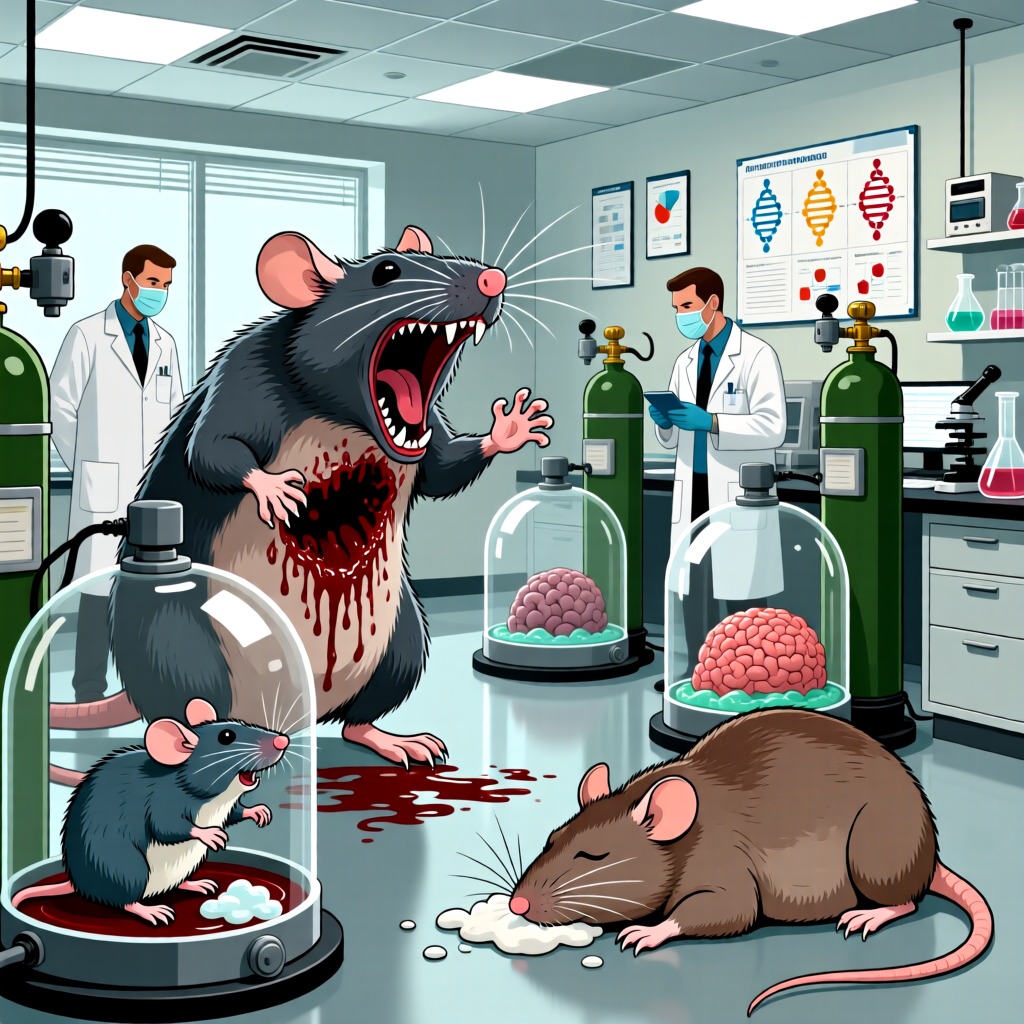

Have you ever seen a "naked" mouse? This type of mouse can grow to an astonishing size, and if its teeth are not removed to make it a more docile creature, it can be incredibly aggressive. These unusual mice have been bred in a genetic laboratory in the United States, with around 2,000 of them currently in existence.
Scientists are conducting numerous rearrangement experiments to breed several unique mutant mouse strains to help humanity conquer many stubborn diseases. The Jackson Laboratory, located near Bar Harbor, Maine, has been conducting experimental research for many years based on orders from the National Institutes of Health, achieving what can be described as a "scientific revolution."
Researchers have meticulously studied each mouse, screening about one million mice from 35 countries worldwide. They discovered that mice share 85% of their genes with humans, and when the remaining 15% of human genes are introduced into the mice, their physiology and genetics become more similar to humans. This means that various diseases can be tested on mice to find effective treatments.
This biomedical research on genetically modified mice is crucial for humanity's ability to ultimately overcome stubborn diseases such as AIDS, diabetes, epilepsy, neurodegenerative disorders, rabies, and bacterial infections. Mice that receive human genes become particularly sensitive to these diseases, quickly displaying symptoms of illness.
Researchers showcased several specially modified mice afflicted with different diseases: a completely hairless giant mouse with an ugly gaping mouth, a mouse with epilepsy that convulses and has bloody foam at its mouth, and an obese, lethargic mouse with a vacant stare suffering from diabetes. These mice quickly developed various diseases and deteriorated rapidly.
By using simple methods to induce diseases in mice, researchers have been able to extract medications that can treat corresponding ailments. Currently, the Jackson Laboratory has developed vaccines that can completely cure stubborn conditions like diabetes and epilepsy, and they have successfully conducted early diagnostic trials for malignant diseases. This marks a growing hope for humanity in conquering a range of stubborn ailments.
