
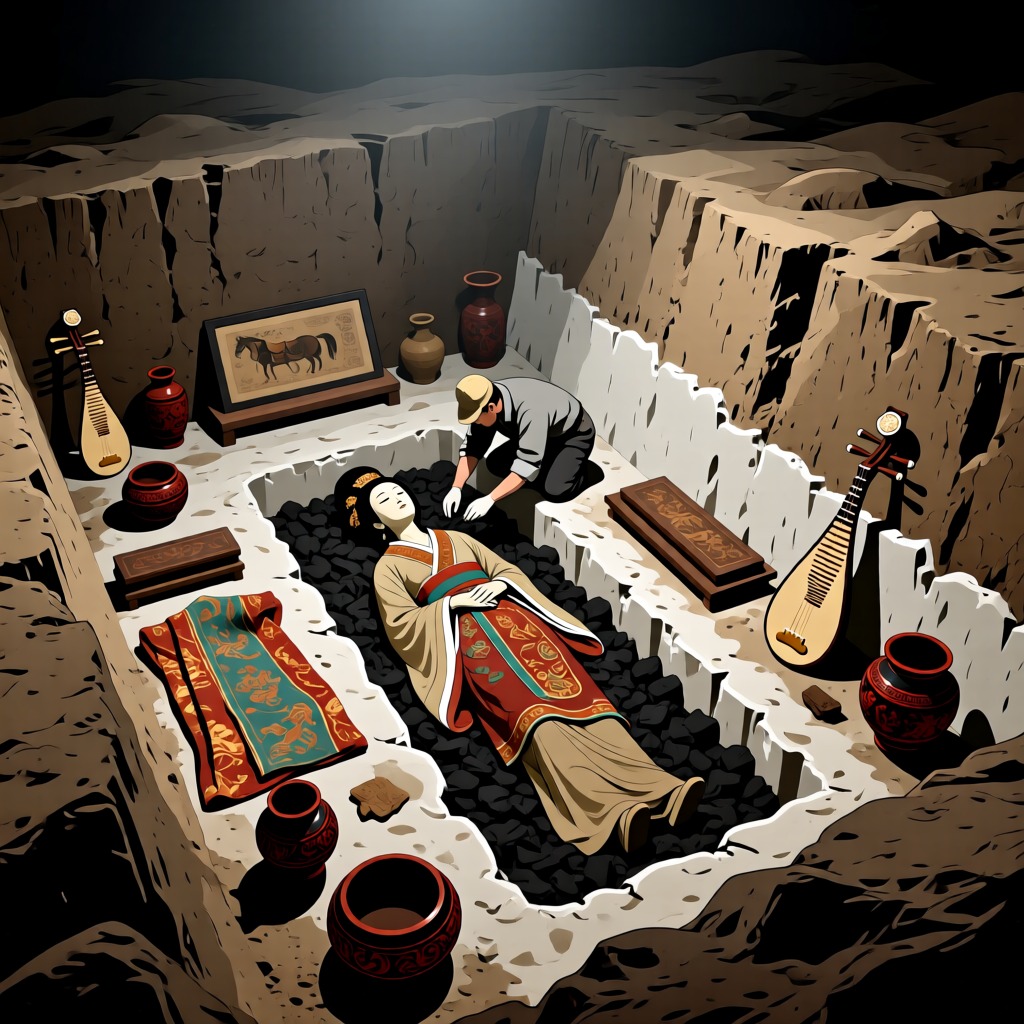

In 1972, an astonishing discovery was made in the ancient tomb of Mawangdui in Hunan, China: a female corpse that has remarkably remained intact for over a thousand years. This ancient body, preserved in a lifelike state, raises the question: how could it remain uncorrupted for so long?
Typically, bodies found in ancient tombs either decay completely or turn into mummies. However, the Mawangdui female corpse has miraculously retained its moist condition without any damage. What secrets lie behind this extraordinary preservation?
Firstly, the corpse underwent meticulous embalming. Studies indicate that the liquid in her coffin contained ethanol, mercuric sulfide, and acetic acid, which provided excellent preservation effects. Secondly, the tomb was constructed 16 meters underground, topped with a large earthen mound, creating a space that is almost completely isolated from external influences. Additionally, the walls of the tomb were sealed with white clay and lined with charcoal, further enhancing its airtightness. These measures collectively ensured a stable temperature and restricted oxygen levels, creating an anaerobic environment. Furthermore, the organic materials and burial items in the tomb produced methane gas, which improved the preservation effects.
In conclusion, the preservation of the Mawangdui female corpse for a millennium is the result of multiple contributing factors. This discovery not only reveals the wisdom of ancient ancestors but also provides valuable insights for the study of ancient medicine and embalming techniques.
