
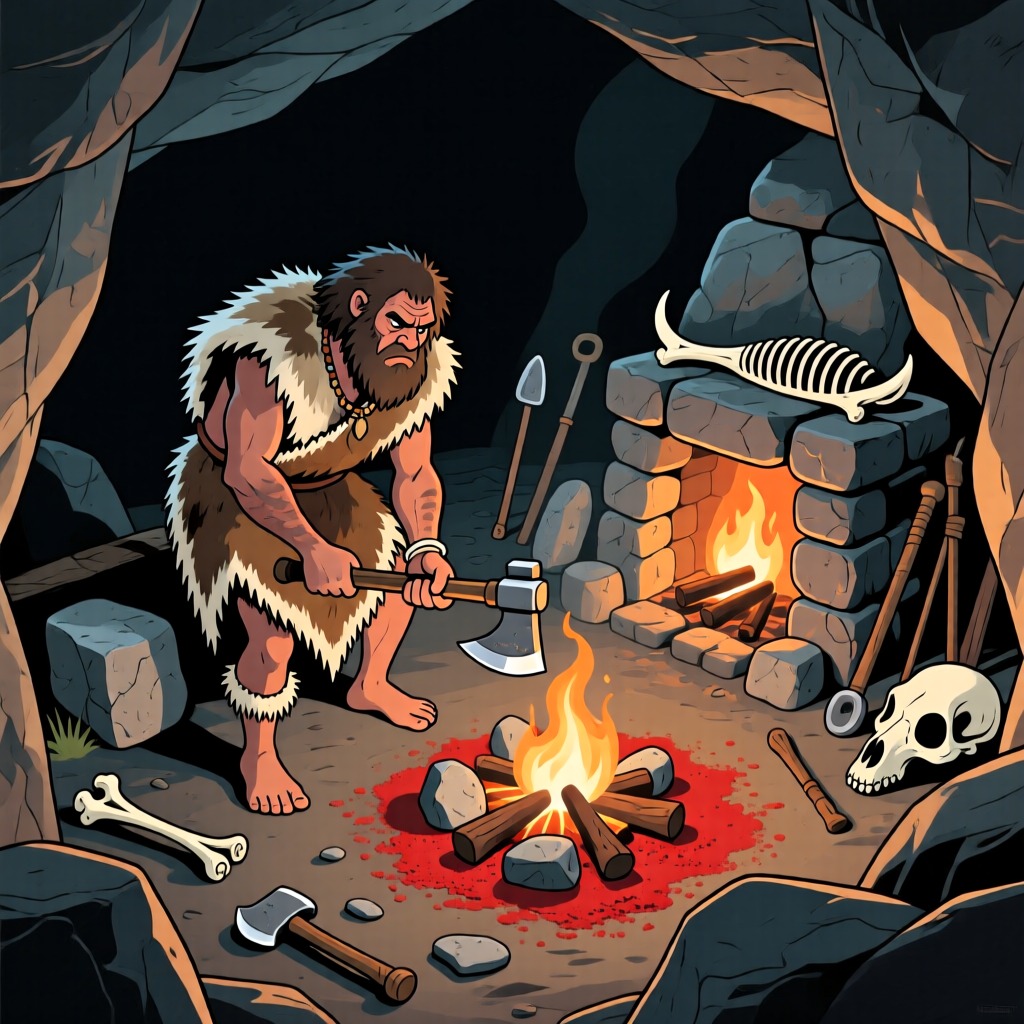

Neanderthals were ancient humans who lived in Europe, the Near East, and Central Asia approximately 200,000 to 30,000 years ago. They resided in caves or camps, were skilled hunters and fishers, and had brain sizes comparable to, or even larger than, modern humans. Neanderthals were capable of creating refined stone tools, mastering the technique of fire-making, and burying their dead while caring for the injured, indicating a high level of intelligence and social organization. However, around 70,000 years ago, Neanderthals suddenly vanished, and the reasons for their disappearance remain a mystery to this day.
There are various hypotheses in the scientific community regarding the disappearance of Neanderthals. One theory suggests that they went extinct due to reproductive difficulties; another posits that modern humans outcompeted Neanderthals for survival; and some propose that Neanderthals may have interbred with early modern humans, with their genes becoming part of the modern human gene pool. Despite these theories, the mystery of what happened to the Neanderthals continues to puzzle anthropologists, awaiting more evidence to uncover the truth.