
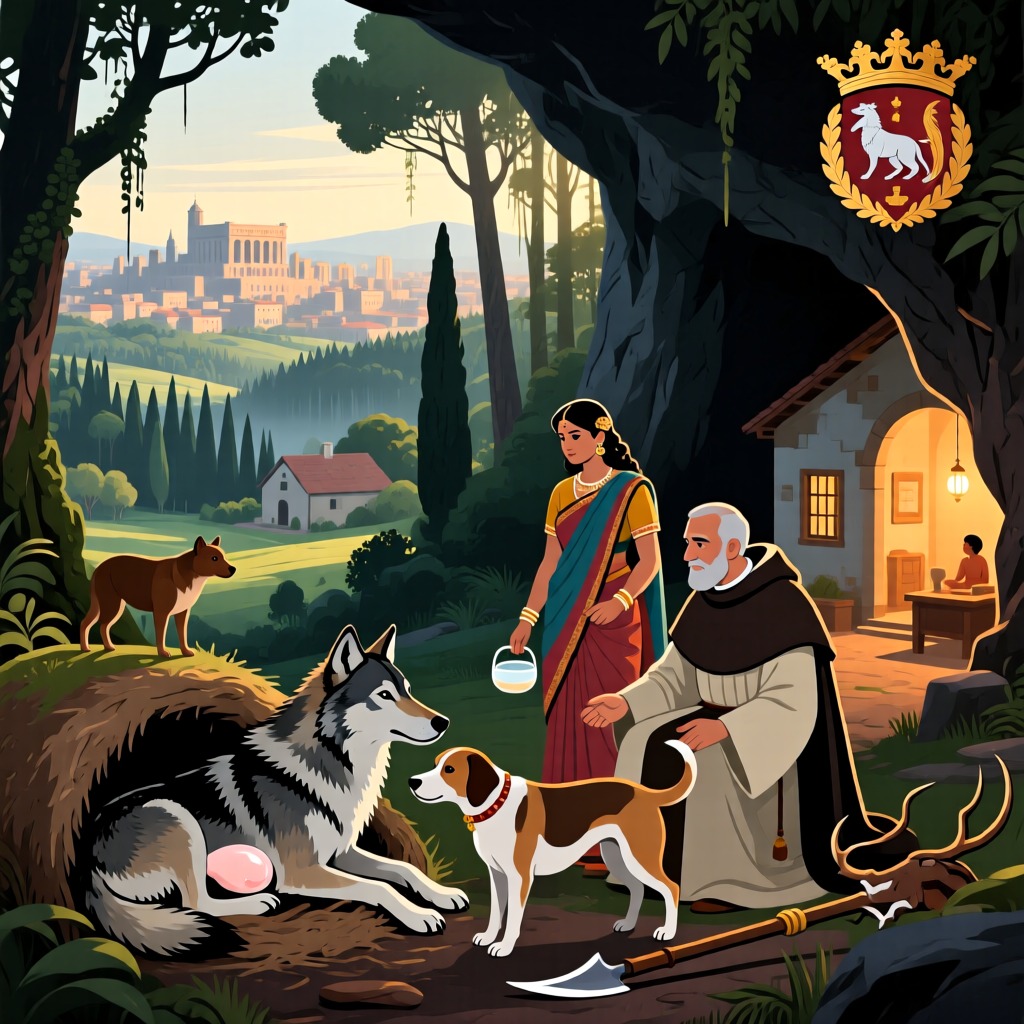

"Giving birth and raising children" is a universal physiological activity among various species in nature aimed at ensuring their reproduction. However, many animals deviate from this norm by nurturing not their own offspring, but those of other species, including humans. Such occurrences have been documented throughout history, from wolf children to leopard children, all of which are truly astonishing.
In the 7th to 8th century BC, the legendary origin of Rome tells the story of Romulus and Remus, who were raised by a she-wolf. This tale is not only legendary but also reveals the greatness of motherhood. In 1920, the wolf girls Kamala and Amala were discovered in India, exhibiting behaviors that were not entirely detached from their wolf origins. These events sparked curiosity and contemplation regarding why animals would care for human offspring.
In 1988, a case in Germany featured a "dog child," where a couple, overwhelmed by work, entrusted the care of their child to their pet dog, which ultimately took on the role of a "parent." These peculiar phenomena compel us to reevaluate the boundaries between the animal kingdom and human society.
These stories not only showcase the wonders of the natural world but also reflect human society's understanding of knowledge and abilities. The cases of wolf children indicate that human knowledge and skills are not innate but acquired through social practice. Individuals who are removed from a human social environment struggle to develop unique habits and intelligence, much like those human children raised by wild animals, who, despite their human lineage, gradually revert to human traits.
Behind these adventures lie unresolved mysteries regarding why animals nurture human offspring, for which there is still no scientific explanation. These stories remind us of the intricate connections between nature and human society, warranting deeper exploration.