

The Trojan War: An Interweaving of Facts and Legends
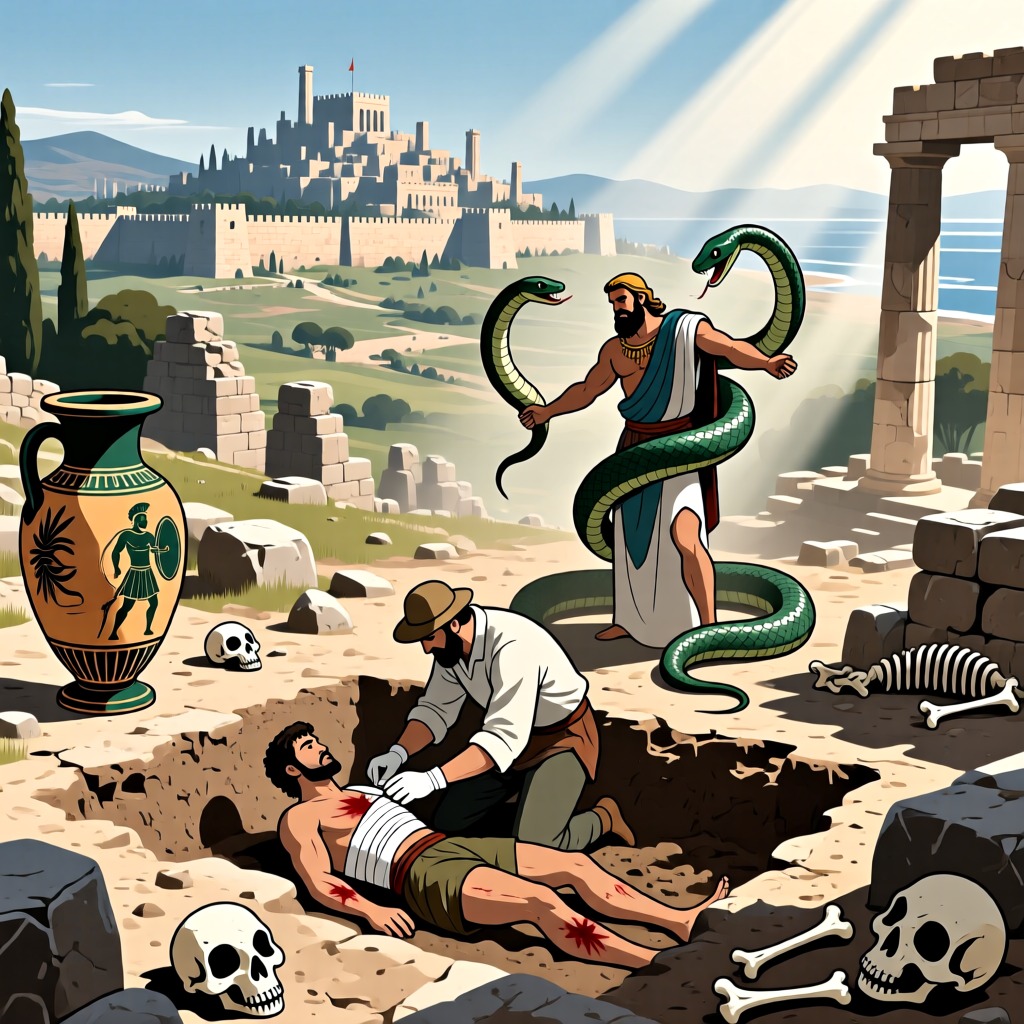
The authenticity of the Trojan War has long been a mystery. Influenced by Homer's epics, the story of the Trojan War is vividly portrayed, yet archaeologists have struggled to find conclusive evidence. Over 350 scientists and technical experts from around the world have spent 16 years uncovering clues at the site of Troy, including remnants of fires, bones, and numerous scattered projectile stones. These discoveries have sparked discussions about whether the Trojan War actually took place.
Kaufman notes that the city of Troy was destroyed around 1180 BC, possibly due to a war. The depiction of Achilles on ancient Greek vases showcases the heroic figures from the Trojan War. However, archaeological evidence does not directly prove the war described in Homer's epics, but rather indicates that the city of Troy was still inhabited afterward.
Kaufman believes that Troy's strategic location made it susceptible to multiple attacks, necessitating ongoing repairs and fortification. Recent archaeological studies suggest that the scale of Troy was much larger than previously estimated, increasing the likelihood of the war's authenticity. Additionally, historical records from the Hittite Empire provide evidence of tensions between Troy and neighboring states, which may align with the narratives found in Homer's works.
The question of whether the Trojan War was real remains a topic of debate in academia. While most scholars agree that conflicts occurred in Troy during the late Bronze Age, whether a large-scale war as described in Homer's epics actually happened is still subject to further exploration.
