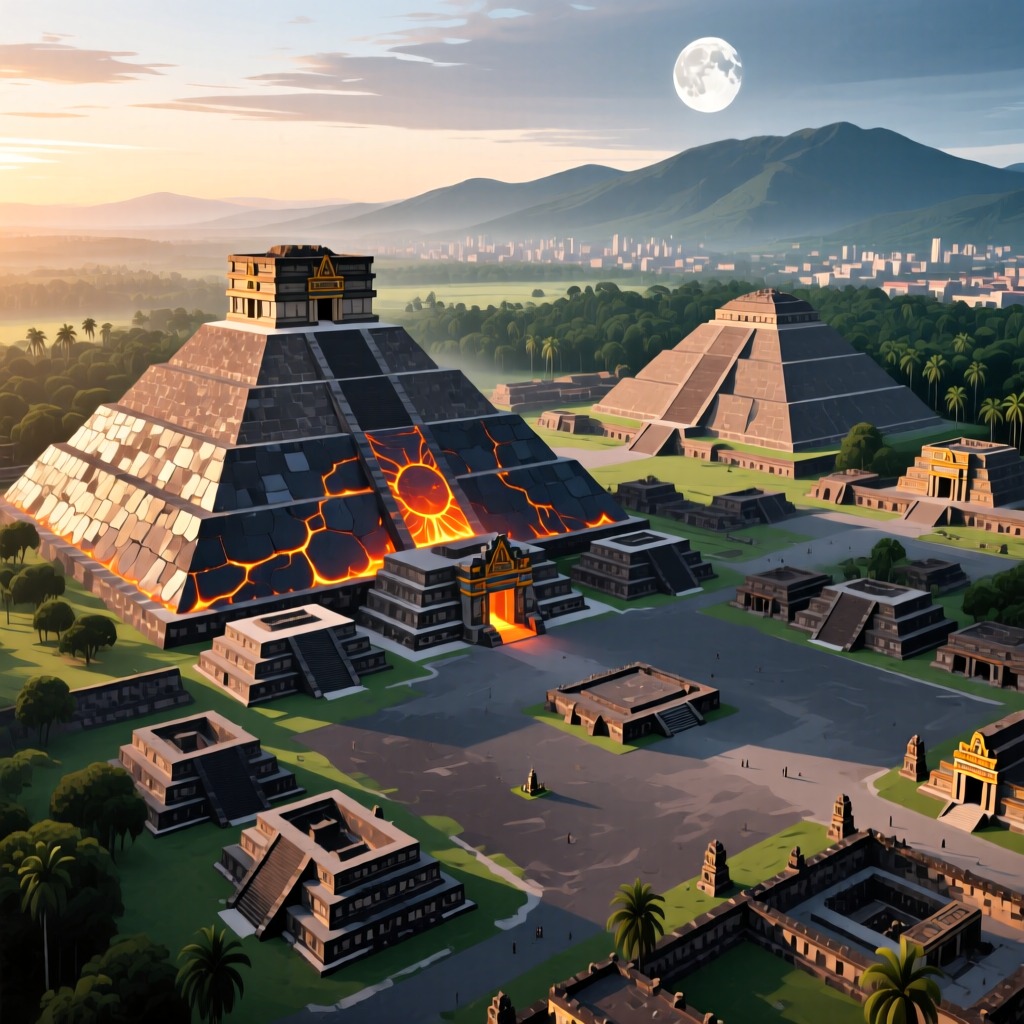
Teotihuacan, an ancient city known in the indigenous language as 'the place where gods are born,' is located in the northeastern suburbs of Mexico City. Once one of the largest cities in the Western Hemisphere, it boasted a population of 200,000, comparable to that of Rome at the time. Today, aside from the restored pyramids and temples, only the outlines of streets and mounds covered in shrubs remain, a stark contrast to its former glory.
The central axis of Teotihuacan is known as the 'Avenue of the Dead,' which is 55 meters wide and 2.5 kilometers long. Along this avenue are many magnificent palaces and temples. The Pyramid of the Sun stands majestically at 64.5 meters tall and covers an area of 50,000 square meters, while the slightly smaller Pyramid of the Moon also has five levels and reaches a height of 43 meters. Between these two pyramids lies a large plaza that could accommodate tens of thousands of people, showcasing the grandeur of ancient rituals.
The front of the Pyramid of the Sun features steps leading to the top, where a resplendent temple once stood. The pyramid is adorned with patterns made from volcanic rock, filled with sand inside, and encased in massive stones. The Pyramid of the Moon is even more intricate, with a base measuring 150 meters long and 120 meters wide, and a height of 43 meters, exhibiting exquisite architectural artistry. The vast ceremonial plaza between the two pyramids highlights the scale of the rituals that took place there.
Teotihuacan began to rise around the 2nd century BC and thrived for approximately 1,000 years before mysteriously disappearing in the 8th century AD. Scholars have proposed various theories regarding its disappearance, including natural disasters, famine, plague, and invasions by northern tribes. The mystery of this city's vanishing remains unsolved to this day.