
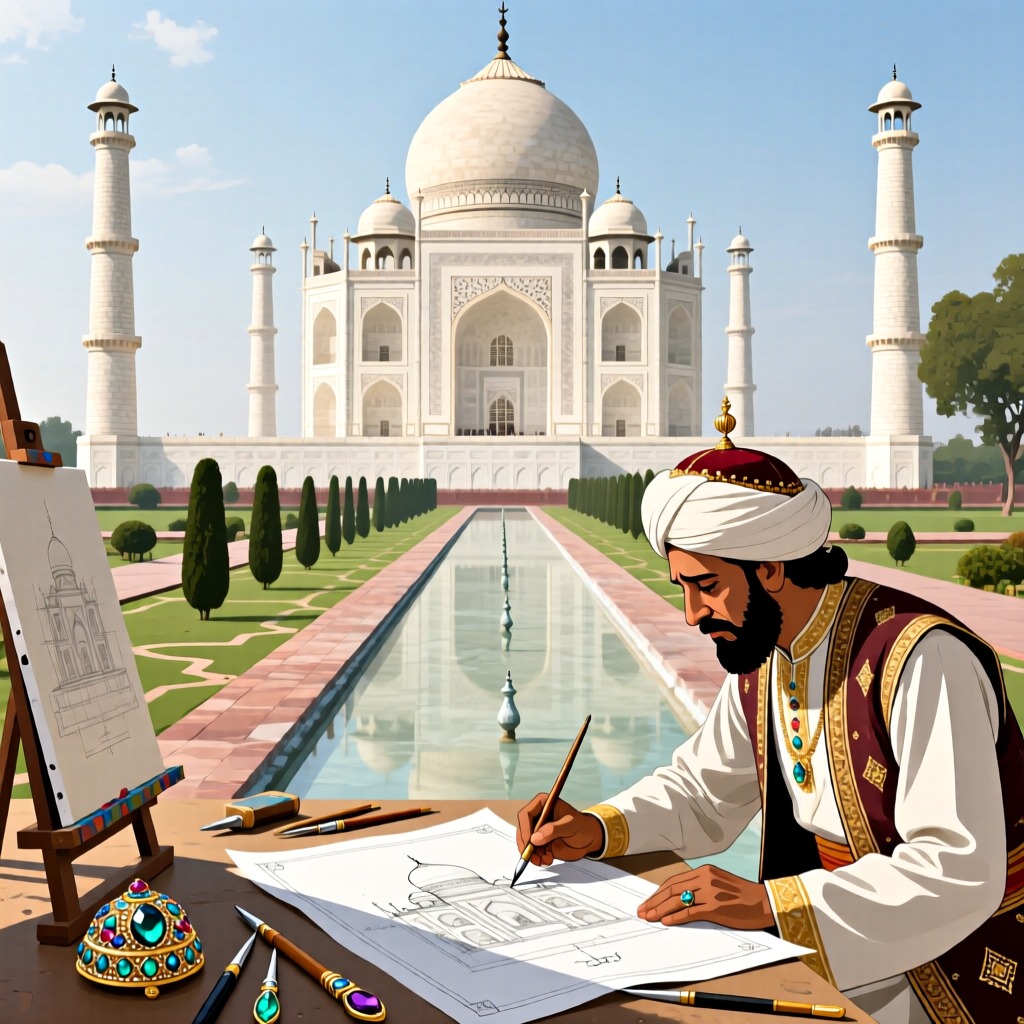

The Taj Mahal is a source of pride for the people of India, located in Agra in the northern part of the country. Construction began in 1631, commissioned by Mughal Emperor Shah Jahan in memory of his late wife. There remains much debate regarding the design and construction of the Taj Mahal. Some believe the primary designer was the Persian Ustad Isa, while many others argue it is a product of the fusion of Eastern and Western cultures. Additionally, some scholars propose the 'Indigenous Art India Theory,' suggesting that Indian factors significantly influenced the design of the Taj Mahal.
The construction of the Taj Mahal brought together architects and craftsmen from Central Asia, Persia, Turkey, India, and Europe. This nearly entirely white marble structure is renowned for its symmetrical layout and solemn appearance. Despite the varied opinions on the identity and background of its builders, the Taj Mahal's status in the hearts of the Indian people remains unchanged.