
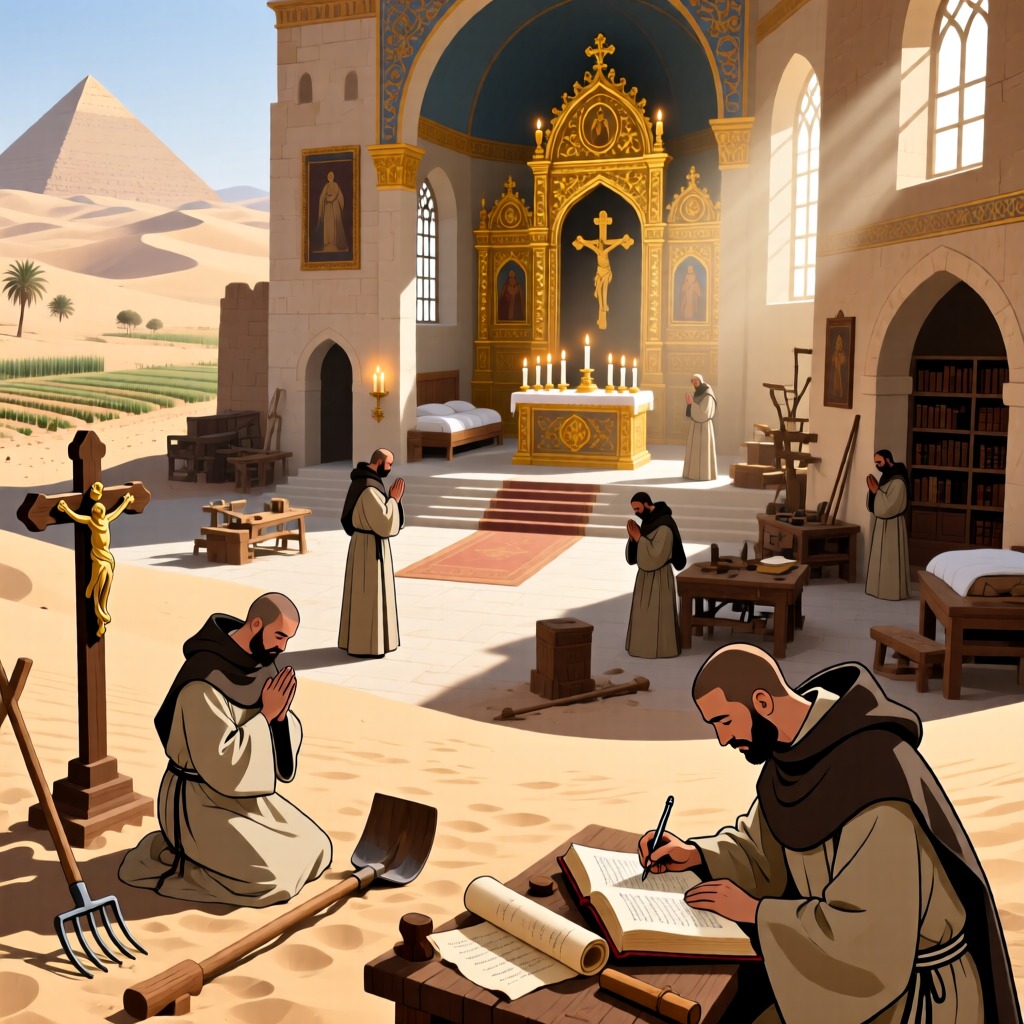

In ancient times, monks sought to escape the hustle and bustle of the world, pursuing spiritual purity and freedom. Saint Anthony of Egypt pioneered the desert monastic movement by renouncing worldly pleasures and establishing a monastery by the Red Sea. Following this, the Tabennisi Monastery emerged inland in Egypt, becoming a model for monastic communities in the Middle East. The monks lived extremely simply, sharing a room among three, engaging in daily prayer and labor, without reclining, and adhering to a very frugal diet. Their lives followed the 'Rule of Saint Benedict,' emphasizing poverty, chastity, and obedience. Monks worked the fields, copied scriptures, and even wrote religious papers, making significant contributions to the development of early Christianity.
As time passed, the Benedictine order spread throughout Europe. The great Benedictine monasteries of the Carolingian Empire have since vanished, but the Abbey of Saint Gallen near Lake Constance in Switzerland still preserves a design plan that showcases the layout of the monastery and the lifestyle of the monks. Monks were required to spend four hours in religious worship, four hours in meditation, and six hours in labor each day. Though their lives were arduous, they were filled with meaning.
For centuries, the monks' way of life remained unchanged, adhering to strict daily routines and living communally. The monastery not only met their material needs but also enriched their spirits through labor. Benedictine monks later became known for their vast knowledge, with many becoming learned scholars. They cultivated medicinal herbs and invented Benedictine wine, enjoying a modest luxury despite their simple lives. The monastery served not only as a refuge for the monks but also as a guardian of cultural heritage, preserving many aspects of ancient societies.