
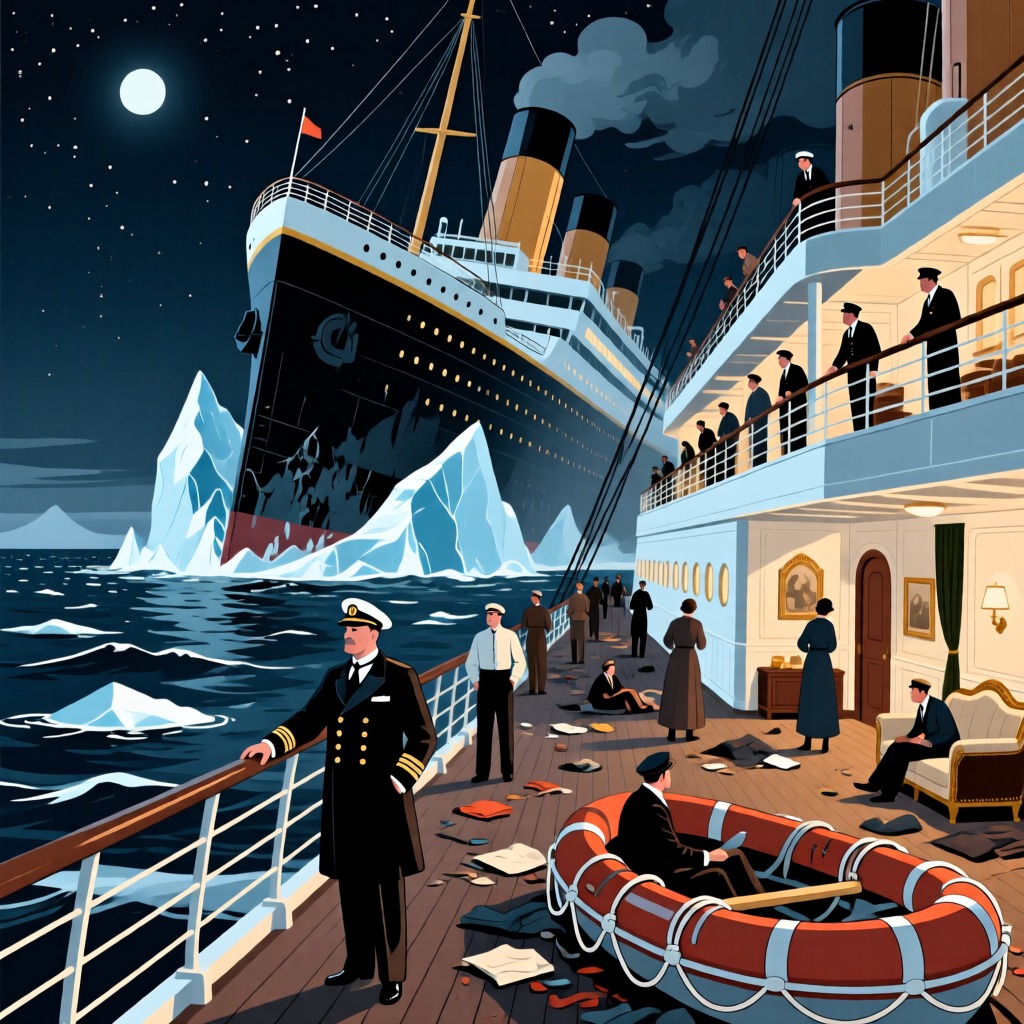

In the spring of 1912, the Titanic set sail, hailed as the 'Palace of the Sea.' However, that night, a tragedy unfolded quietly. The ship struck an iceberg, water flooded the compartments, and passengers panicked as lifeboats were in short supply. Despite the designer's claims that the ship was unsinkable, scientific evidence points to a more complex truth.
Thomas Andrews, the Titanic's designer, stood on the deck witnessing the disaster unfold. Inside the luxurious cabins, carpets, lighting, and paintings bore witness to its splendor. Yet, as the iceberg approached, all beauty shattered in an instant. Passengers struggled amidst the chaos; some jumped into the frigid Atlantic, while others awaited death in despair. Ultimately, the Titanic sank, claiming the lives of over 1,500 people.
As time passed, speculations about the sinking's causes emerged. Some mentioned a mummy's curse, believing that an ancient Egyptian spell led to the disaster. However, scientific analysis revealed that the quality of the ship's materials might have been a primary factor. In 1985, the wreck of the Titanic was discovered, confirming the state of the broken hull. Additionally, the inadequate number of lifeboats was one of the key reasons for the high death toll.
The story of the Titanic remains a tragic ballad in maritime history, reminding us to respect nature and prioritize safety.