
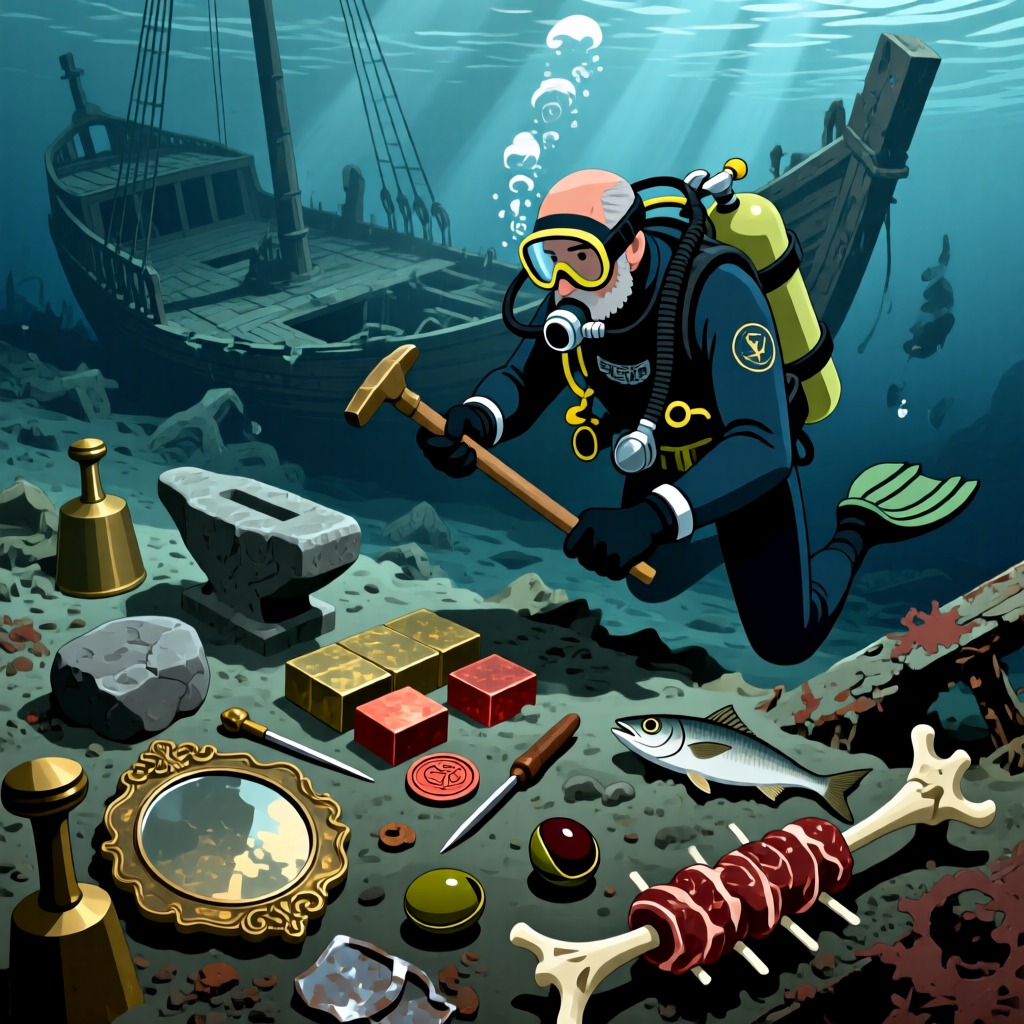

Sunken for 3,000 Years: Secrets of the Ancient Ship
Off the coast of Turkey, an ancient ship that has lain undisturbed for three millennia awaits its discoverer at the bottom of the sea. In 1958, American diver and writer George F. Bass arrived in the village of Bodrum, embarking on an adventure to find ancient shipwrecks. After a series of explorations, he realized that this ship might hold an extraordinary history. In 1960, a team led by American archaeologist Bass employed innovative methods to successfully recover a wealth of precious artifacts, revealing the story behind the ship.
This merchant vessel set sail from Cyprus, laden with bronze and red copper. The cargo weighed about a ton, representing a lucrative trade for merchants of the time. However, a sudden storm drove the ship onto the reefs near Cape Gelidonya, causing its hull to rupture and it sank to the seabed. The shipwreck occurred around 1200 BC, a time when merchants melted scrap to forge new metal products, a practice corroborated by descriptions in Homer's epic, the Odyssey.
Archaeologists meticulously studied these artifacts, comparing styles and dates, ultimately confirming the historical significance of this shipwreck. This research not only unveiled the thriving trade of ancient times but also challenged some traditional views on Homer's epic.