The mystery of Loulan script: decoding the code of ancient civilizations.
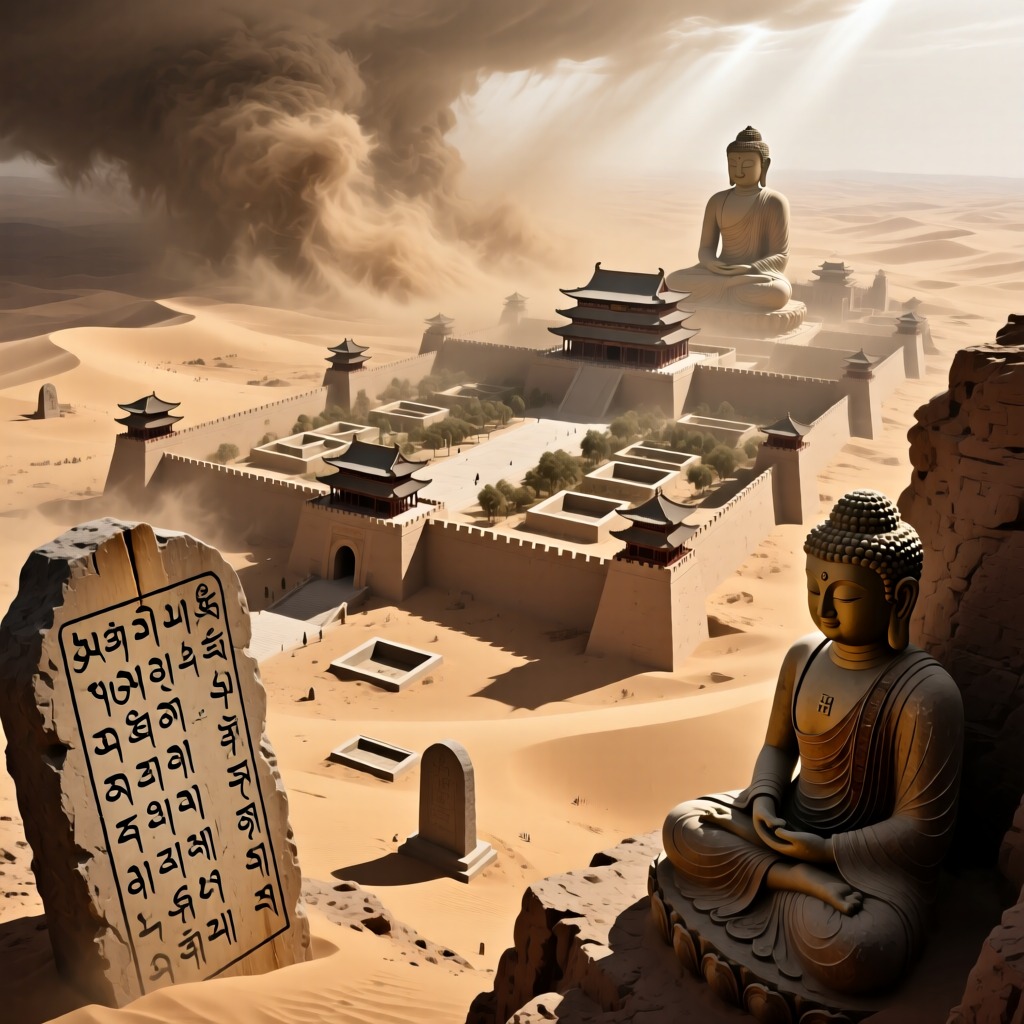
According to archaeological discoveries, the official script used by the Loulan people was the Kharosthi script. This script belongs to the Phoenician alphabet system and originated from Aramaic, coming into use around the 3rd century BCE. Around the 1st century CE, Kharosthi became one of the official scripts of the Kushan Empire in Central Asia, but it was gradually replaced by Brahmi script. In the Xinjiang region of China, however, Kharosthi continued to be used in some kingdoms, particularly in regions like Khotan and Shanshan. The discovery of numerous Kharosthi manuscripts in Xinjiang raises a series of questions: Why did the Loulan people use a script that had already disappeared in Central Asia? Did they migrate from Central Asia? What were their migration routes? Were there indigenous residents before their arrival? These mysteries remain unsolved, as interpreting Kharosthi is challenging, and many documents have yet to be fully deciphered. Nevertheless, the language spoken by the Loulan people was Tocharian, an Indo-European language that has long been considered a 'dead language.' Scholars remain cautious about the possibility of the Loulan people originating from distant Europe.