

The mystery of Tutankhamun: unraveling the truth behind the pharaoh's sudden death.
The tomb of the ancient Egyptian Pharaoh Tutankhamun was discovered in 1922 and is considered one of the best-preserved pharaonic tombs to date. Tutankhamun ascended to the throne at the age of 10 and died at 19. Despite the wealth of precious artifacts unearthed from the tomb, the cause of Tutankhamun's sudden death remains an unsolved mystery.
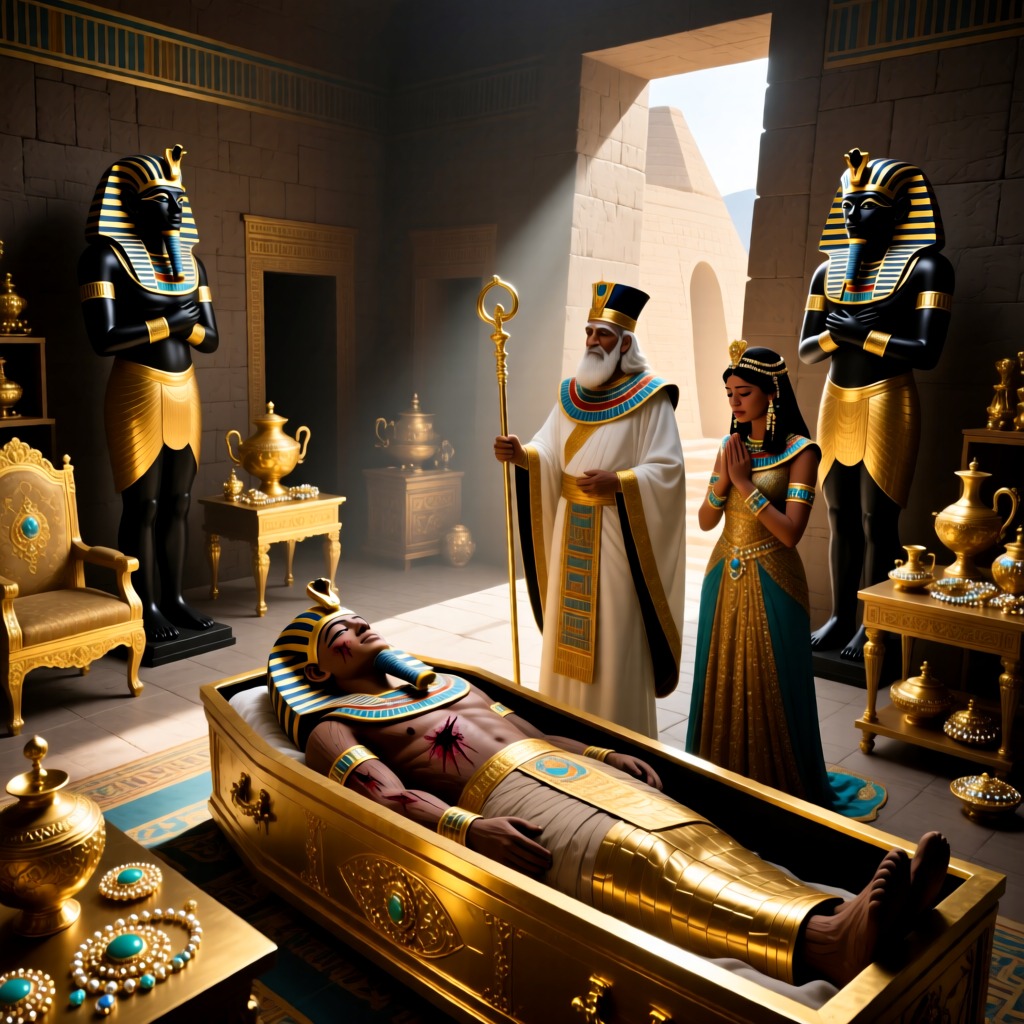
Within the burial chamber, archaeologists found a mummy with a fatal wound near the left earlobe. The origin of this injury and the identity of the perpetrator have become lingering questions. Tutankhamun's tomb is located in the Valley of the Kings in Egypt, surrounded by ancient burial sites, creating a mysterious and solemn atmosphere.
The interior of Tutankhamun's tomb consists of an ante-chamber, burial chamber, storeroom, and treasury, filled with various types of furniture, vessels, and boxes, including the pharaoh's treasure. The burial chamber also houses two life-sized gilded wooden statues, which scholars speculate may represent Tutankhamun himself. These statues are remarkably lifelike, showcasing the exquisite craftsmanship of ancient Egyptian artists.
Tutankhamun's mummy was tightly wrapped in layers of coffins, with the outermost layer being a gilded wooden coffin and the innermost one made of gold. Upon unveiling the final layer of linen, a noticeable wound was discovered on the mummy's face. This finding has sparked various speculations regarding the cause of Tutankhamun's death.
