
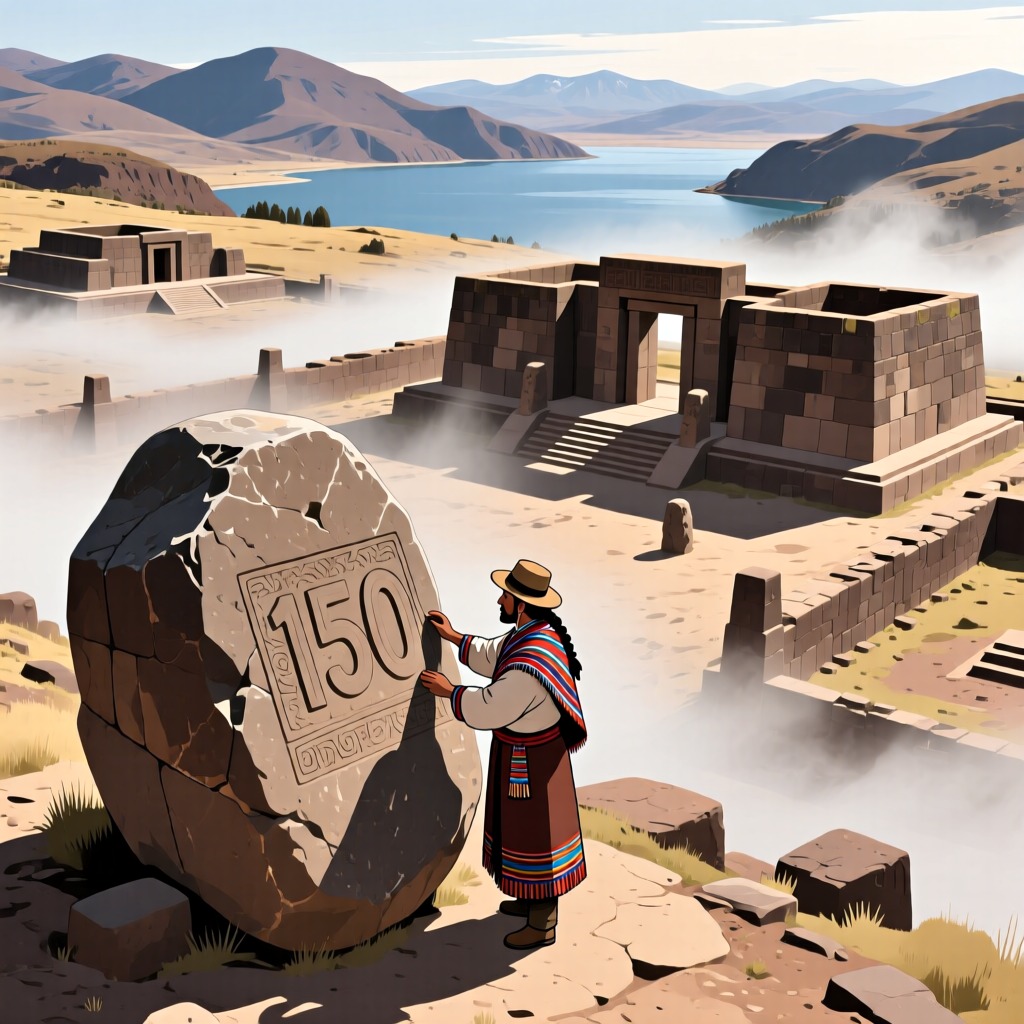

High in the Andes Mountains of South America lies a place known as Tiwanaku, which was already in ruins before the rise of the Inca Empire. This city is renowned for its intricate stone architecture, and although its inhabitants have vanished, the remnants still amaze visitors. According to Spanish accounts, the people of Tiwanaku had neither horses nor wheels, yet they managed to transport massive stones from a quarry 40 kilometers away to construct incredible buildings.
Tiwanaku's architectural style is unique, with the largest structures, Akapana and Kalasasaya, being particularly noteworthy. Akapana is a stone structure that stands 15 meters tall and covers an area of 65 square meters. Kalasasaya features colossal stones weighing up to 150 tons, adorned with exquisite carvings that unveil the secrets of this ancient civilization. Some of the carvings depict a creator god with white skin, believed to have arrived in Tiwanaku around 500 AD, bringing advanced skills and knowledge.
There are various speculations regarding the identity of these outsiders. Some believe they were Phoenicians from the Mediterranean, while others suggest they were Buddhist travelers from Asia. Norwegian scholar Thor Heyerdahl proposed that these white individuals might have embarked on a transoceanic voyage from Peru in 1480, eventually reaching the Polynesian islands. He theorized that these outsiders could have been the creators of the Tiwanaku civilization, leaving behind countless unsolved mysteries with their arrival and departure.
