
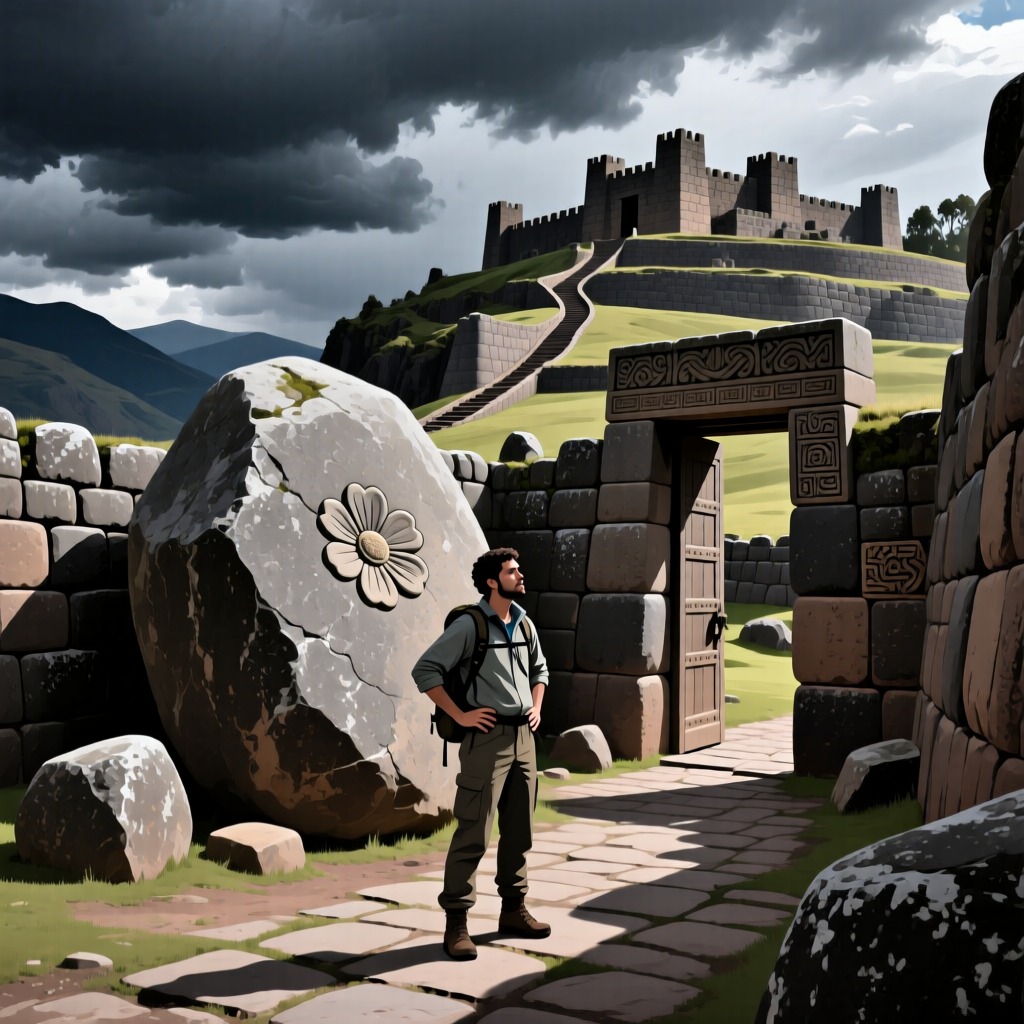

The Sacsayhuamán fortress stands majestically on the outskirts of Cusco, leaving visitors in awe of its grandeur. One afternoon, under a sky filled with dark clouds, we entered this ancient fortress. A cold wind swept across the desolate highlands as I climbed the stairs, passing through a tall stone doorway and delving deeper along the winding stone walls.
Looking up, a massive granite block loomed before me. It stands 12 feet tall, 7 feet wide, and weighs over 100 tons, clearly carved by human hands. The edges of the stone are smooth and harmonious, reminiscent of a symphony. Scattered around are many large stones of various shapes—some towering, others drooping, and some staggered—making one marvel at the craftsmanship of the ancients.
Standing before a colossal stone that reaches 28 feet in height and weighs 361 tons, I was filled with questions. How could the Incas have accomplished such a monumental task? How did they transport these massive stones here? Did they really lack vehicles and steel tools? The 16th-century Spanish historian Vega lamented that it seemed more like the work of devils than of human effort.
Vega's account only deepened my confusion. He recorded a tragic attempt by an Incan ruler to build a similar fortress: over twenty thousand workers pulling a giant stone, only for it to tumble off a cliff, killing more than 3,000 people. This undoubtedly intensified my doubts about the origins of this fortress. Perhaps it was not built by the Incas, but rather a remnant of an even earlier civilization.
Legend has it that the Viracocha people, a mysterious race described as fair-skinned and bearded, were the builders of this fortress, referred to as 'heavenly warriors.' This sparked my curiosity to explore more of the unknown surrounding this fortress.
