
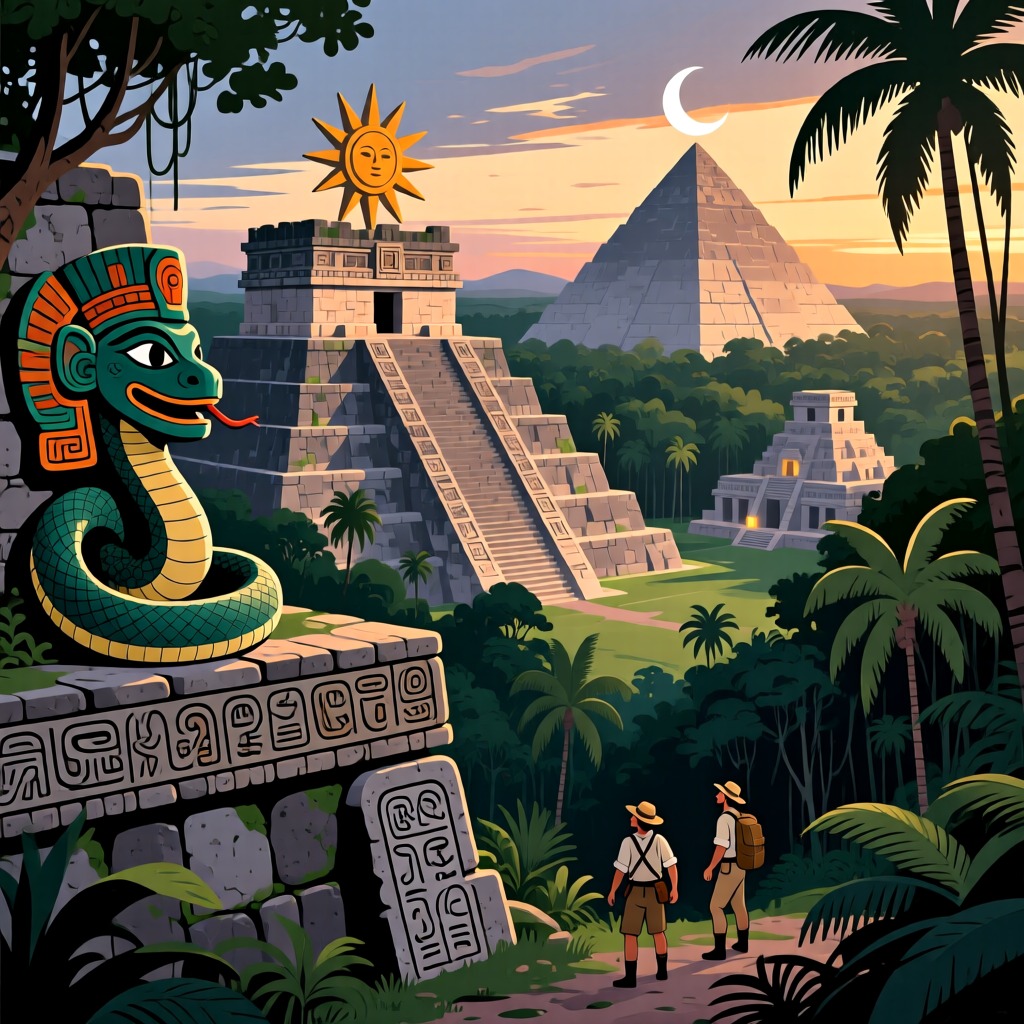

The Maya are often referred to as the 'Greeks of the New World.' Their civilization dates back to 3000 BC, long before the Roman Empire. The Maya culture flourished in the Americas but suddenly vanished, only to be rediscovered in modern times.
In the early 16th century, when the Spanish explored the Yucatán Peninsula, they were astonished to find a grand 'Governor's Palace' constructed from over 10,000 tons of stone, adorned with intricately carved serpent masks. Additionally, the impressive 'Sun' and 'Moon' pyramids left them in awe. These magnificent structures required exceptional skills, meticulous organization, and scientific division of labor to build, making them a remarkable feat even by today's standards.
However, how did the Maya construct these grand edifices? And why did they abandon these masterpieces and disappear? These questions remain unanswered to this day.
The reintroduction of Maya civilization to the Western world began in the 19th century. In 1822, British scholars started studying Maya culture, suggesting that it might be linked to the 'Lost Ten Tribes' mentioned in the Old Testament. In 1849, American explorer John Stephens and British artist Frederick Catherwood discovered a series of astonishing ruins in eastern Guatemala, including massive carvings, stone columns, altars, and pyramids, which continue to perplex historians.