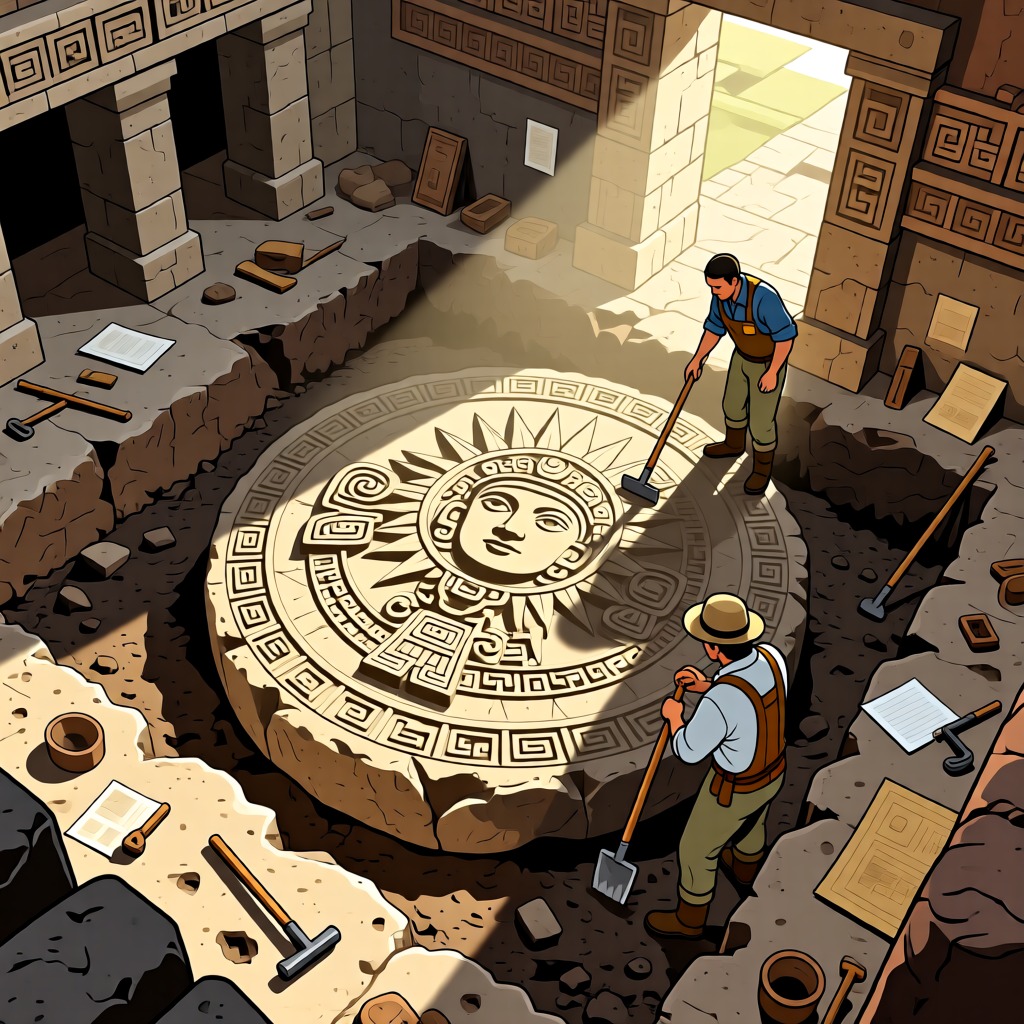

The Maya civilization developed an intricate mathematical system, notably their understanding and application of the concept of 'zero,' which predates its introduction to Europe by Arab scholars. Their astronomical calendar is equally impressive, particularly their precise calculation of the Venus cycle, which lasts 584 days. These achievements not only showcase the advanced intellect of the Maya but also provide valuable insights into the development of human civilization.
The Mayan calendar system is complex and varied, including the 'Sacred Calendar' and the 'Solar Calendar.' The former was used for religious ceremonies, while the latter served daily life. They employed a unique vigesimal (base-20) counting system, making their calendar both precise and aesthetically pleasing. This calendar system was widely used throughout different dynasties of the Maya civilization, reflecting their outstanding accomplishments in mathematics and astronomy.
Even more astonishing is the discovery of a similar calendar system in the distant East. In the Yunnan province of China, archaeologists have uncovered a calendar that aligns perfectly with the Mayan system. This cultural connection across two continents raises intriguing questions about a possible undisclosed link between Mayan and Eastern civilizations.
The Mayan calendar conceals many unsolved mysteries. Archaeologists continue to investigate the Maya's remarkable contributions to mathematics, astronomy, and agricultural techniques. However, many questions remain unanswered: Why did the Maya choose a base-20 system? How did their astronomical observation techniques achieve such high precision? How were they able to accurately predict solar and lunar eclipses and planetary movements? These enigmas await our exploration.