
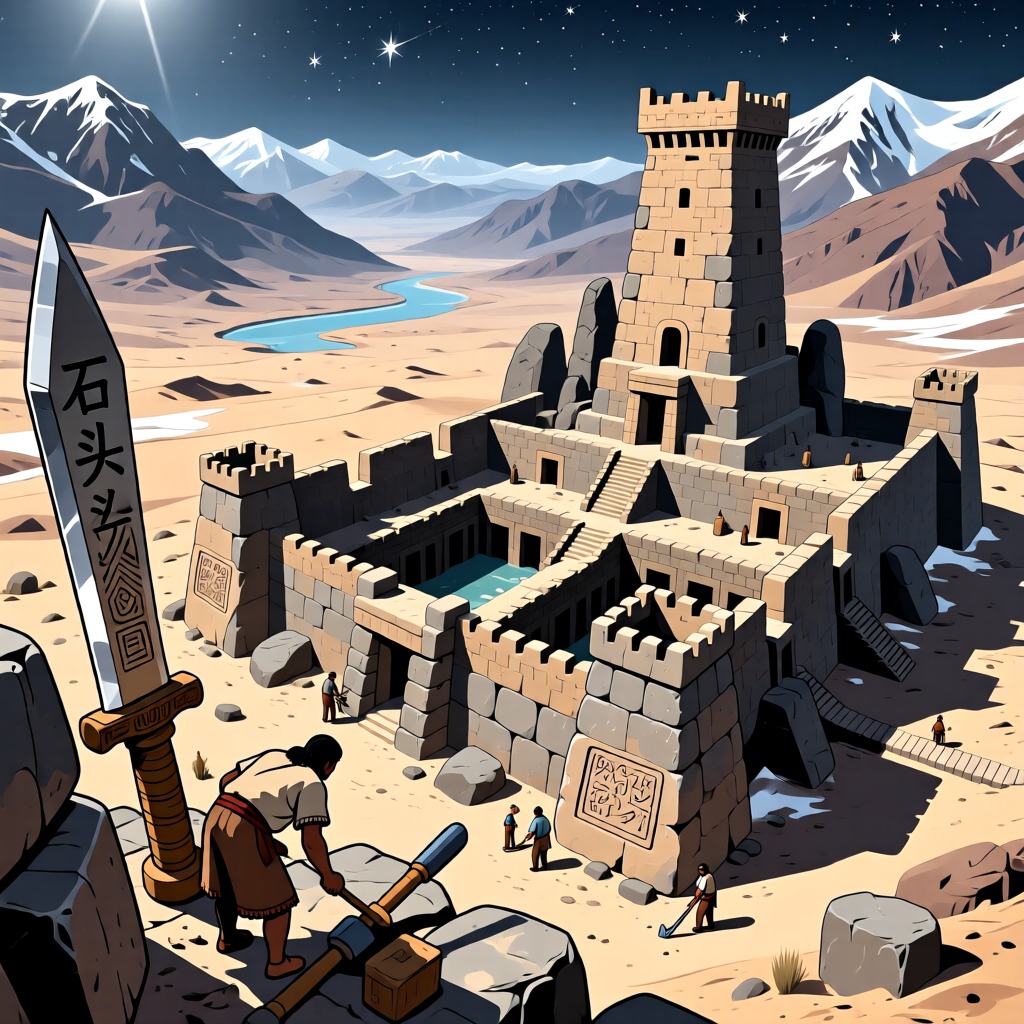

The ancient civilizations of South America are shrouded in many unsolved mysteries. In Peru, within the Byidna Yulanka mountains, stands a fortress known as Chavín de Huántar. This castle is nearly inaccessible, built using unique techniques with walls carved and chiseled from rock, showcasing an understanding of construction that remains difficult to comprehend. The interior layout of the fortress is complex, filled with traps and mechanisms at the entrance. Stone pillars, resembling 'stone daggers', are embedded in hard granite, adorned with carvings of mysterious female figures that baffle observers.
At the ruins of the ancient castle of Selaraga, located at an altitude of 6000 meters, similar inexplicable phenomena exist. The construction techniques of this fortress are advanced, using massive stone blocks without mortar, and it has no doors or windows, only an exit at the roof. The height and environmental conditions make it hard to imagine how it was built and inhabited.
In the Atacama Desert of Chile, stone carvings cover the hard rocks, featuring intricate patterns and mysterious inscriptions. Meanwhile, in the desert of Arequipa province in Peru, enormous designs and giant circles, along with sturdy ancient castles, have been discovered. The walls of these fortresses are up to 56 meters thick, built from volcanic lava, and remain strong despite thousands of years of erosion.
The existence of these castles and patterns challenges our understanding of ancient civilizations. How were they constructed? And who built these fortresses in such harsh environments?
