
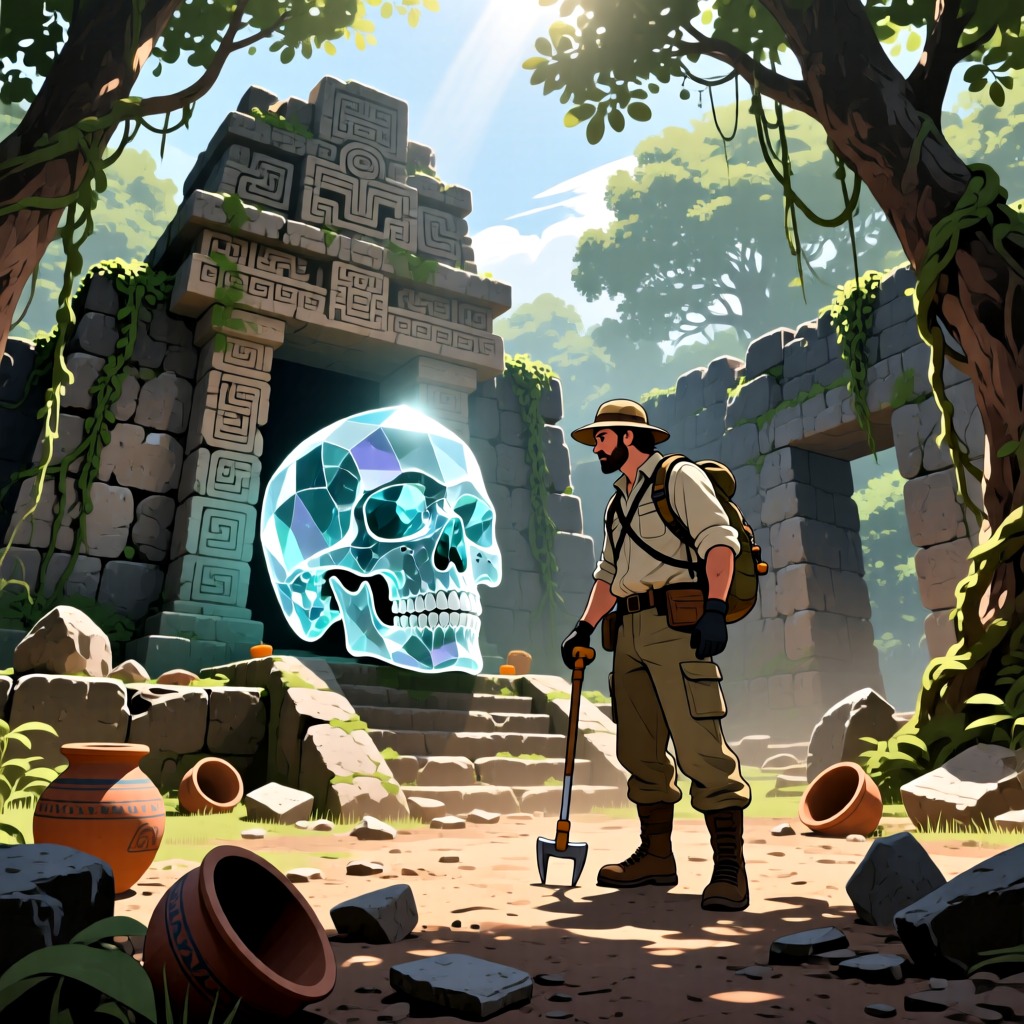

In 1924, British explorer Mitchell Hedges and his team discovered an ancient city site known as Lubantown deep in the mountains of Honduras, Central America. During further excavations, they unexpectedly unearthed a crystal skull. Measuring approximately 18 centimeters in length and weighing around 5 kilograms, this crystal skull not only resembles a human skull but also emits soft singing and tinkling sounds, even influencing sensory experiences. Hedges and his colleagues were puzzled by this mysterious crystal skull. Is it a relic of the Maya civilization or a remnant of the 'Atlantis' civilization? The existence of the crystal skull has sparked various speculations and controversies regarding ancient civilizations, and the secrets behind it remain unsolved to this day.
As more similar crystal skulls have been discovered, their origins and uses have sparked extensive discussions among archaeologists. These skulls have been found not only in Aztec sites in Mexico but are also exhibited in the British Museum and the Musée de l'Homme in Paris, France. Despite extensive research, there are still no clear answers regarding the origins and purposes of these crystal skulls.