
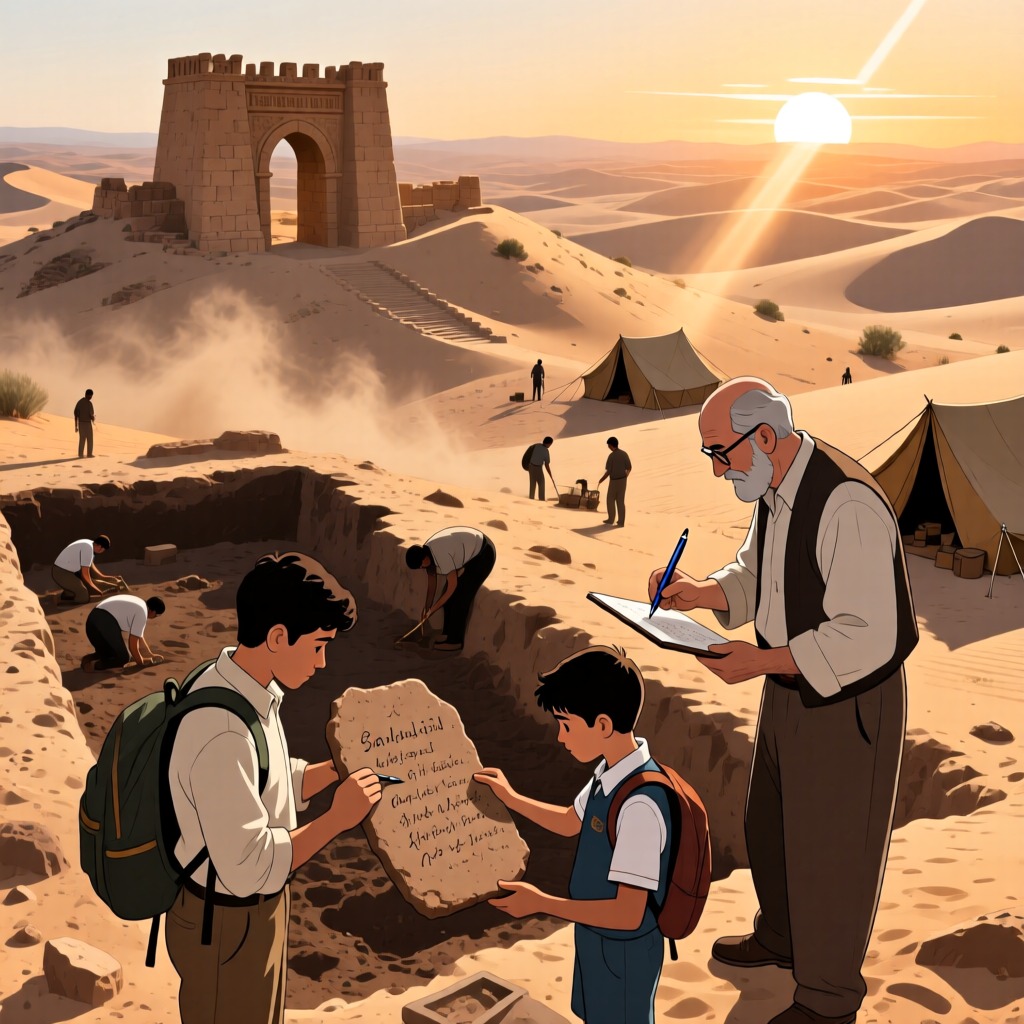

In 1963, Dr. Machieu and his expedition team unearthed the ancient city of Ebla in the desert of northwestern Syria. After fifteen years of diligent work, they discovered the city's gates, walls, palaces, temples, and many residential ruins. Ultimately, they found the city's name—Ebla—inscribed on a statue. In 1974, they uncovered 42 small clay tablets inscribed with cuneiform writing in the palace, followed by the discovery of thousands of clay tablets. These tablets revealed the power and prosperity of Ebla, demonstrating its close connections with surrounding regions and even altering perceptions of the area's history.
This collection of tablets is not only vast in number but also rich in content, including detailed accounts of Syria and Palestine. Some of the tablets feature slanted writing, clearly the work of students, with corrections made by teachers nearby. Through the study of these tablets, experts gradually deciphered the cuneiform script of Ebla, unveiling the glorious history of this ancient city. Ebla was ultimately conquered by the Akkadians around 2300 BC, and after enduring many trials, it became a ruin until its rediscovery by modern archaeologists.