
The Minoan civilization, located on the island of Crete in the eastern Mediterranean, is the largest island in Greece. Known for its stunning landscapes and pleasant climate, it has been the site of many unsolved mysteries throughout history. In Greek mythology, Crete was the domain of King Minos, famous for its complex labyrinth and the fearsome Minotaur. However, the existence of the Minoan civilization was scarcely documented until the early 20th century when archaeologists began to unveil the secrets of this enigmatic kingdom.
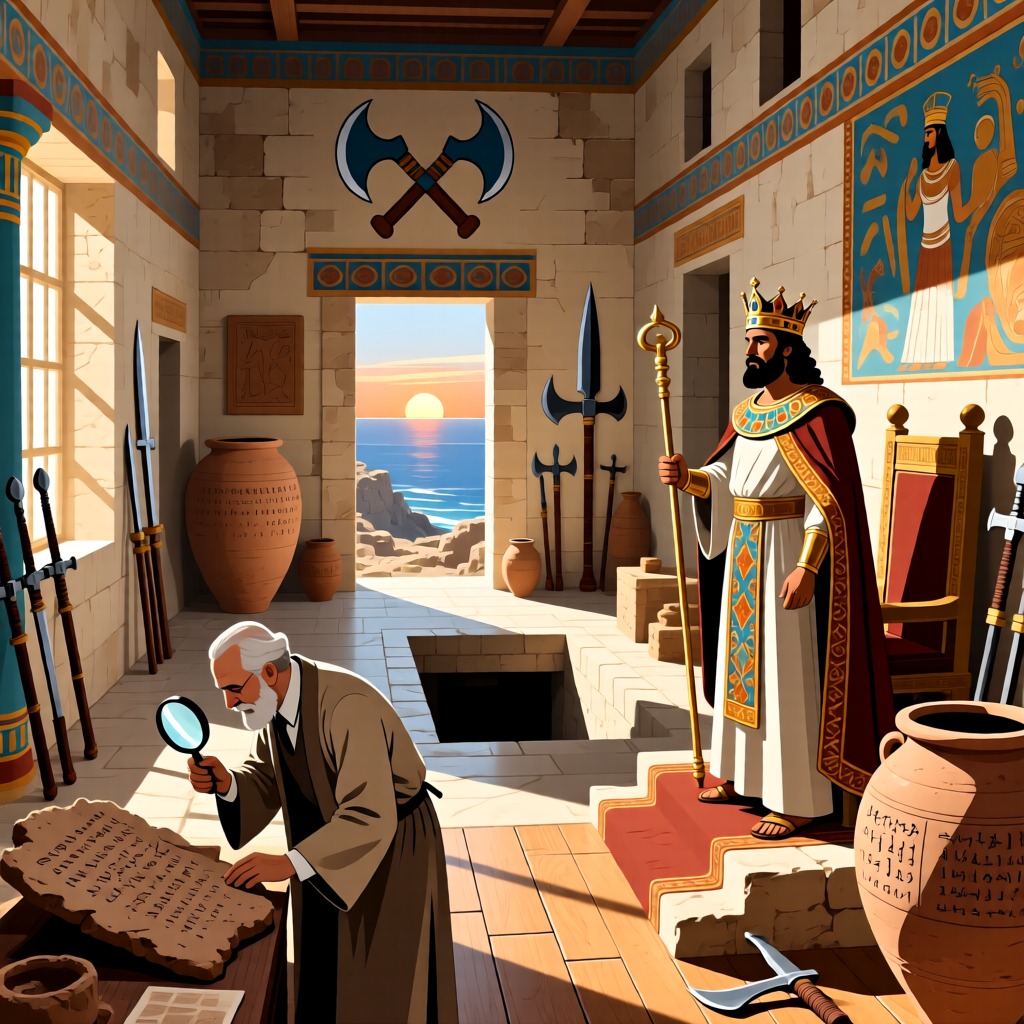
In 1900, British archaeologist Arthur Evans and others discovered the ruins of the palace at the ancient city of Knossos. The palace covers approximately 20,000 square meters and features a complex structure with three stories and a basement. Hundreds of rooms within the palace are connected by winding corridors. The frescoes depict images of kings and noblewomen in vibrant colors. In storage rooms, archaeologists found numerous large jars filled with food, olive oil, and wine, as well as chariots and weapons. A small chamber wrapped in lead contained the king's immense wealth, including jewels, gold ornaments, and seals.
Most notably, thousands of clay tablets inscribed with writing were discovered, recording the king's archives and significant events. One tablet states: 'Seven women sent from Athens, one boy and one girl each.' This aligns with the legend of Minos demanding tributes of young boys and girls from Athens.
Additionally, archaeologists found several children's skeletons around the palace of Knossos, showing clear signs of knife marks, suggesting that the Cretans may have practiced cannibalism. This further corroborates the authenticity of the legends.
After years of excavation, the existence of the Minoan civilization has been confirmed. It thrived from around 2300 BC to 1500 BC and was a significant cultural center in the Aegean region. However, around 1500 BC, all cities on Crete were destroyed simultaneously, and the reasons remain unknown.