
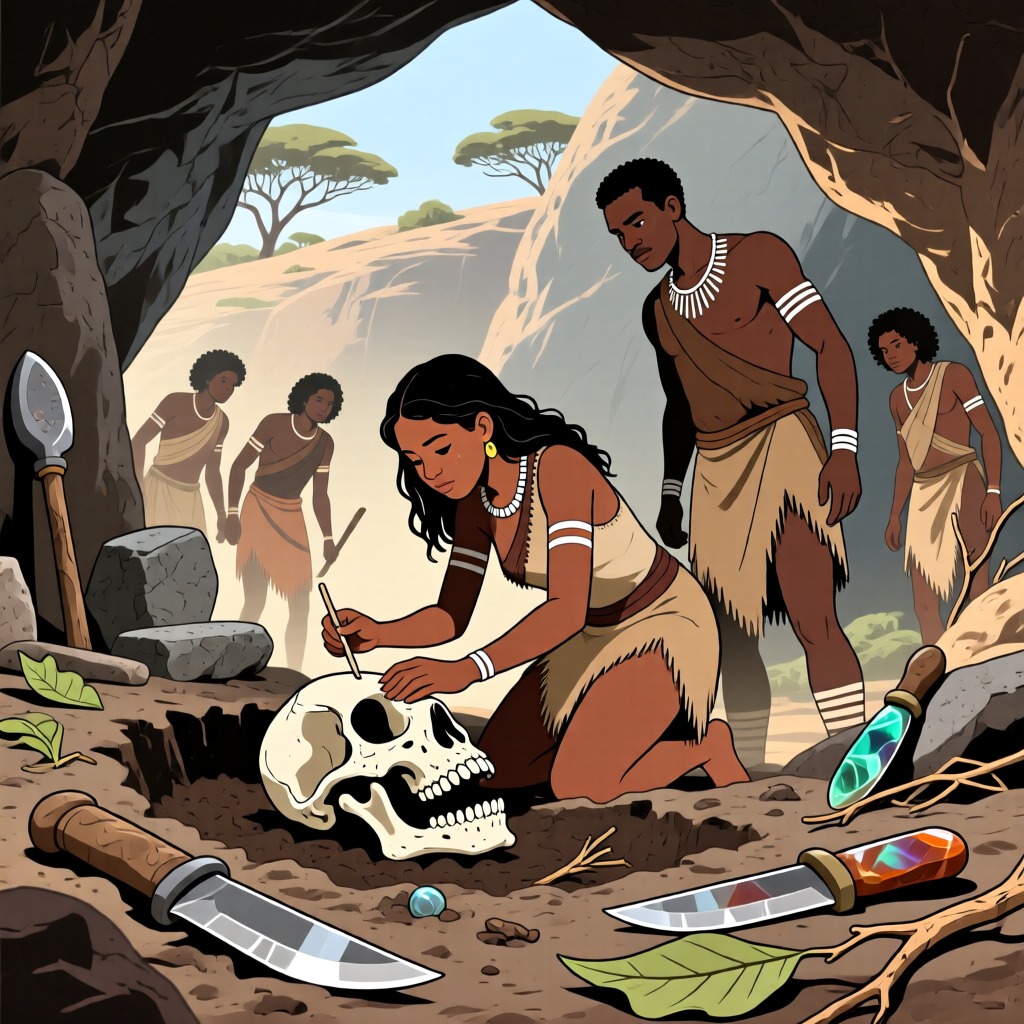

The mystery of human origins has been significantly impacted by four major discoveries in Africa over the past two decades. These findings challenge traditional beliefs about the origins and evolutionary journey of humanity. In Kenya, a skull and bones dating back over 2.8 million years were uncovered; in southern Africa's border caves, modern-type hominids were found, living around 100,000 years ago; in Tanzania, teeth and jawbones resembling early humans from 3.75 million years ago were discovered; and in Ethiopia, a skeleton named 'Lucy' was identified to be nearly 4 million years old. These discoveries reveal crucial stages in the process of human evolution and alter our understanding of human origins.
These findings not only demonstrate that our ancestors had physical forms remarkably similar to modern humans but also showcase the intelligence and creativity of early humans. The inhabitants of the border caves crafted many intricate tools, including finely made agate knives, indicating their highly developed intellect. Moreover, they exhibited religious beliefs and left behind traces of burial practices, showing that they possessed complex emotions and social structures. These discoveries overturn previous conventional views about human origins and evolution, revealing key milestones in the journey of human development.