
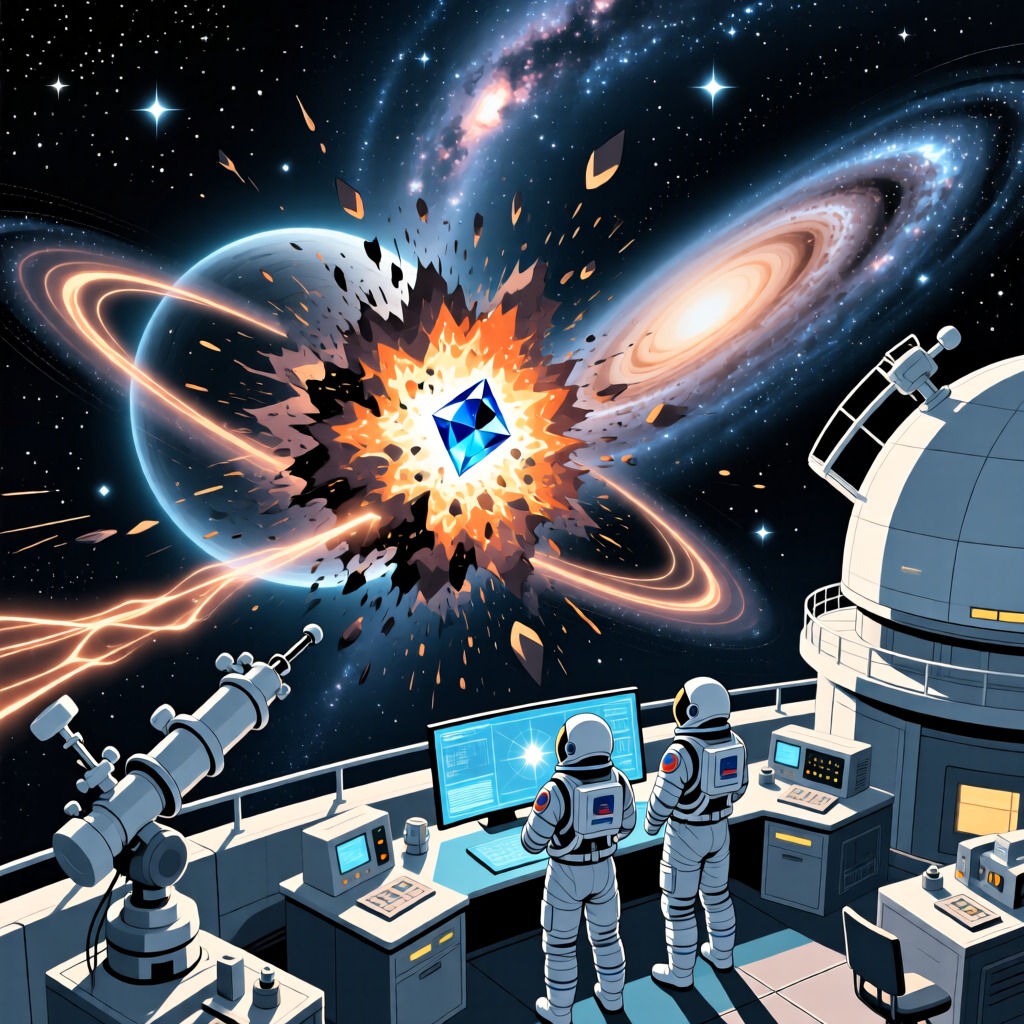

Galactic collisions are not only spectacular phenomena in the universe but also significant puzzles in the field of astronomy. As early as the 1970s, American astronomers observed astonishing changes caused by galaxy collisions using telescopes. In 1997, with the help of the Hubble Space Telescope, scientists captured the moment two galaxies collided in the antenna nebula, discovering a multitude of newly formed stars. This finding overturned traditional understandings of cosmic evolution, showcasing the interactions and power of collisions between galaxies.
Galaxy collisions not only lead to the birth of new stars but also trigger intense luminosity and changes in the shapes of galaxies. This marks a natural law in the process of cosmic evolution. However, there remains a gap between simulation experiments of galaxy collisions and actual observations, particularly in explaining changes in galaxy colors and X-ray brightness. In recent years, Japanese astronomers have utilized computer and mathematical simulation systems to complete galaxy collision simulations in just a few hours, a process that typically takes billions of years. The simulation results indicate that during galaxy collisions, gas clouds within the galaxies undergo significant changes, forming unique structures that promote the star formation process.
This series of discoveries not only answers the questions of ancient astronomers but also provides new perspectives for modern astronomical research. It leads us to ponder whether the collisions between galaxies are also part of the origins of humanity and the universe.