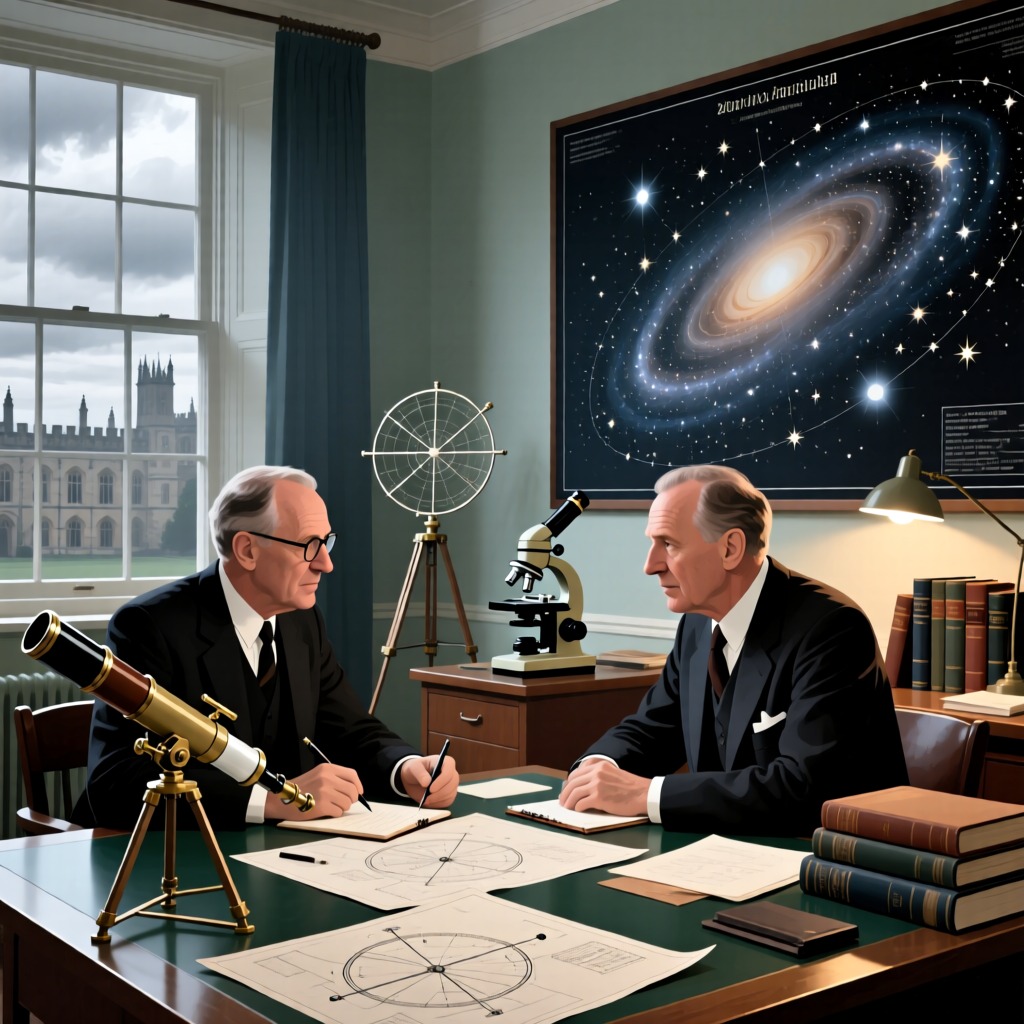
In the late 1940s, British scientists Bondi, Gold, and Hoyle proposed a new theory known as the steady state universe model. This model assumes that the universe is infinite, having neither a beginning nor an end, and always maintains a constant state. To address the fact of cosmic expansion, they suggested that new matter is continuously created in the universe, with the rate of this creation counterbalancing the density decrease caused by the expansion, thus maintaining a constant matter density. This theory challenges traditional views on the origin of the universe, offering a novel explanation that matter in the universe does not arise from energy conversion but is born from nothingness. However, this theory faces numerous controversies, including its inability to be verified through observation and its violation of the laws of conservation of mass and energy. Additionally, the observed changes in the number of quasars do not align with the predictions of the steady state universe model, and it fails to adequately explain the phenomenon of cosmic microwave background radiation.
The Origin of the Universe: The Mystery of the Steady State Theory