
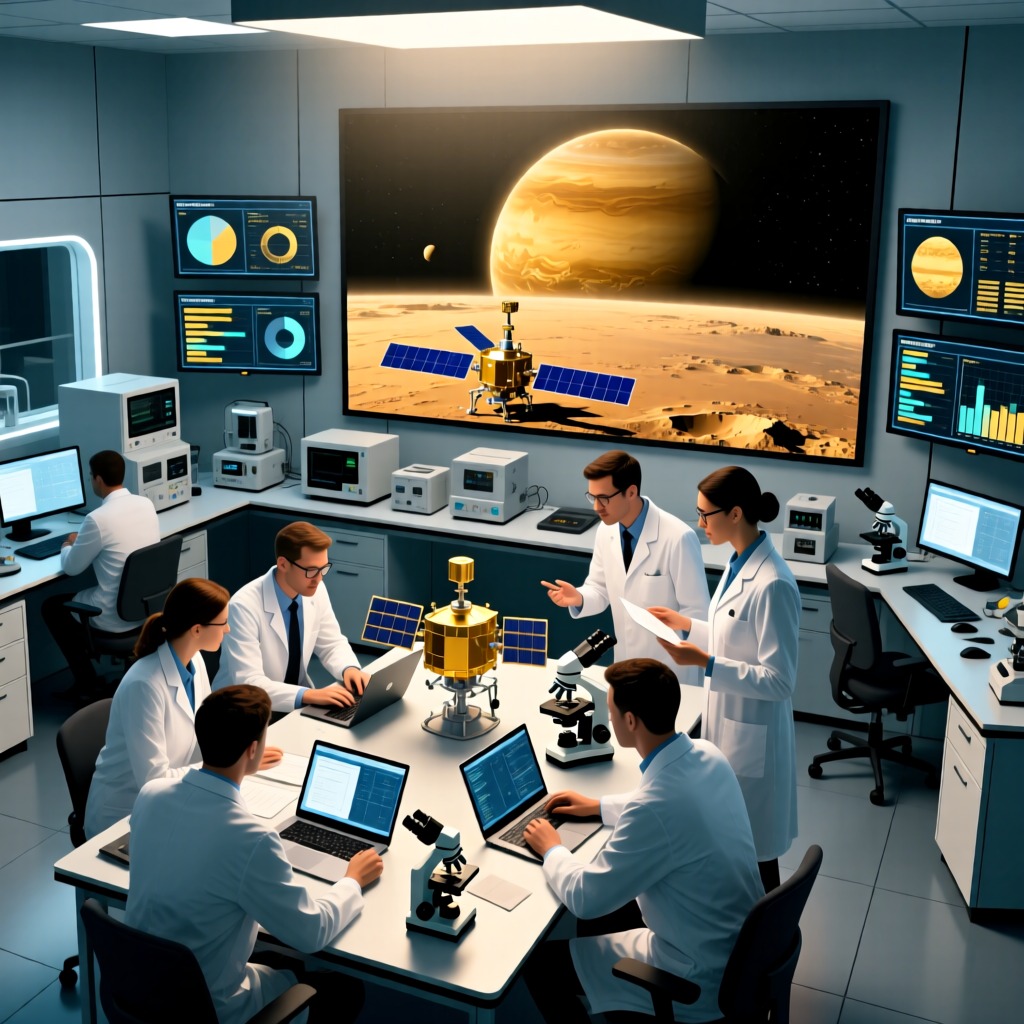

Venus was once considered Earth's "twin sister," but as humanity's exploration advances, its mysteries are being uncovered. Between 1961 and 1983, the Soviet Union launched 16 spacecraft to Venus, most of which successfully transmitted valuable data. The United States also sent probes in 1962 and 1978, further revealing the truths about Venus.
The sky of Venus appears orange-yellow, shrouded in thick clouds that reflect sunlight. These clouds are actually composed of highly corrosive sulfuric acid mist, forming a dense layer. If it were to rain on Venus, it would be sulfuric acid rain, which would be fatal to any form of life.
The atmospheric pressure on Venus is 100 times that of Earth, making it unbearable for the human body. The atmosphere is primarily made up of carbon dioxide, which accounts for 96%, while oxygen only makes up 0.4%. The intense greenhouse effect raises the surface temperature of Venus to a scorching 460°C, with little to no drop in temperature at night. This extreme environment shatters any hopes of life existing on Venus.
Venus experiences minimal temperature variation between day and night, with no significant seasonal changes. Although Earth also experiences a greenhouse effect, its lower carbon dioxide levels result in far less impact than Venus. However, with the acceleration of industrialization, Earth's carbon dioxide concentration is rising, and climate change is becoming an increasingly pressing issue. We must remain vigilant to prevent Earth from becoming a second Venus.
