
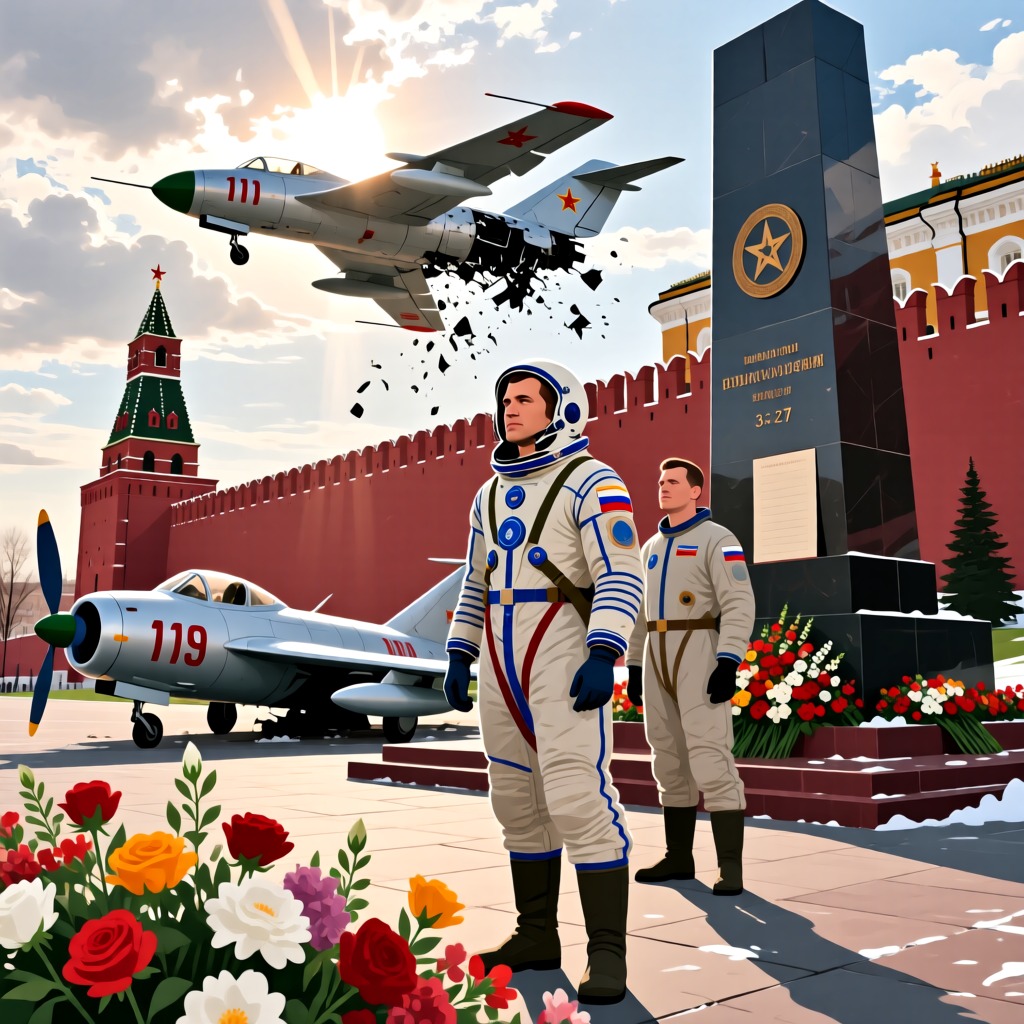

Near Red Square in Moscow, beneath the walls of the Kremlin, lie the remains of Yuri Gagarin, the first human astronaut, alongside his companion, Vladimir Seryogin. A monument stands at the site of their plane crash, often adorned with fresh flowers in memory of this space hero.
Gagarin soared freely in the cosmos but lost his life during a flight on Earth. On March 27, 1968, he completed his last training flight. At that time, he and Seryogin were piloting a MiG-15 fighter trainer, conducting a simulated landing. However, the aircraft suddenly lost control as it approached the ground, crashing into a field.
Following the incident, the Soviet government established a commission to investigate the crash. After a thorough examination, experts found no issues with the aircraft's equipment or mechanical failures. Yet, the question of why Gagarin could not recover the plane from its nosedive remains an enigma.
Gagarin's flight records indicate that he and Seryogin adhered strictly to operational protocols, but the aircraft still crashed. Some speculated it was human error, while others even suggested the possibility of an assassination. However, medical experts concluded that Gagarin showed no signs of poisoning or external influences before the crash, and he remained conscious in his final moments.
Despite the known investigation results, the specific reasons behind Gagarin's crash remain an unsolved mystery to this day. It wasn't until many years later that the secret was revealed: Gagarin failed to adjust the plane's attitude at the last moment, resulting in the loss of control and subsequent crash.
The cause of Gagarin's death was ultimately disclosed, but it did not quell everyone's doubts. The mystery of his crash endures, becoming a historical riddle.