
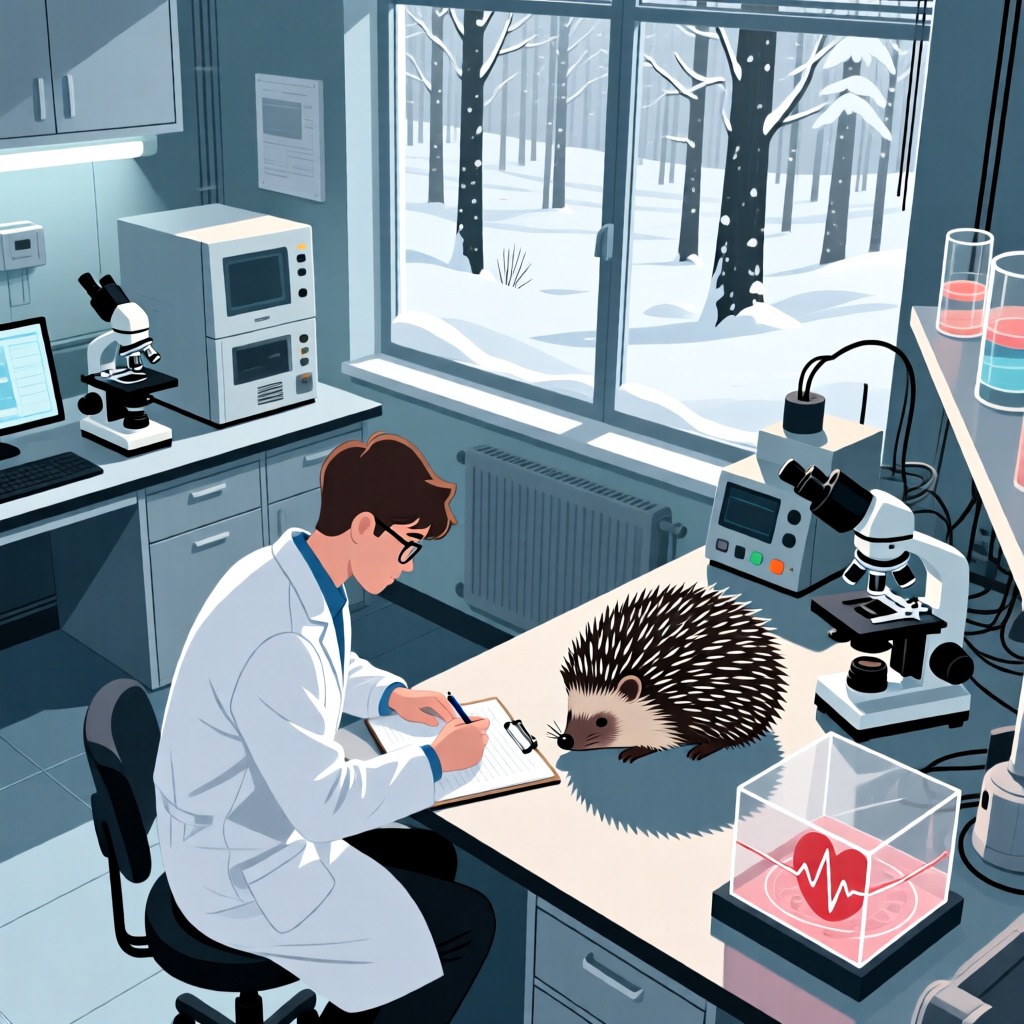

Hibernation is a unique strategy employed by some animals to survive the cold winter months. During this period, their bodies undergo a series of significant changes to adapt to low temperatures and reduce energy consumption. For example, hedgehogs nearly stop their heartbeats, their breathing becomes extremely faint, and their body temperature drops significantly while hibernating. Ground squirrels, on the other hand, maintain a nearly constant body temperature throughout their long hibernation, but their metabolic rate drops to a minimum to conserve energy.
The physiological mechanisms behind hibernation are complex and diverse, and many mysteries remain unsolved. Some scientists believe that external temperature and food supply are the primary triggers for hibernation. However, experiments have shown that certain animals will enter hibernation even when food is abundant, challenging this viewpoint. Additionally, the biological clock theory suggests that there is a mechanism similar to a biological clock within animals that regulates their hibernation cycles. Although there is preliminary evidence supporting this theory, more experimental validation is needed.
In recent years, scientists have discovered a mysterious factor known as the "hibernation-inducing substance." This substance can be produced within hibernating animals and regulates their hibernation state by balancing it with non-hibernating animals. Furthermore, there is an "anti-hibernation substance" that works against this factor, allowing animals to enter hibernation. This discovery provides new clues to unravel the mystery of hibernation, but many unknowns still need to be explored.