
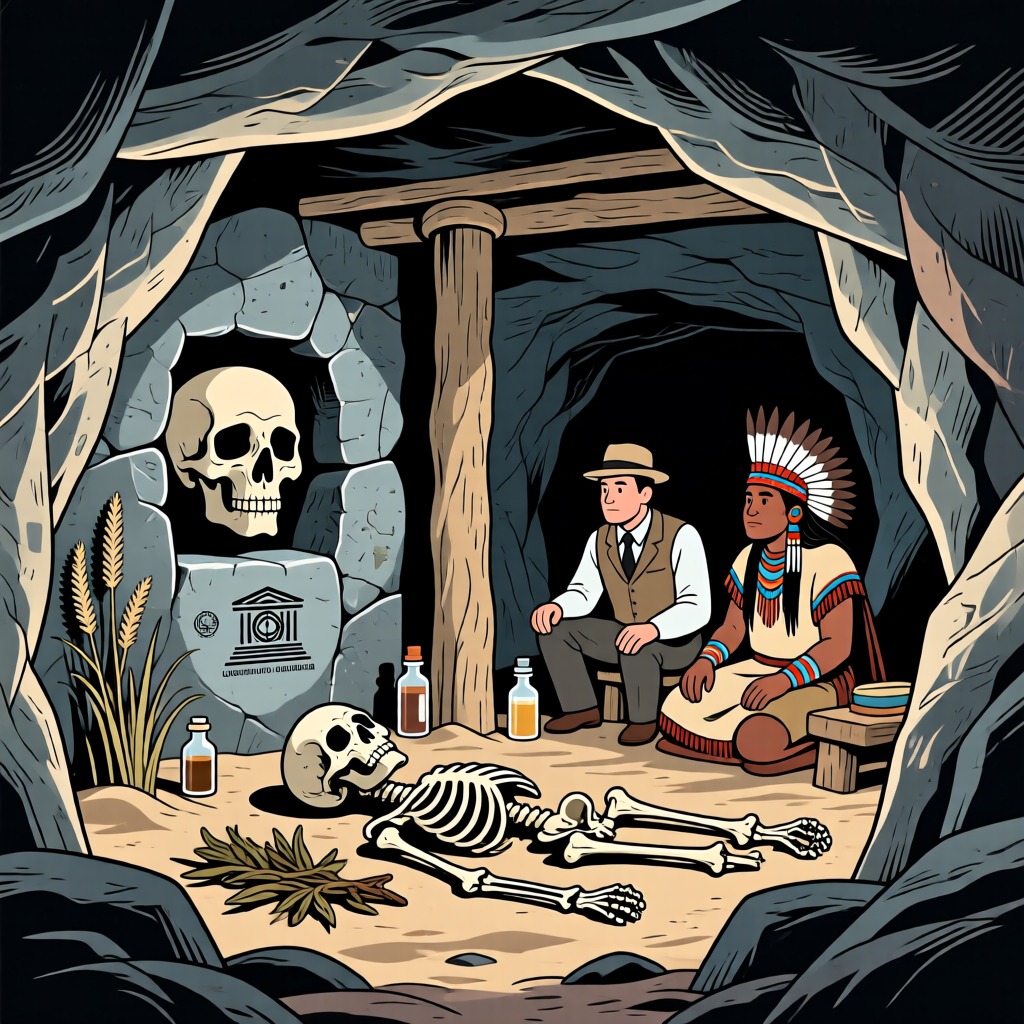

In the 1950s, geologists from UNESCO discovered some incredible phenomena in the Andes Mountains of South America. They found numerous niche caves carved with human-like heads, each the size of a fist. Physiological slice examinations revealed that these heads shared the same cellular structure as that of adults. The existence of these small heads raised significant questions: how could adult heads be so small? This phenomenon puzzled experts, who speculated that it could be some unknown dwarf species or even a remnant of ancient humans.
Even more shocking was the discovery in 1934, when two employees in Alaska found a mummified body of a little person in a rock formation in the Rocky Mountains. This body stood only 48 centimeters tall, had copper-colored skin, and a skeletal structure similar to that of humans, but with unusual head features. Scientists confirmed through X-ray imaging and various tests that this was indeed the mummified body of a male over 60 years old. These findings sparked widespread discussions about the existence of a land of little people, but ultimately, scientists concluded that these small heads were the result of the head-shrinking practices of the indigenous Shuar people.
Researchers also investigated local indigenous legends, with many tribes sharing tales of a 'land of little people,' describing them as fierce and skilled in archery and ambush. However, more scientists believe that these tales of little people are merely fictional legends rather than a reflection of reality.
