
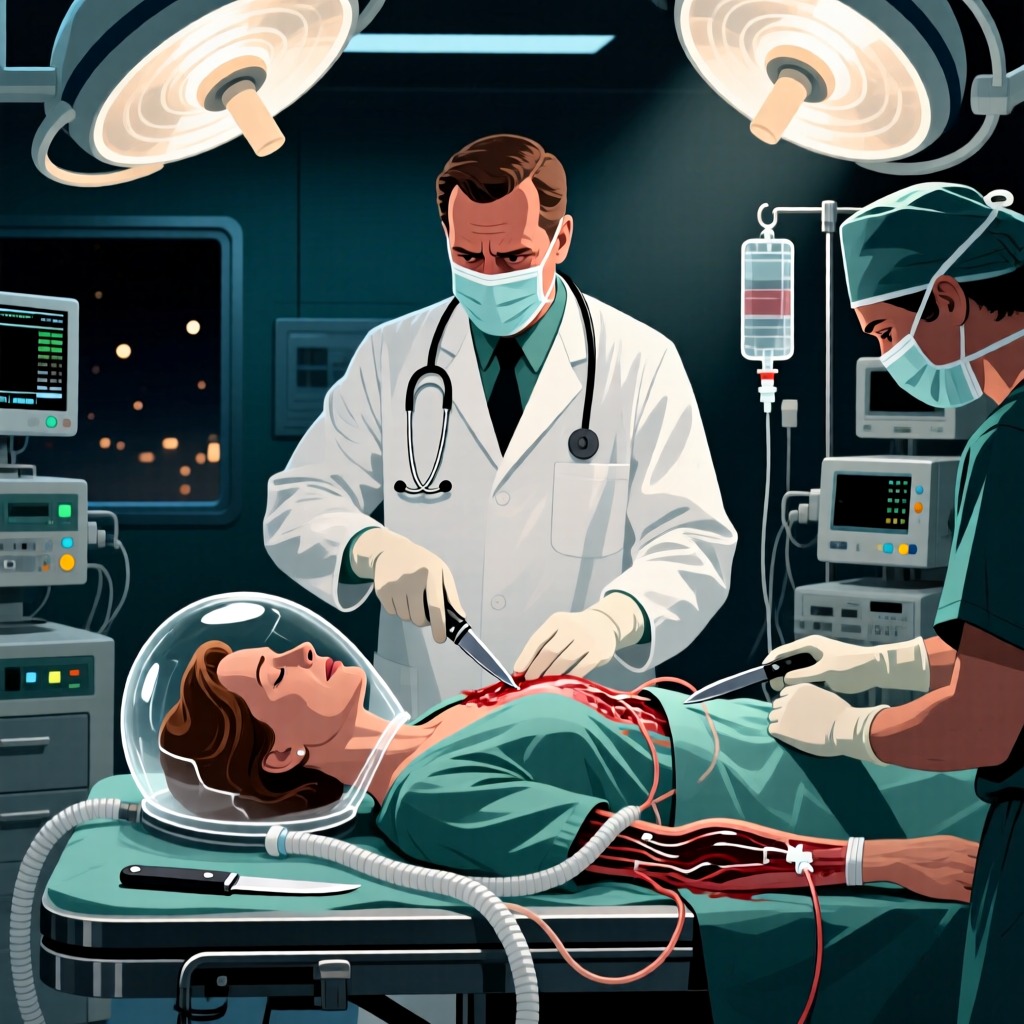

In 1989, Dr. D. Truman from Philadelphia, USA, embarked on an unprecedented experiment after his wife was diagnosed with cancer. He decided to separate her healthy head from her ailing body and sustain its life using an artificial life support system for nine years. This bold experiment sparked significant controversy and attention within the medical community.
Dr. Truman claimed to have invented a simple artificial life support system that could provide the necessary water, oxygen, and blood to the head. The surgical procedure was incredibly complex, lasting over six hours. Aware of the high risks involved, he understood that failure could lead to legal repercussions. However, driven by the desire to give his wife hope, he resolutely took on this daunting task.
Although Dr. Truman's wife, Brinta, maintained communication with the outside world through special devices, she declined any interviews. She expressed a willingness to continue living but felt deep shame inside. The experiment eventually became public, sparking widespread discussion and debate. Some viewed it as a challenge to the laws of nature, while others in the medical field considered the experiment to have certain feasibility.
Dr. Truman's experiment not only challenged medical ethics but also touched on people's understanding of the essence of life. Although the chances of success were minimal, his deep love and sense of responsibility towards his wife earned him sympathy and support from many.