

The phenomenon of human combustion was first documented in medical reports from the 17th century, and since then, numerous related articles have emerged. So, what exactly is human combustion? It refers to a person's body igniting and burning spontaneously without any external source of fire.
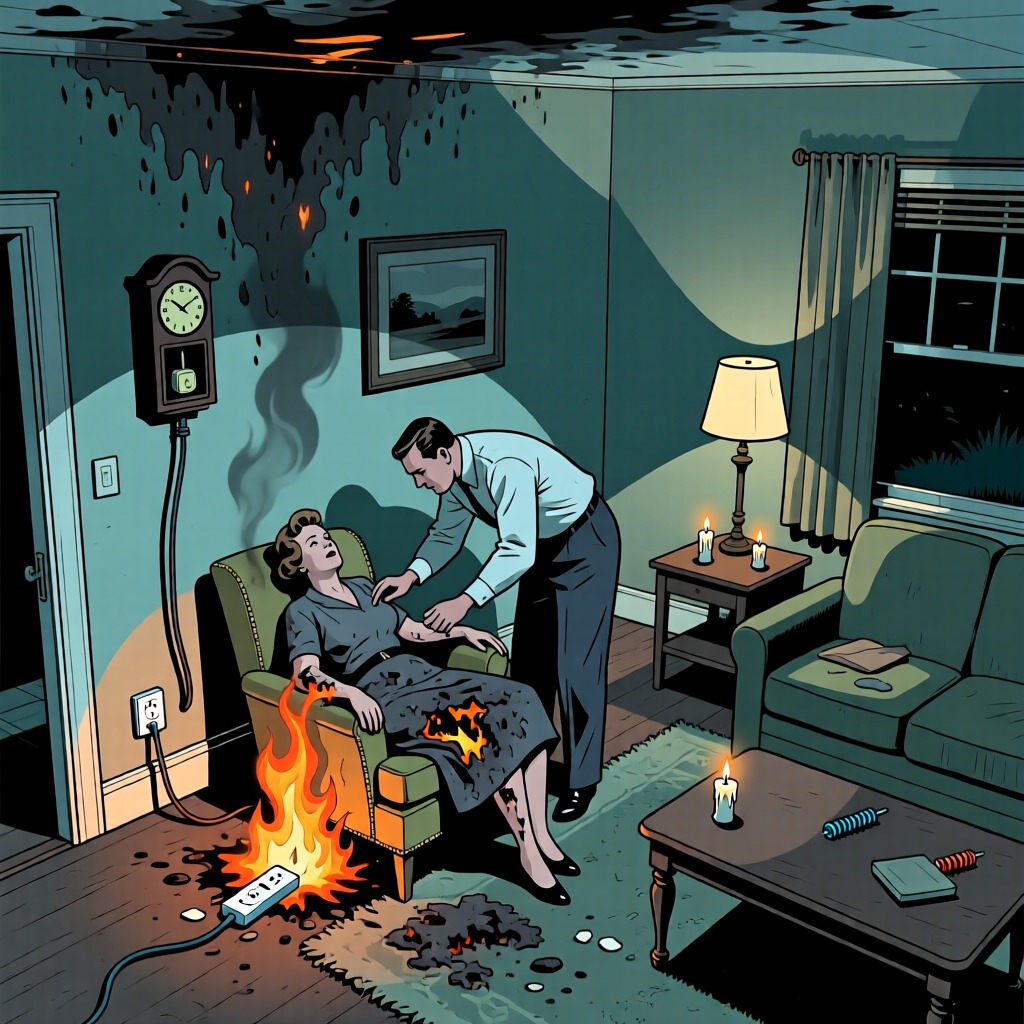
In 1951, Mrs. Liza from St. Petersburg, Florida, was discovered reduced to ashes, while her house remained completely intact. Investigators employed modern scientific methods and spent a year trying to unravel the mystery. Aside from a chair and a coffee table, no other furniture showed significant damage, but the ceiling, curtains, and walls above one meter were covered in soot, while the walls below one meter were unaffected. The paint on the wall next to the chair had turned yellow, yet the carpet was unburned. A wall mirror three meters away shattered from the heat, and a candle on a dressing table 2.6 meters away melted, although its wick remained intact. Plastic outlets on the walls above one meter melted, but the fuses did not blow, and electricity continued to flow, while the power outlet on the baseboard remained unharmed. A melted outlet connected to a clock stopped at 4:20 but resumed working when reconnected. Nearby flammable items such as newspapers, tablecloths, and curtains were left completely unharmed.
Reports of this phenomenon have surfaced worldwide, varying in form from minor burns to complete incineration. In Paris, France, a woman with a drinking problem was reported to have spontaneously combusted while sleeping, leaving only her head and fingers intact, with the rest of her body reduced to ashes. Victims have ranged in age from infants to 114 years old, with most being frail individuals. While some theories have been proposed, they lack physiological evidence, as it is nearly impossible to incinerate bone marrow and tissue at such high temperatures, especially when charred bodies still have undamaged clothing or intact skin, adding to the mystery.