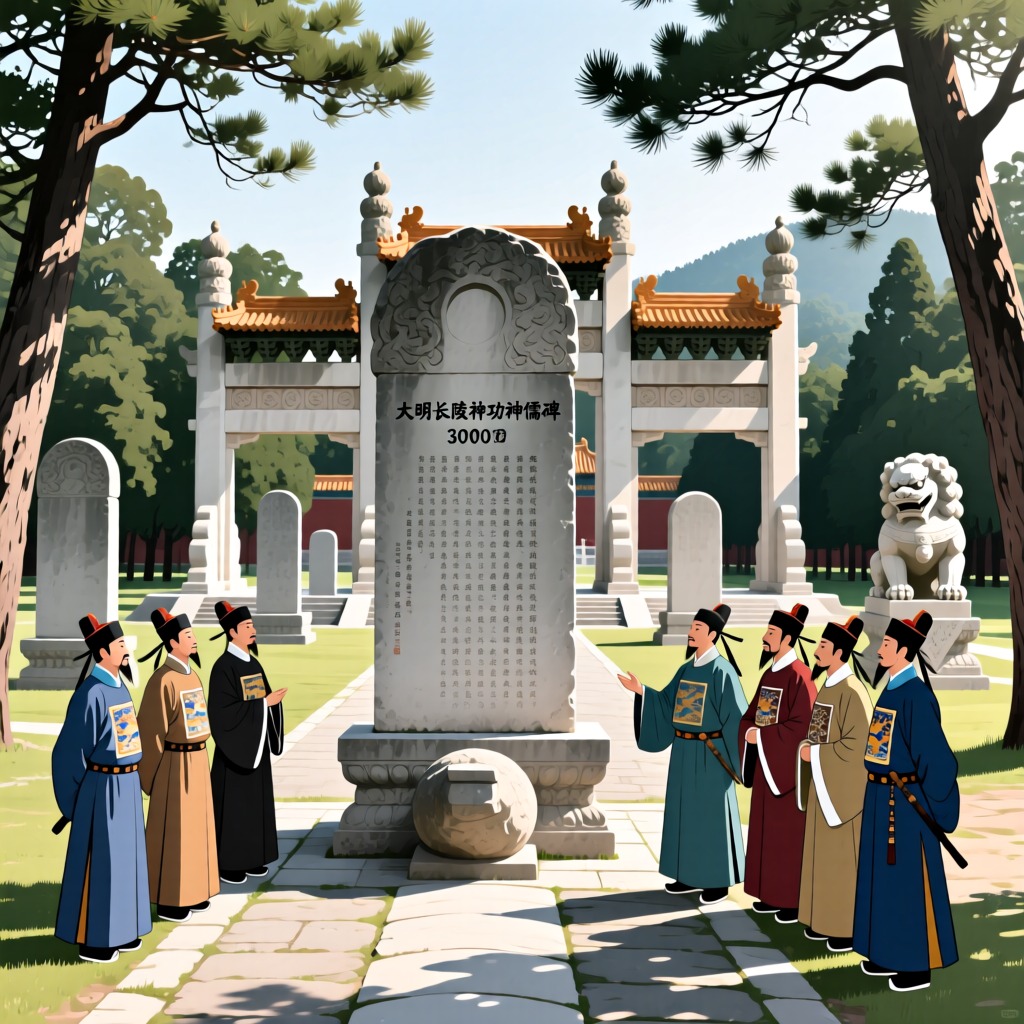
The blank stele at the Ming Tombs is an unsolved mystery left by history. Founded by Zhu Yuanzhang, the Ming Dynasty experienced both glory and decline, leaving behind many enigmas. Among the Thirteen Tombs, only the stele of the Ming Emperor Zhu Di bears an inscription, while the rest remain blank. Why is this the case? According to legend, when the succeeding emperor visited the tombs and inquired about the reason for the blank stele, an official replied that Zhu Di's merits and virtues were too great to be expressed in words. Another explanation suggests that the Ming founder, Zhu Yuanzhang, believed that inscriptions often embellished the truth and should not be written. Thus, the inscription at the Xiaoling Tomb was personally composed by Zhu Di, while the inscription at the Changling Tomb was written by Emperor Renzong of Ming. However, Emperor Jiajing was too preoccupied with indulgence and the pursuit of immortality to write any inscriptions. Subsequently, each emperor followed suit, refraining from inscribing the names of their predecessors, ultimately leading to the existence of these blank steles. These blank steles not only witness the changes of history but also leave room for future generations to discuss the merits and faults of the past.
The Mystery of the Blank Stele at the Ming Tombs