
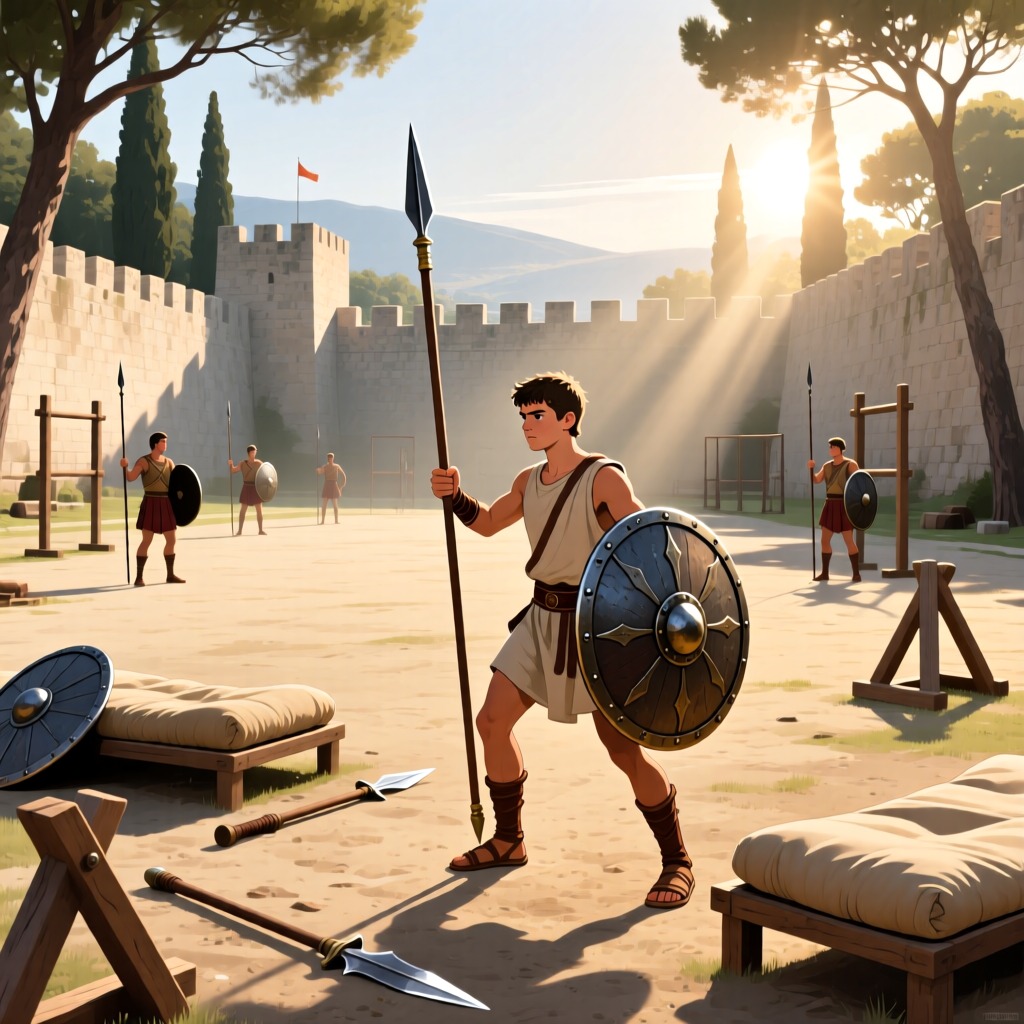

Sparta, located on the Peloponnesian Peninsula in Greece, is renowned for its indomitable warriors. In the 5th century BC, Sparta consistently defeated Athens, becoming the most powerful city-state in Greece. The Spartans abandoned art and culture to focus on military training, forming a unique tradition of bravery. Their stories are legendary, such as a young boy enduring the bites of a fox without showing pain, and hundreds of Spartan warriors holding their ground at Thermopylae until the last man. These tales showcase the courage and discipline of the Spartans.
Sparta's education system was strict, with boys sent to state schools at the age of eight to undergo military training and physical conditioning. They wore minimal clothing, slept outdoors, and endured hunger and cold. This training aimed to cultivate bravery and discipline, with many children perishing from the inability to withstand pain. Spartan women also underwent rigorous training to ensure they could bear healthy offspring. The social structure of Sparta was divided into 'true Spartans' and non-citizens, with the former enjoying privileges while the latter occupied the lower strata of society.
Over time, Sparta gradually declined, but its indomitable spirit remains. By the 1st century BC, the image of the Spartans became a model for the Romans to emulate. Despite questions about their morals, the resilient character of the Spartans continues to be admired.
