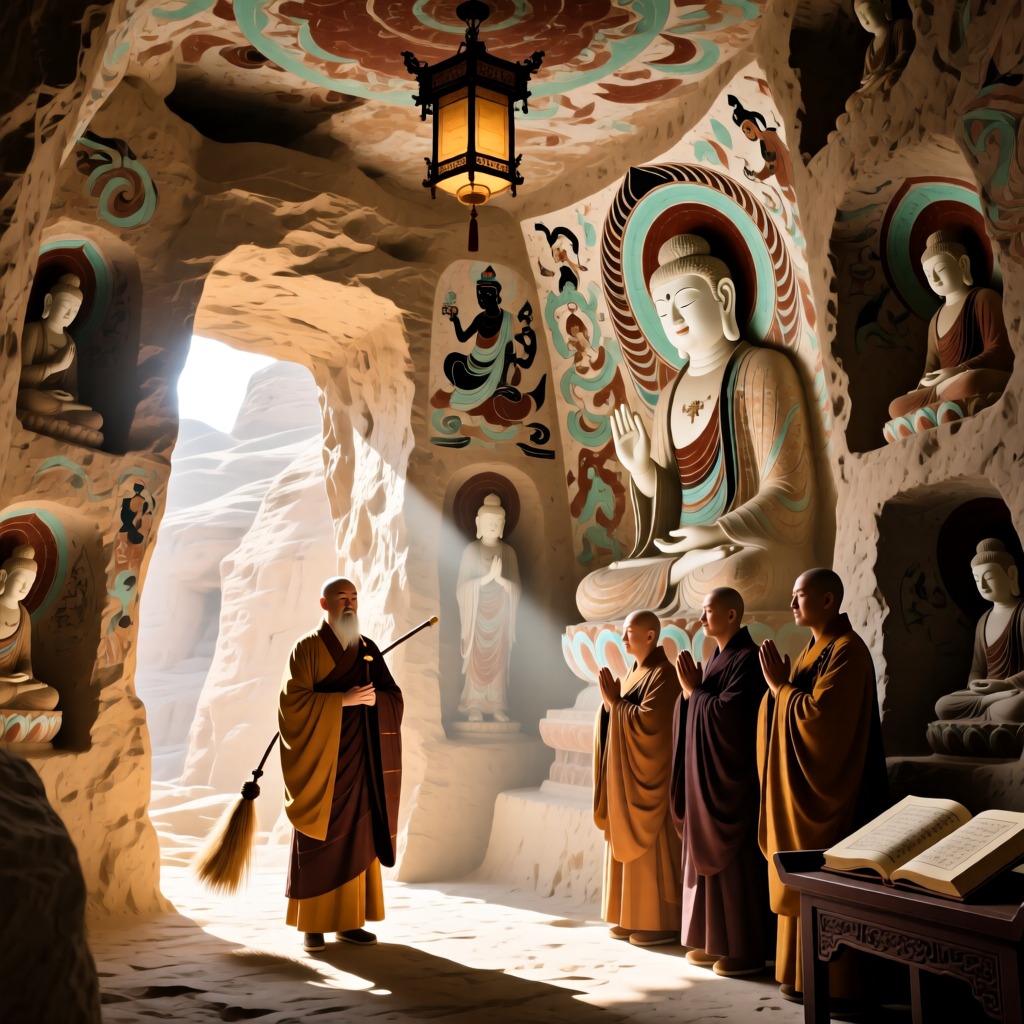
Since ancient times, Dunhuang has been a crucial hub along the Silk Road, serving as a center for cultural exchange between the East and the West. This region not only witnessed the prosperity of ancient China but also became a bridge for the introduction of Buddhism into the country. From the 7th to the 14th century, countless monks and devotees carved caves, sculpted statues, and painted murals, leaving behind a treasure trove of artistic masterpieces.
In 1900, a Taoist priest named Wang Yuanlu accidentally discovered the Cave of Scriptures, which was filled with various precious artifacts, including Buddhist scriptures, manuscripts, and images. These relics document Dunhuang's long history and rich culture, revealing a series of unsolved mysteries. Who was responsible for leaving behind such monumental works in this land? What beliefs sustained generations of people in accomplishing this grand feat?