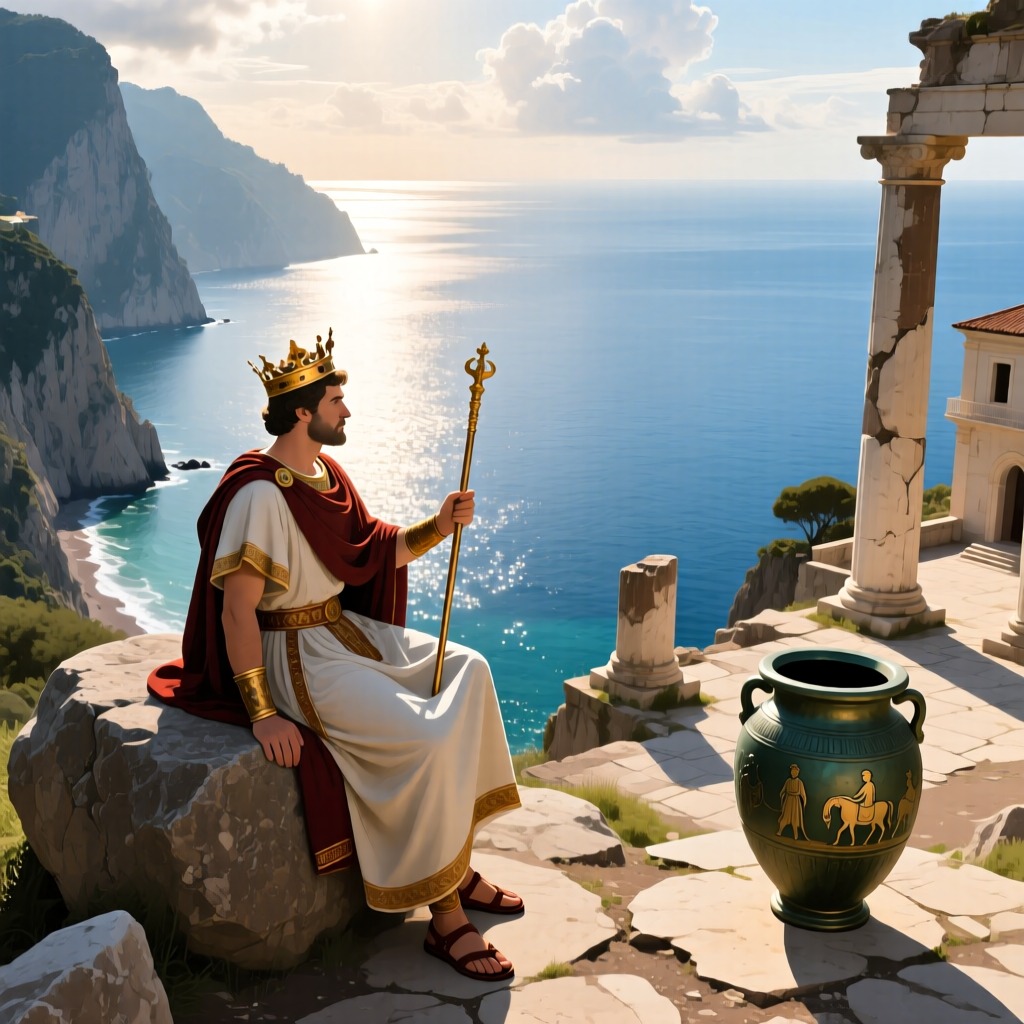
Tiberius, the Roman emperor, made a surprising choice to leave the bustling city of Rome at the height of his power and retreat to the countryside. This decision has sparked numerous speculations over the centuries. In the summer of 26 AD, Tiberius hastily departed from Rome with a group of attendants, following an astrologer's prediction that he would never return and would soon die in exile. However, these predictions did not come true, and Tiberius lived on until his unexpected death on the island of Capri eleven years later.
Tiberius' seclusion was not a sudden decision but rather a series of transitions. He briefly resided in a cave at Cape Misenum, but spent the longest time on the island of Capri. These locations were not only picturesque with pleasant climates but also distant from the political center, providing a relatively safe haven for his retreat. Despite being in the countryside, Tiberius managed to influence national politics through letters and even attempted to return to Rome several times, though he ultimately never succeeded.
The life of Tiberius in seclusion is shrouded in mystery. Some believe it was to conceal his true nature and create an air of mystique; others think it stemmed from fears of conspiracies against him, particularly from the commander of the Praetorian Guard, Sejanus, or the emotional toll from the deaths of his sons. Despite Tiberius' peculiar personality and strange behavior, modern historians agree that his reign was marked by stability and prosperity in Rome, a fact that cannot be overlooked.