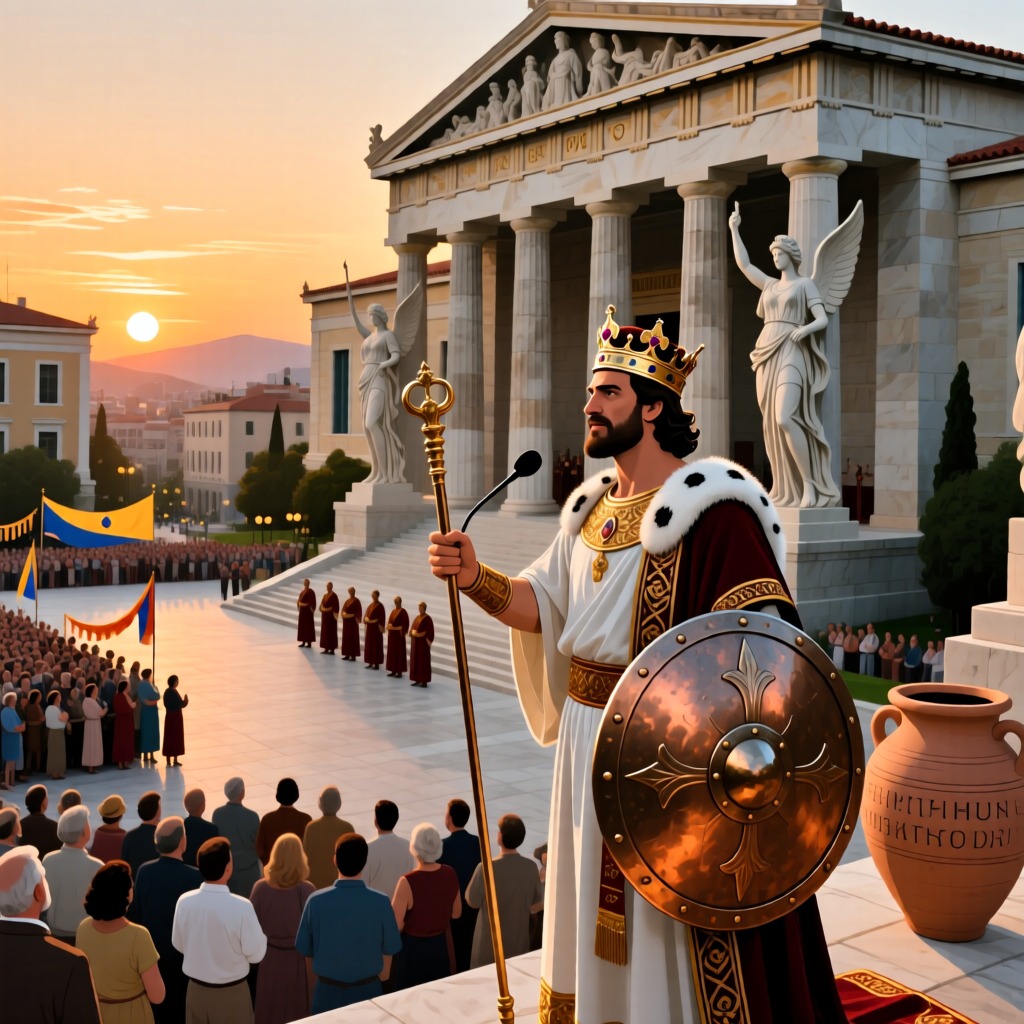
Theseus is a prominent figure in ancient Greek literature, particularly in the works from Attica. How did he, at the age of 16, obtain the token left by his father, face numerous dangers, and eliminate the six bandits to arrive in Athens? How did he, with the help of Princess Ariadne of Crete, slay the Minotaur and rescue his fellow countrymen, only to cause his father's tragic death by forgetting to change the ship's sail to white, signaling his victory? Was Theseus truly a historical figure? Did he unify Attica and establish Athens? These questions have intrigued historians from both ancient and modern times. By exploring myths, classical writings, and archaeological findings, we can ponder the true identity of Theseus. His achievements are not only military but also political; he quelled conflicts in Attica, unified the nation, and established new public institutions, including a city hall and council chamber, thereby solidifying the aristocratic governance of Athens.
The Symphony of Theseus: Myth and History